
It has been widely reported by multiple reputable sources that Meta is working on a premium, ultralight, open-periphery headset with a tethered compute puck, intended to occupy a similar high-end position to Meta Quest Pro, but in a much sleeker form factor.
Here is everything we know so far about Meta's next VR/MR device.
Phoenix Is A Passthrough VR (Mixed Reality) Headset
 David Heaney
The headset project now known by the codename Phoenix was initially reported by The Information all the way back in 2024. In that report, an earlier prototype known as Puffin was described as "a bulky pair of glasses" that weighed less than 110 grams, yet was an opaque VR-style headset with pancake lenses and passthrough cameras, with its light weight being achieved by offloading both the battery and computing hardware to an external tethered puck. This is distinct from devices like Apple Vision Pro and Samsung Galaxy XR, which only offload the battery. The report describes Puffin as not including controllers, instead leveraging Eye and Hand Tracking to use the gaze-and-pinch input scheme introduced by Apple Vision Pro, and later utilized by Meta's own Orion AR Glasses prototype. Meta reportedly hoped to ship the device in 2027.
This came shortly after The Information's reporting that Meta had canceled a more direct Quest Pro successor and Vision Pro competitor codenamed La Jolla due to concerns over the costs of the micro-OLED displays and other components. This was later confirmed by Meta CTO Andrew Bosworth in an interview with then–The Verge reporter Alex Heath.
In essence, Meta made a choice to prioritize comfort and wearability, rather than having the best possible specs in its next high-end VR/MR device. When Meta CTO Andrew Bosworth was asked “What do you think is a worthy tech tradeoff to get VR headsets smaller and lighter?” during a November 2025 Instagram "Ask Me Anything" session, his response strongly hinted at this shift in philosophy:
"You know, I love this question because so often the features I get asked for are more features. People want to know, when’s this feature I want coming, and when’s that coming, and when’s this coming, and when can I get more field of view and more of everything?
And I always try to tell you, well, these are real trade-offs, and be careful what you wish for, because there’s headsets out there that deliver the thing that you want and nobody’s using them, and this is why I think a lot of them are not being used:
I think lightness is premium on the headset. I think it’s more important than a lot of other features.
John Carmack used to say, “Simplicate and add lightness,” which is, uh, from an aeronautical engineer, if I recall correctly.
So, yeah, this is the right question to ask. And the answer is, like, I think we can. I think there’s a lot of trades that we can make. Instead of taking the wins from each generation and pouring it into more features, you can take those wins and pour it into lightness and smallness, and that’s probably the right call."
Meta CTO Andrew Bosworth sharing his thoughts on headset form factor and weight in a November 2025 Instagram AMA response.
Phoenix Comes Into Focus
 David Heaney
Reports regarding the device were quiet for some time, but in June 2025 UploadVR learned from multiple people familiar with the matter that Meta was prioritizing an ultralight open-periphery headset with a tethered compute puck for 2026 over a traditional Quest 4.
Before this, in July 2024, The Information reported on a 2026 Quest 4 product line that would have a budget model and a premium model, codenamed Pismo Low and Pismo High, and a focus group listing found in October 2024 suggested that at least one of these models would have both Eye and Face Tracking. Both of these devices were effectively canceled, and the existing prototypes became internal development units.
At that point, the ultralight open-periphery headset with a tethered compute puck became Meta's focus, with the goal of shipping it in 2026. It was reported that the device would run the same Horizon OS as Quest headsets, but be strongly focused on virtual screens for productivity and entertainment, and other seated mixed reality and VR use cases. A new prospective traditional Quest 4 was planned to ship no earlier than 2027.
Just days later in June 2025, The Wall Street Journal reported that Meta plans to release a "premium virtual-reality headset" codenamed Loma in 2026, which looks "similar to a large pair of eyeglasses" with a puck — clearly referring to the same headset. Meta often uses separate codenames for projects and the hardware candidates within those projects. The publication also claimed that Meta was "planning to charge less than $1000" for the device.
Around a month later, while reporting on ByteDance's next PICO device, The Information claimed that the primary codename for Meta's ultralight open-periphery headset was now known to be Phoenix.
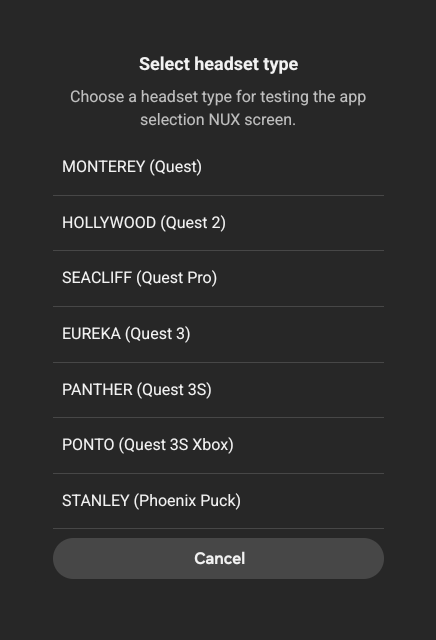
It is my understanding that the codename Phoenix refers to the overall project initiative, while Loma refers to the hardware candidate, and the additional codename Stanley refers to the underlying mainboard and software platform.
This is consistent with Meta's previous devices. For example, Quest Pro was developed under the project codename Cambria, with the hardware candidate codenamed Arcata and its underlying mainboard and software platform codenamed Seacliff.
Design & Form Factor
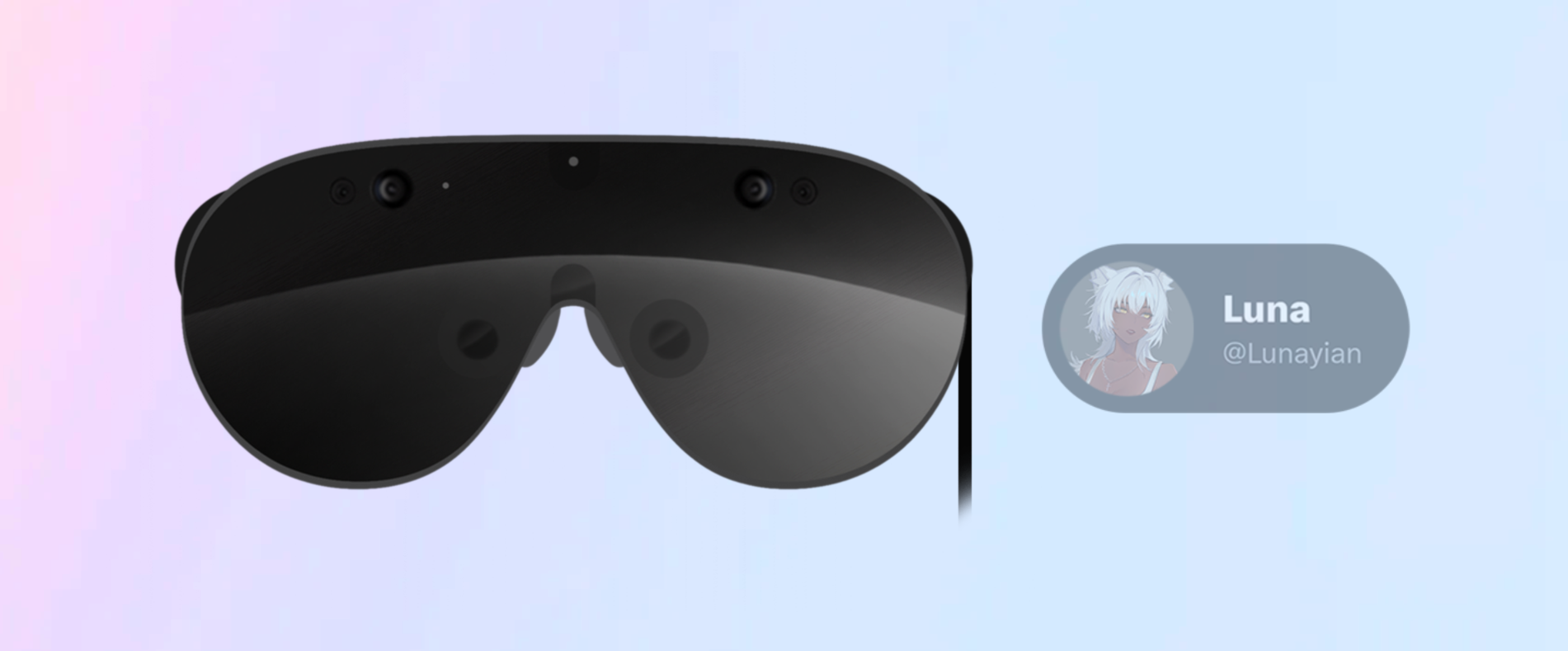
In December 2025, I had the opportunity to view development units of the Phoenix device. The 2D mock-up/sketch above is based on what I personally observed at the time (most depictions of the device found online are speculative or derivative edits based on my original post and imagery, rather than independent depictions), while the descriptions below reflect both those observations and information shared by people familiar with the device, rather than the final product.
On a technical level, Phoenix is firmly a glasses-like Passthrough VR (Mixed Reality) headset, operating on the same basic principle as Meta Quest 3 and 3S. It may also be described in broader terms as an XR or spatial computing device, but those terms do not place it in a separate hardware category: Phoenix remains an opaque VR headset that uses camera passthrough to enable Mixed Reality.
It is not a see-through AR device, like Meta's Orion prototype, nor does it fall into the same product category as the many see-through display-mirroring glasses marketed under broad “XR” or “AR” labels, despite sharing a broadly similar glasses-like form factor. Meta may even ultimately market Phoenix as “Mixed Reality Glasses”, though this would describe its positioning and form factor rather than distinguish it from Passthrough VR.
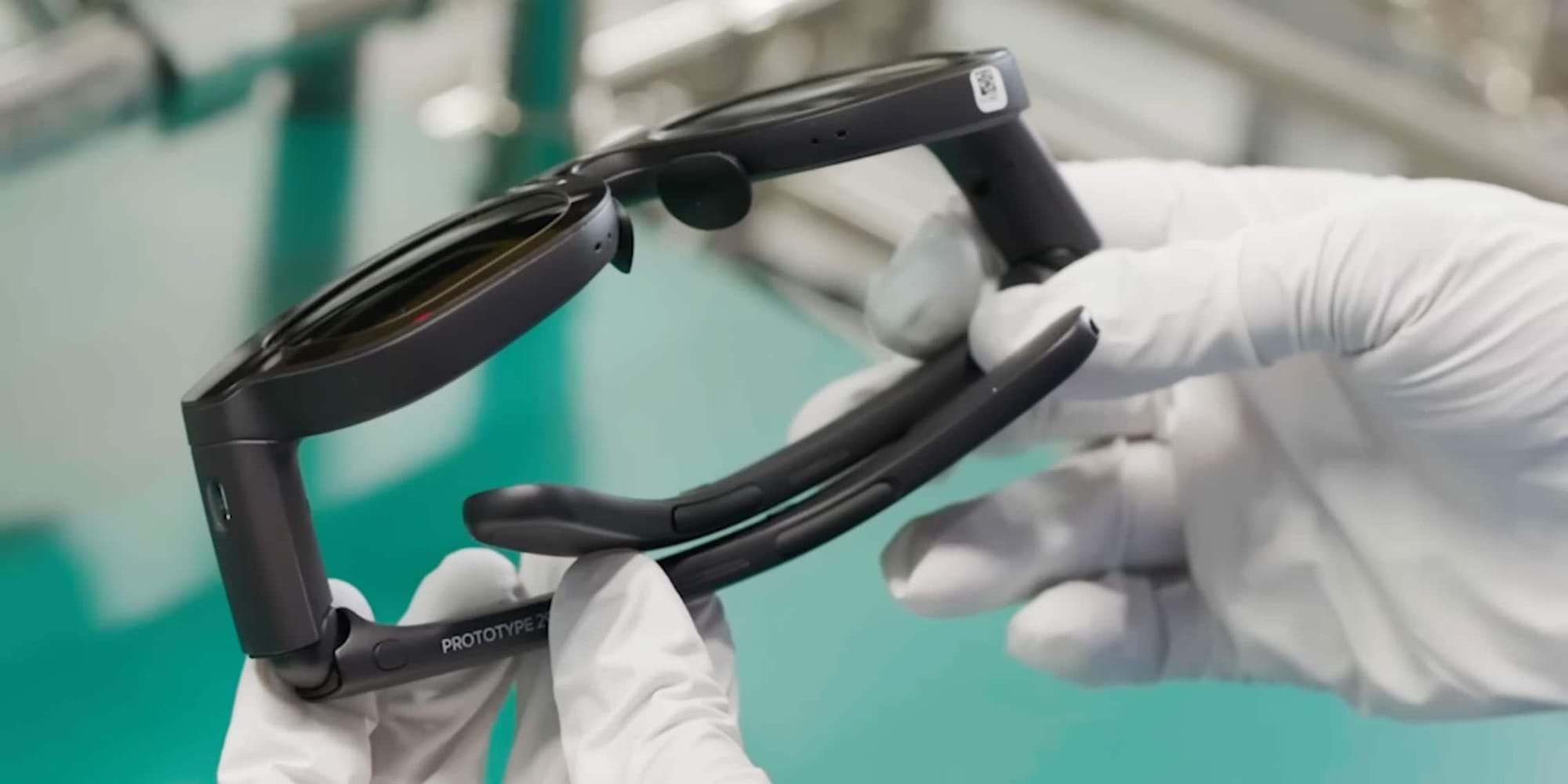
Phoenix has a glossy, ski-goggle-like front visor reminiscent of Meta Quest Pro, though considerably smaller, with IR and passthrough cameras along the upper edge and additional sensing components positioned toward the center. Its overall shape and upper-edge camera layout are broadly similar to GravityXR's M1 reference design. Labels on some early development units also identified a dToF (direct Time-of-Flight) depth-sensing subsystem within the central sensor array.
The visor itself is slim, with a front-to-back thickness much closer to a device like VITURE's Beast display glasses than a Quest 3.
Like Quest Pro, Phoenix uses an open-periphery design by default, with no facial interface or light blocker. Unlike Quest Pro’s halo-style forehead support, however, Phoenix rests on the user’s nose, more akin to the fit of display glasses. Its nose pad assembly is adjustable, allowing the pads to be repositioned vertically and moved closer together or farther apart to accommodate different nose shapes. The assembly can also be removed entirely and replaced with differently sized options.
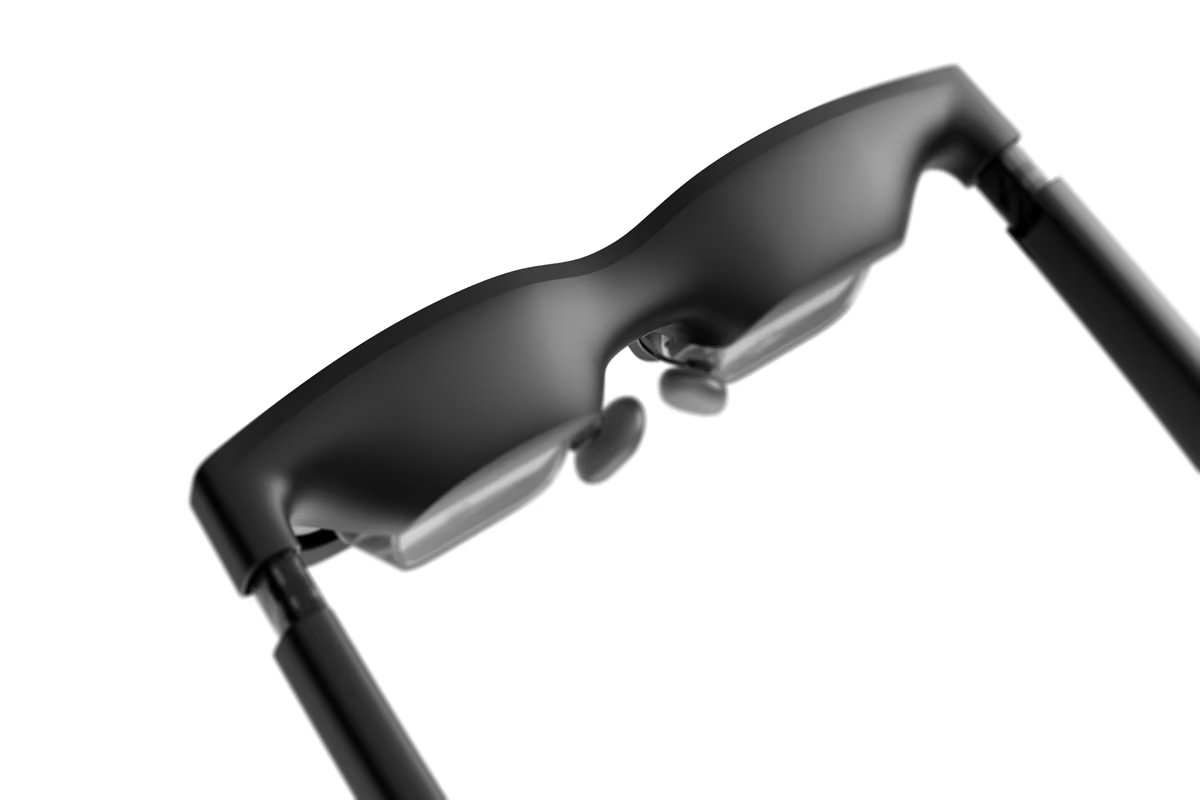
Phoenix has temples with a thick but conventional glasses-like profile, housing speakers as well as additional cameras. The development units I saw had volume controls under the right arm, and a physical Action Button on the top right of the visor.
Both temples can fold inward on hinges for storage and portability, in a manner broadly similar to Meta’s Orion prototype. On the units I saw, the ends of the temples were made of a silicone-like material, and the compute puck's cable was attached to the end of the left temple.
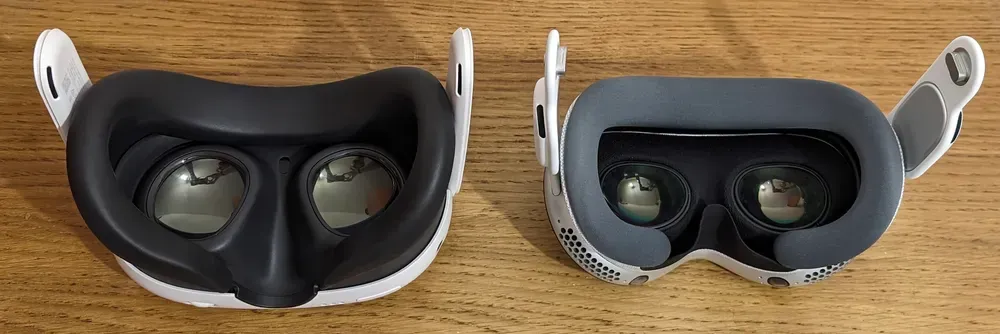
Inside the headset are pancake lenses. On the development units I saw, the interior of the frame was lined with dark gray fabric. The lenses themselves appeared somewhat similar in shape to those used in Apple Vision Pro, although considerably smaller. Separately, people familiar with Phoenix have described its field of view as narrower than most traditional VR/MR devices, with the optical design instead balancing a smaller form factor with pixel density, while noting that the open-periphery design makes the limitation less noticeable in use, particularly in Mixed Reality experiences.
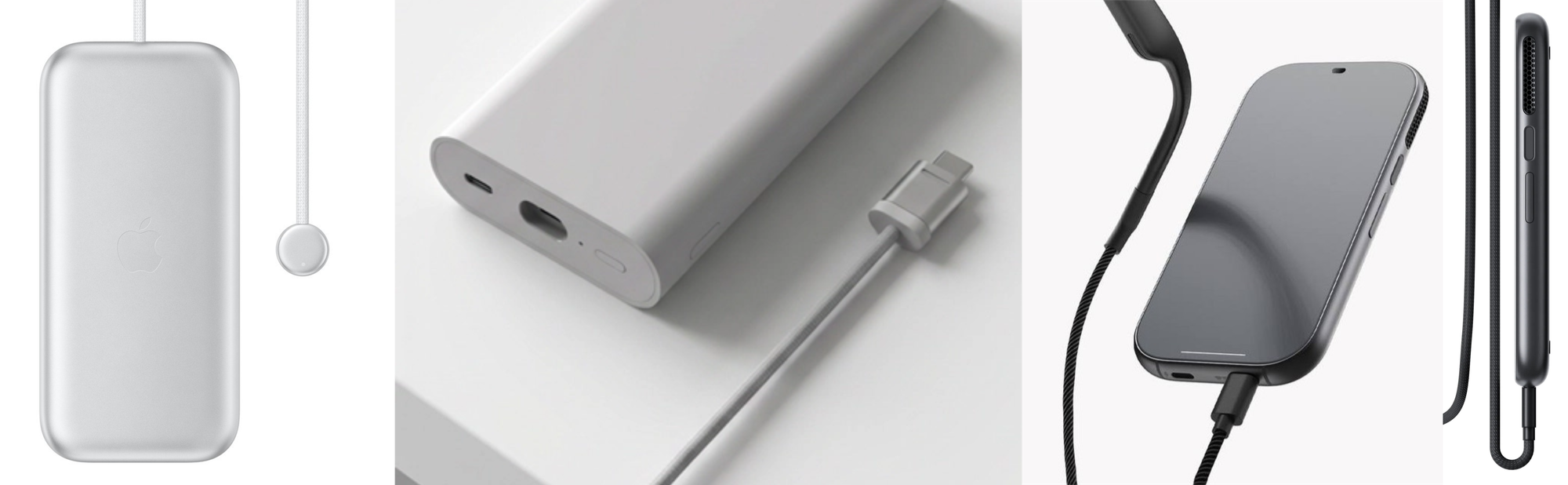
The other major component of Phoenix is its compute puck. Early development versions of the compute puck resembled a large battery bank, and were larger than the battery-only packs used by devices such as Apple Vision Pro and Samsung Galaxy XR. The puck featured exhaust vents around the upper part of its enclosure, similar to XREAL Aura, but extending continuously around the top.
Dataminer and programmer Nori created a 3D model of Phoenix's compute puck based on "physical prototypes" she had seen in February 2026 (most depictions of the puck found online are speculative or derivative edits based on her original post and imagery, rather than independent depictions) and the model is consistent with my own observations.
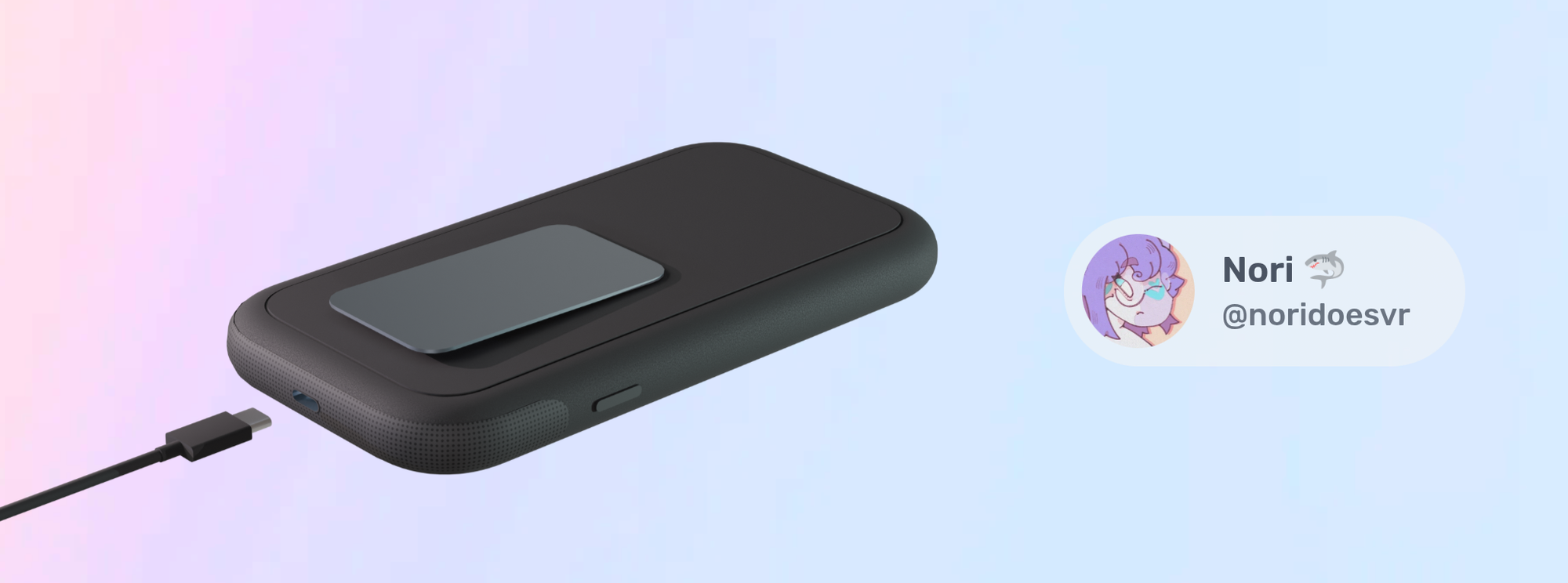
Consistent with Nori's 3D model, the development units I saw had a clip mounted on the back of the puck. My understanding is that this is intended to attach to the user’s waistband, helping keep the puck secure during movement while leaving its cooling system exposed during higher-power workloads.
Design Appears In Firmware
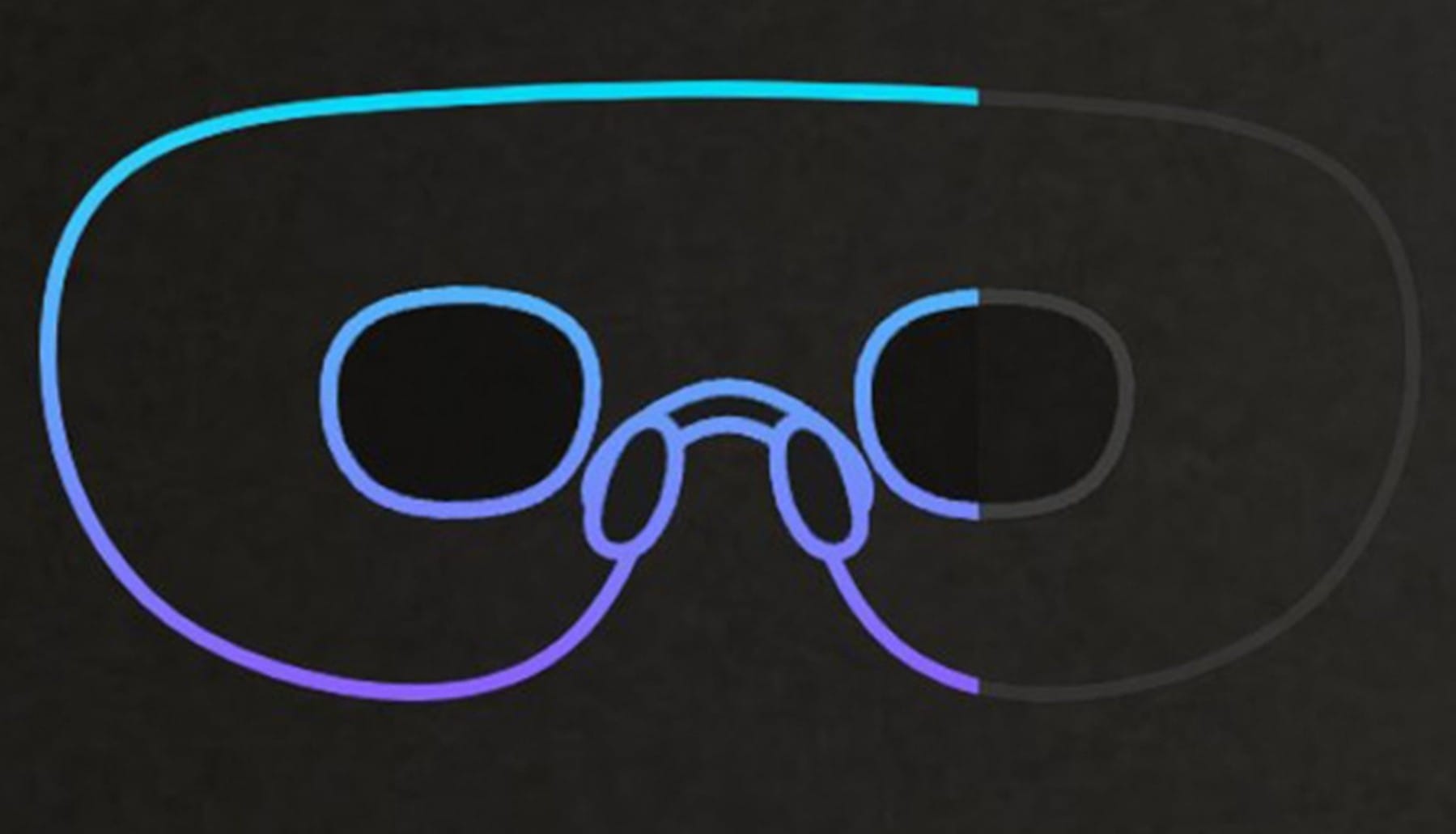
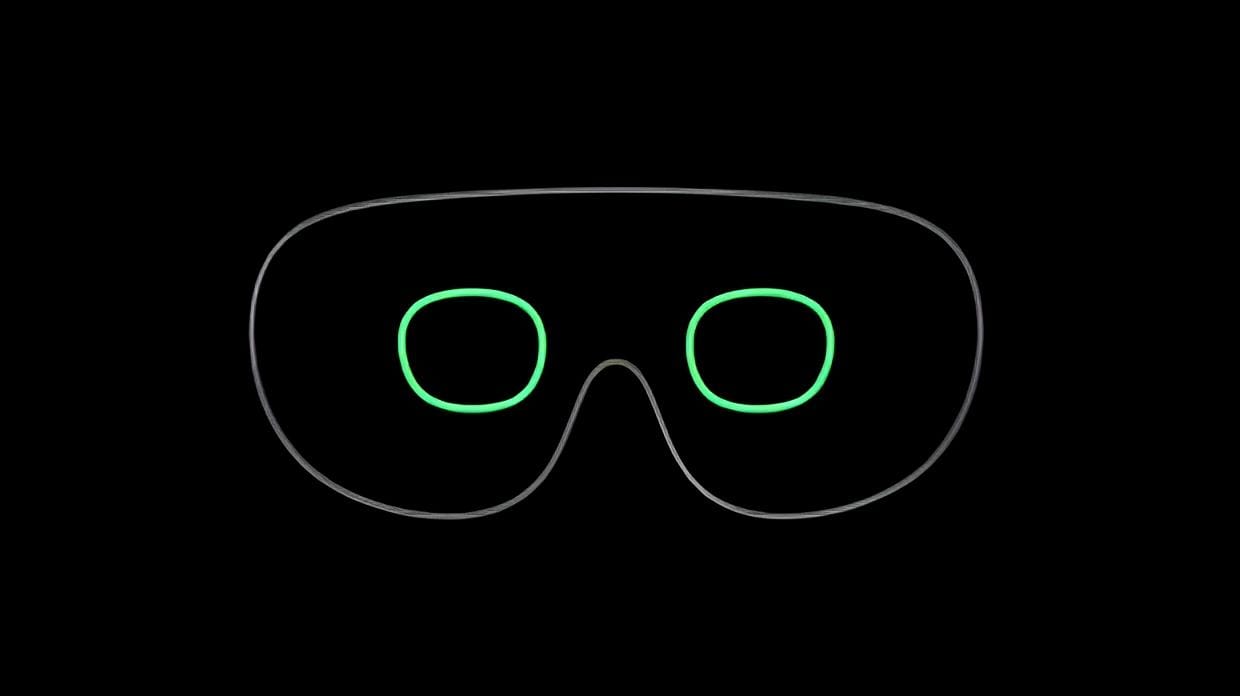
In February 2026, dataminer Samuila managed to download an early version of the Eye Tracking NUX firmware package for Phoenix. I was then able to inspect the package and get it running on a Meta Quest Pro. The package itself contained a vector outline and a very low-resolution image of Phoenix that clearly depict a slim headset with glasses-style nose pads instead of a face interface.

Then, in July 2026, dataminer and security researcher ToastConcern managed to download an updated version of the Eye Tracking NUX firmware package. This new version included blurred renders of the headset itself, alongside other device-setup assets labeled "PHX".
While blurry, the videos clearly show a slim headset with an opaque front visor and pancake lenses, with dedicated segments demonstrating how to adjust and detach the nose pad assembly and change the IPD spacing.
Focus On Media, Immersive Video & Screens
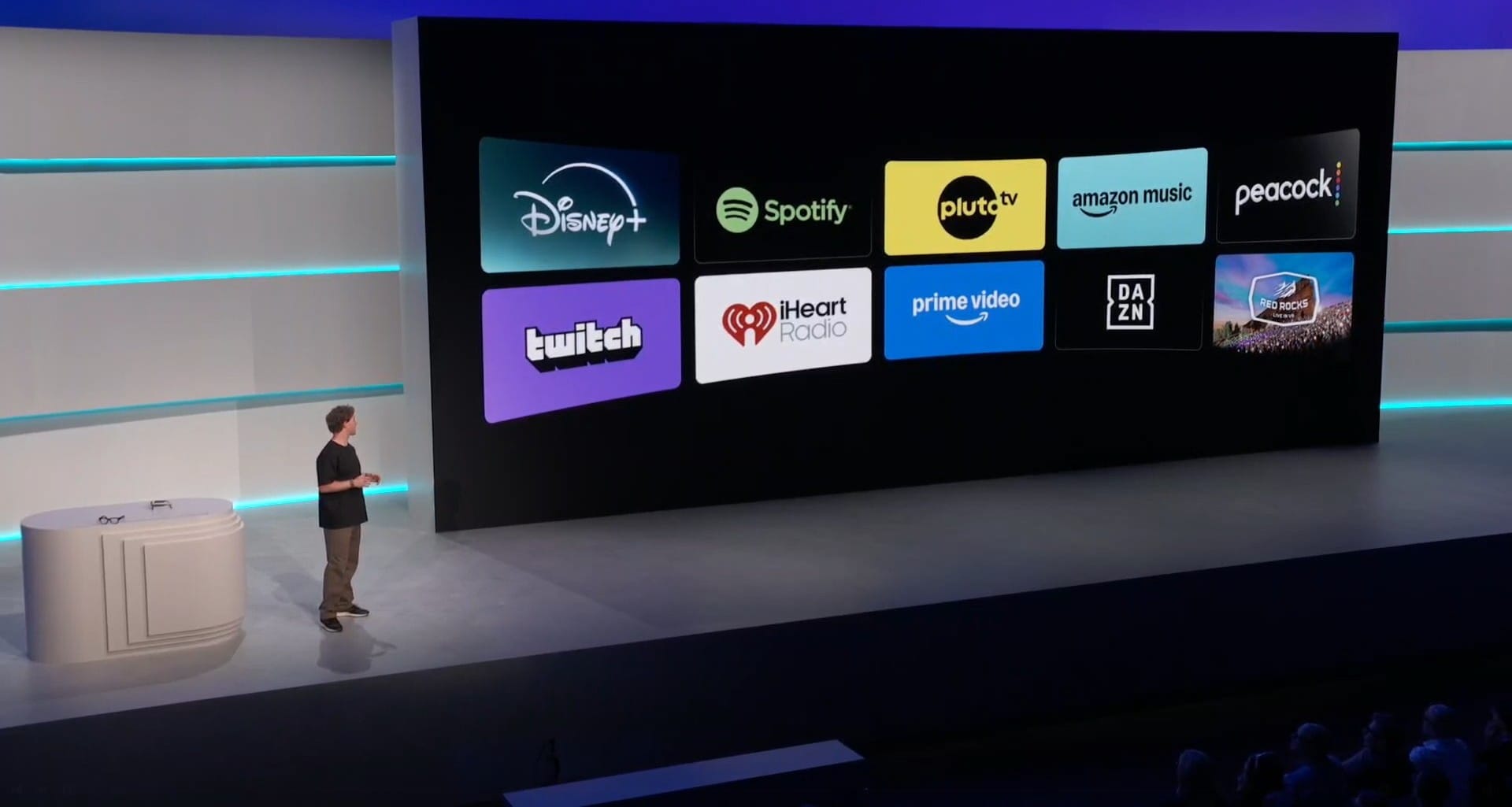
There are several indications that Meta intends for Phoenix to have a strong focus on entertainment in the form of media and immersive video, rather than centering primarily on productivity and business use cases as it did with Quest Pro, or on immersive gaming like Quest 3.
 David Heaney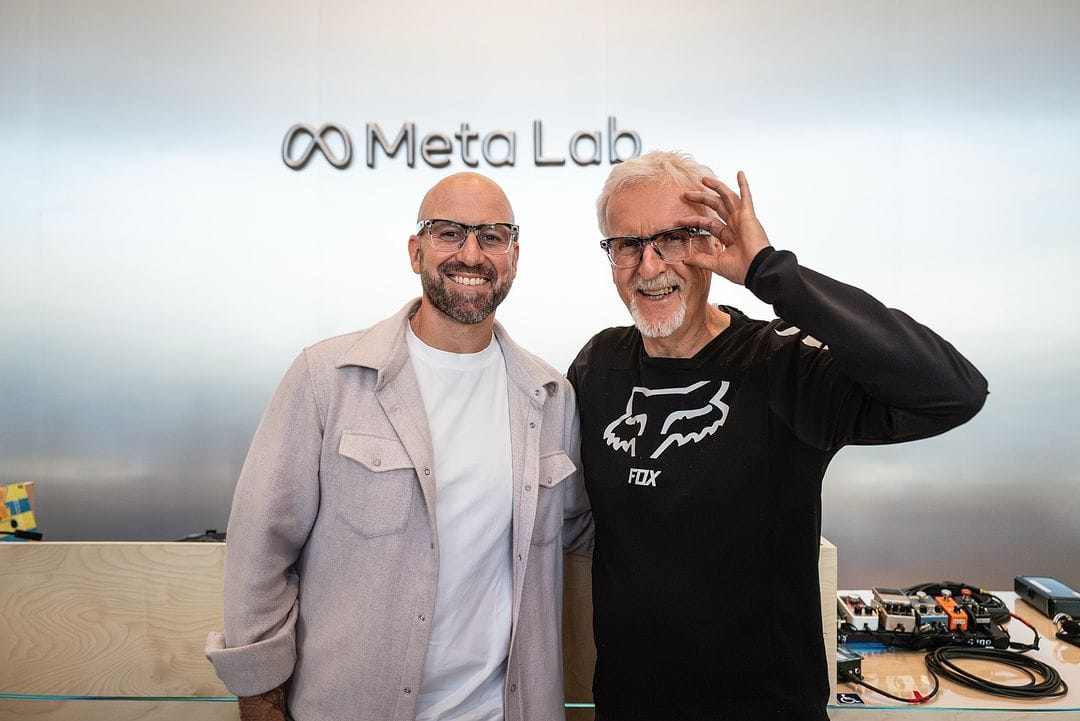
In December 2024, Meta and James Cameron announced an exclusive multi-year partnership to help bring significantly more 3D video content to Quest headsets, via Cameron's company Lightstorm Vision. Meta said the partnership will bring "world-class 3D entertainment experiences spanning live sports and concerts, feature films, and TV series featuring big-name IP" to Horizon OS. So far, the only publicly released results of the partnership have been an Avatar: Fire and Ash 3D clip that was available on Quest in the redesigned Horizon TV app for a limited time, as well as 3D conversions of the film's trailers.
Then in April 2025, Cameron said in a publicized conversation with Meta CTO Andrew Bosworth that headsets effectively solve the problems of 3D cinema.
More notably for Phoenix, during Meta Connect 2025, Cameron appeared in an extended conversation with Meta CTO Andrew Bosworth, and did interviews with several content creators. In a conversation with Norman Chan from Adam Savage's Tested, when asked about the future of headsets and content, Cameron responded:
"I think it’s going to be the portal for all media that we consume, you know. I mean, really, I think when the weight and the form factor and all of those things are all conquered — and that’s imminent. That’s not some pie-in-the-sky thing. That is imminent, certainly to my satisfaction, and I have very exacting standards, as you might imagine.”
Clip of James Cameron's response in Tested's "James Cameron's Theory of 3D Cinema" interview.
In June 2025, The Wall Street Journal reported that Meta was offering firms including Disney and A24 "millions of dollars" to provide "episodic and stand-alone immersive video based on well-known intellectual property" for the device codenamed Loma.
 David Heaney
In October 2025, Variety then reported that Meta and XRTV were working on a 3D spin-off series of A24's 2022 horror film Talk to Me, exclusively for Meta's VR headsets. The production and cast were then confirmed by Deadline in February 2026, describing it as a six-episode series "created exclusively for Meta’s immersive VR devices."
Finally, in March 2026, Meta Director of Games Chris Pruett offered what might be the clearest indication yet of the company’s future hardware priorities during Meta's GDC 2026 The State of VR panel. In the company's accompanying blog post, he wrote:
"Over the next couple of years, we expect more Mainstream Adults to enter VR through media consumption first, then discover games once they are in-headset. These are folks who don't move the needle today, but we expect to arrive as a large ecosystem player in the next few years. They purchase VR as a TV replacement first, then discover that it can also play video games. They are mid-core, love Meta Horizon+, and probably play seated without controllers."
Meta Director of Games Chris Pruett’s original remarks, which the blog post excerpt is based on (24:52–28:42).
This isn't to say Phoenix will be entirely focused on media and immersive video. Meta has been continually updating the Horizon OS Remote Desktop app and its Windows 11 integration, adding new features such as an Ultrawide mode, headset-side input forwarding, and more.
 David Heaney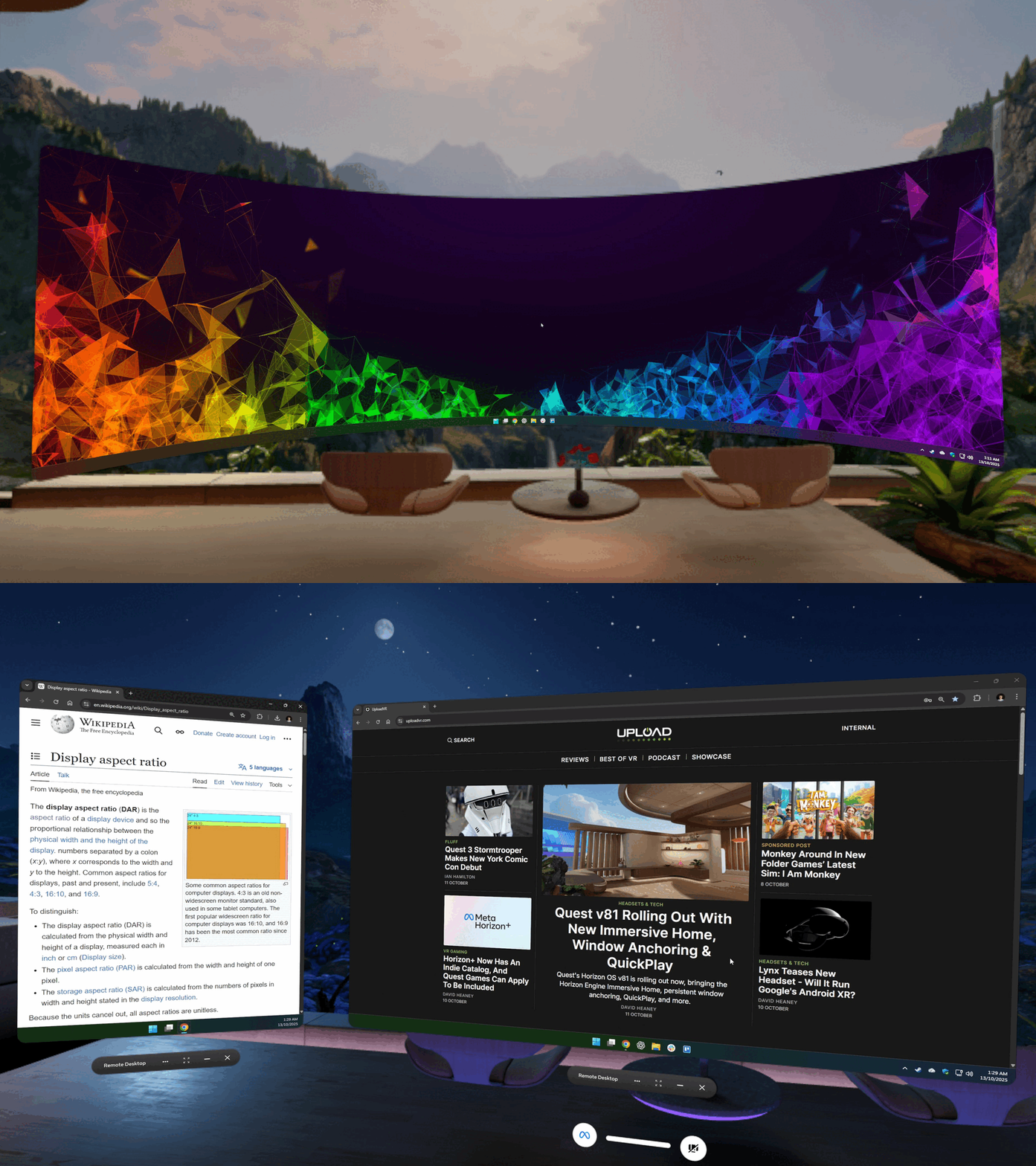
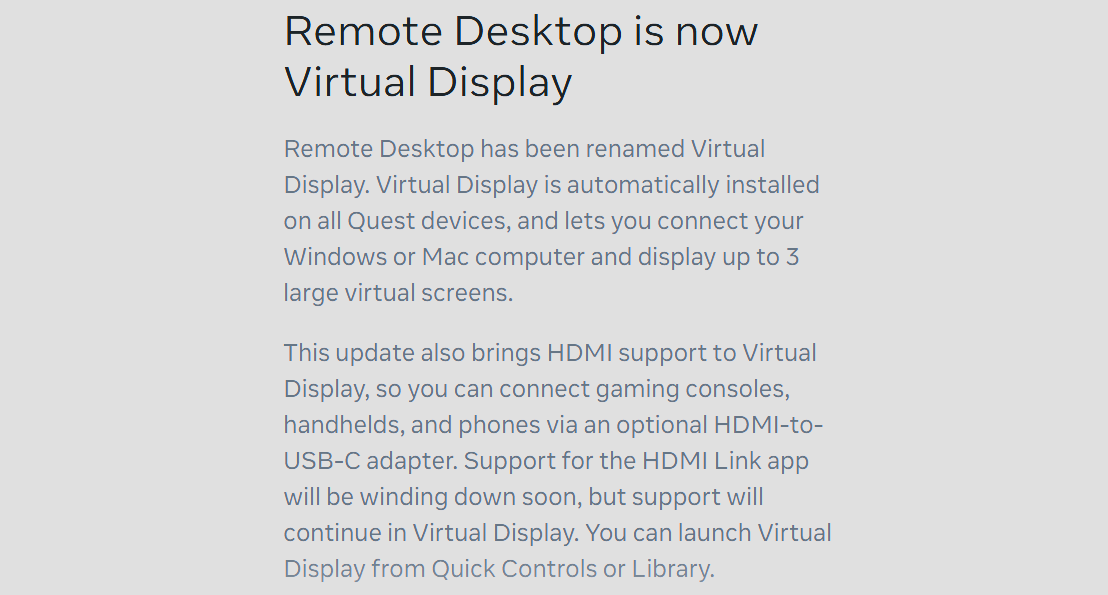
In July 2026, the company even rebranded the app as Virtual Display, while Horizon OS 2.7 merged the features of Meta Quest HDMI Link into it, creating a single app for multiple screen-mirroring use cases.
There are also dedicated strings and assets related to gaze-and-pinch input within the app, suggesting that getting it working on a device where Eyes and Hands serve as the primary inputs has been a meaningful priority.

Meta is also rethinking the core virtual screen experience in Horizon OS through an overhaul of its 2D window and panel system codenamed Display Evo.
While the Navigator replaced the operating system's tablet-style app dock with a more modern overlay-style launcher, the underlying window system remained largely unchanged, still centering the experience around three apps in a relatively restrictive triple-monitor-style layout and forcing users to juggle additional windows between the now-simplified dock and the space around them.
Display Evo removes the simplified dock entirely.
Footage of the in-development versions of Display Evo, Window Manager, and Quick Actions Menu v2 in Horizon OS 2.6
In the Horizon OS 2.7 development version of Display Evo, 2D windows can instead open freely around the user, be "snapped" into groups by moving their edges together, or arranged into a Stack that users can flip through like cards.
Display Evo also introduces a redesigned Quick Actions Menu, providing access to a new Window Manager for viewing all open 2D windows, bringing them forward, or closing them individually or all at once. This is broadly similar to Android XR's app management interface, presenting open spatial windows in one place for quick selection or dismissal. In the Horizon OS 2.7 development version of the feature, the Window Manager also includes Stack and 3-Up presets for automatically organizing windows into stacked or triple-monitor-style layouts.
Eye Tracking & Gaze-And-Pinch
Some of the most critical elements of Phoenix are its Eye Tracking and gaze-and-pinch input scheme. This is done in a way that is broadly similar to Apple Vision Pro, Samsung Galaxy XR, and Meta's own Orion AR Glasses prototype. Users look at UI elements they want to interact with and pinch their fingers together to select them. This is in stark contrast to Meta Quest Pro, where Eye Tracking was primarily for avatars and, in limited scenarios, for foveated rendering.
Horizon OS firmware packages indicate that this is intended to be the default input scheme on Phoenix, prioritizing the user's Eyes and Hands.
The device has an extensive Eye Tracking calibration setup, similar to Apple Vision Pro and Samsung Galaxy XR. Dataminer and programmer Nori managed to get a functional version of the Eye Tracking NUX firmware package running on her Quest 2, using headset gaze to simulate eyes.
Footage of Phoenix's Eye Tracking NUX, enabled to run on Quest 2 by dataminer and programmer Nori.
The setup flow also provides further evidence for the return of the Action Button that debuted on Quest 3S, positioned on the top right of Phoenix.
Because of the importance of Eye Tracking, prescription inserts on Phoenix appear to need to be paired to the device to apply distortion correction, again similar to Apple Vision Pro and Samsung Galaxy XR.
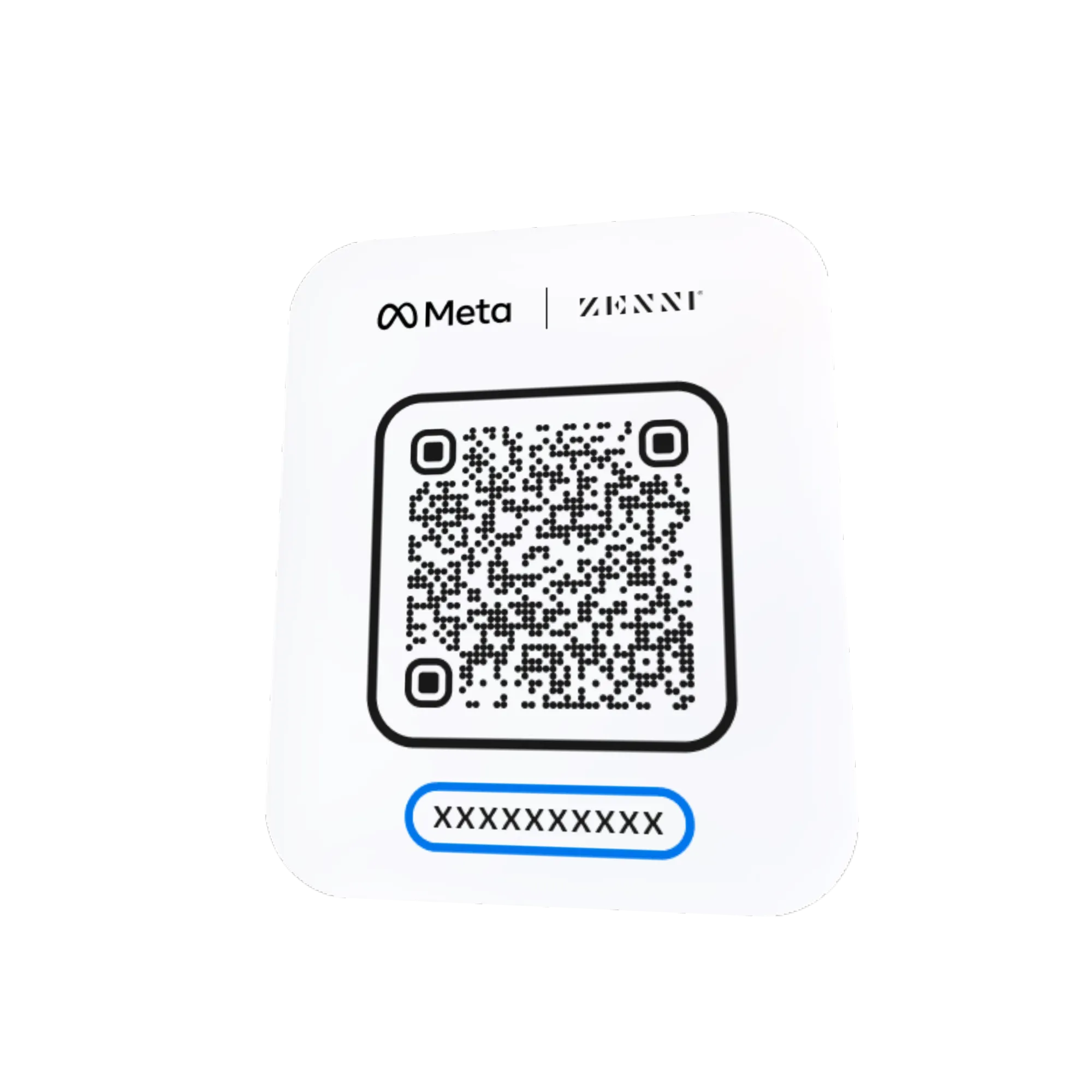
Meta's partner for Phoenix's prescription inserts appears to be Zenni Optical, the same company behind the Quest 3 and 3S prescription inserts. The lens inserts pair with the device either by scanning an included QR code card, or by manually entering their serial number within the headset.
Eye Unlock
Eye Unlock animations as found in firmware.
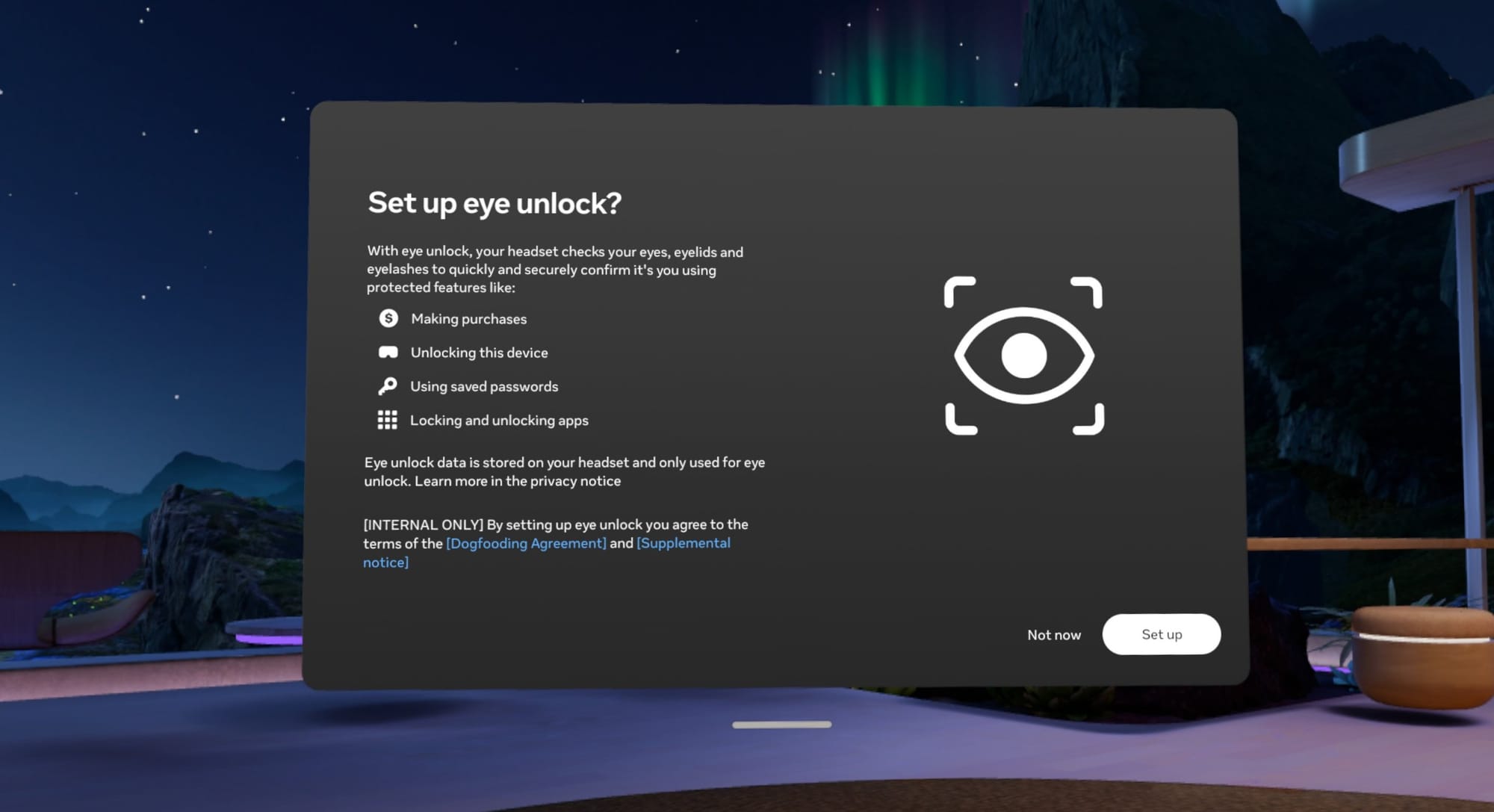
Meta seems to be working on a new feature for Phoenix called Eye Unlock, similar to Optic ID on Apple Vision Pro.
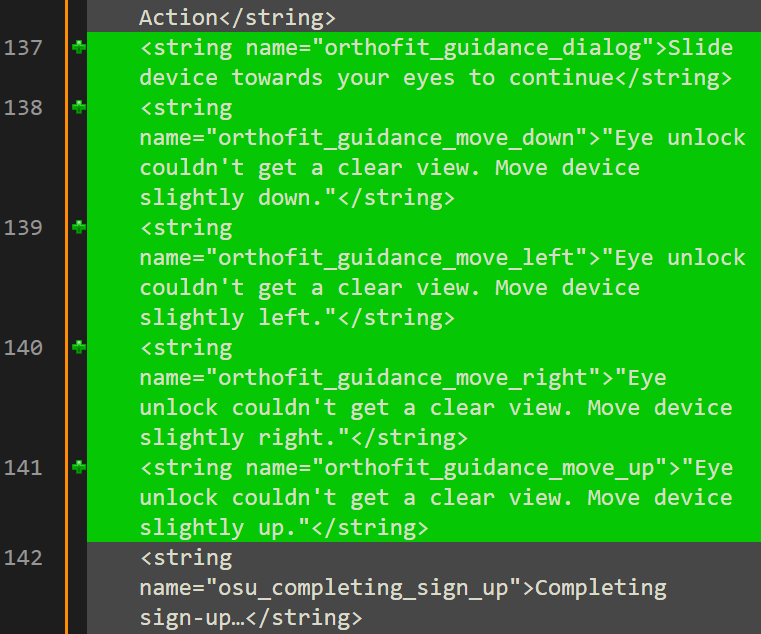
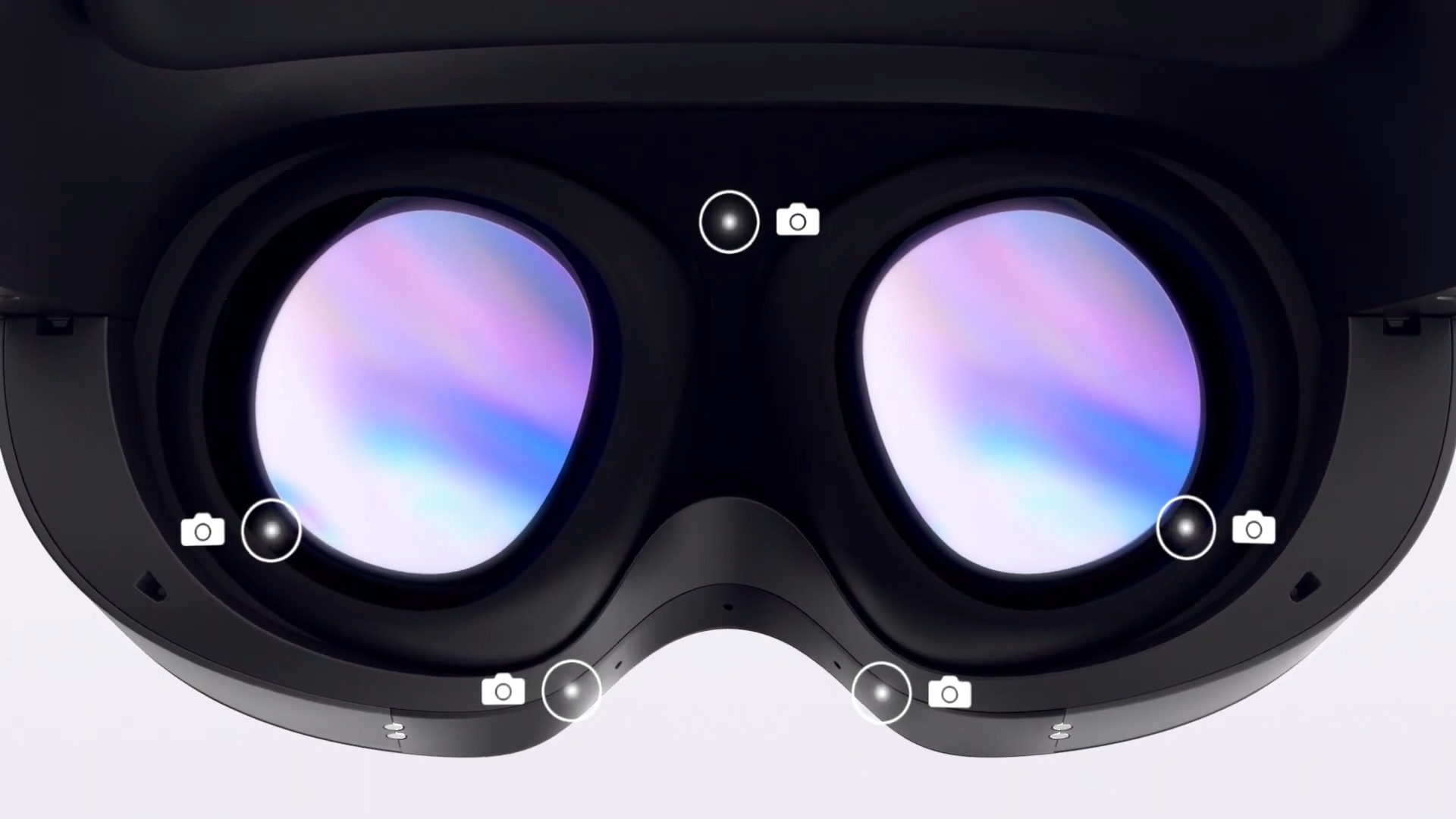
This feature appears designed to work alongside the existing Passcode integration. It appears to leverage the inward-facing cameras to verify the user and unlock the device, make purchases, and access other authentication-gated items.
Codec Avatars & Face Tracking?
Meta's now-canceled initial Quest Pro successor, La Jolla, was reportedly set to feature Codec Avatars, the company’s long-running research project to achieve photoreal spatial telepresence via Face Tracking sensors on VR/MR headsets.
Multiple findings in Horizon OS firmware and elsewhere across Meta's ecosystem suggest that this may still be the case with Phoenix.
One of the clearest indications is a LomaEtFt configuration found in a camera model library within Horizon OS, suggesting that Phoenix is being developed with combined Eye Tracking and Face Tracking hardware.

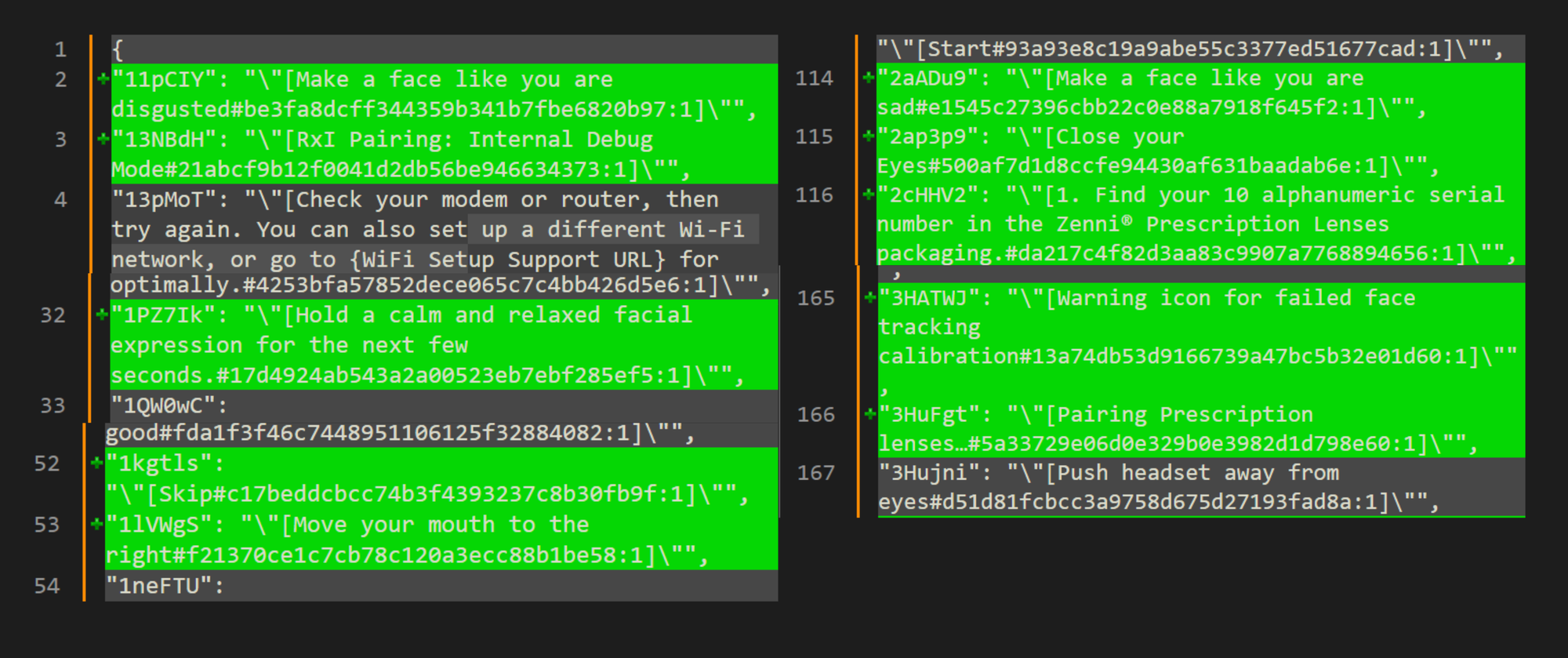
Earlier evidence specific to Phoenix appeared in December 2025, when the first references to the device surfaced in Horizon OS firmware, tagged as "phx", before being removed around a week later. The strings and assets specifically describe how to pair prescription inserts to the device, and how to set up and calibrate Face Tracking for an avatar.
Later in December 2025, dataminer and programmer Nori noticed that the in-development Codec Avatars of the Meta employees and testers using them could be seen if their profiles were viewed via the Meta Horizon website.
hi, found some :) (1/4) https://t.co/DFejuxRPwE pic.twitter.com/wYB5EczGMS
— Nori 🦈 (@noridoesvr) December 11, 2025
At the time, it seemed that Meta's eventual plan was to integrate Codec Avatars as an avatar type within the Horizon Worlds and Hyperscape systems. However, following the far-reaching layoffs and reorganization of the VR and Horizon teams within Reality Labs, it became unclear if that was still the goal going forward.
Now, as of August 2026, Meta's plans for Codec Avatars seem increasingly centered on video calls and telepresence for more versatile social experiences across the company's family of apps, alongside a new name associated with this direction: Hologram.
Seemingly AI-rendered "Hologram" product tour videos found in August 2026 builds of the Meta AI mobile app, showing the avatars on Ray-Ban Display-like Smart Glasses.
Multiple packages within Horizon OS contain what appear to be sub-frameworks for a broader "Hologram Calling" system, with those frameworks also containing extensive references to Codec Avatars.
Alongside this, strings within the Meta AI mobile app for the company's Smart Glasses and other wearables describe the usage and setup process for a "Hologram" avatar, perhaps revealing the consumer-facing name for the long-in-development project.
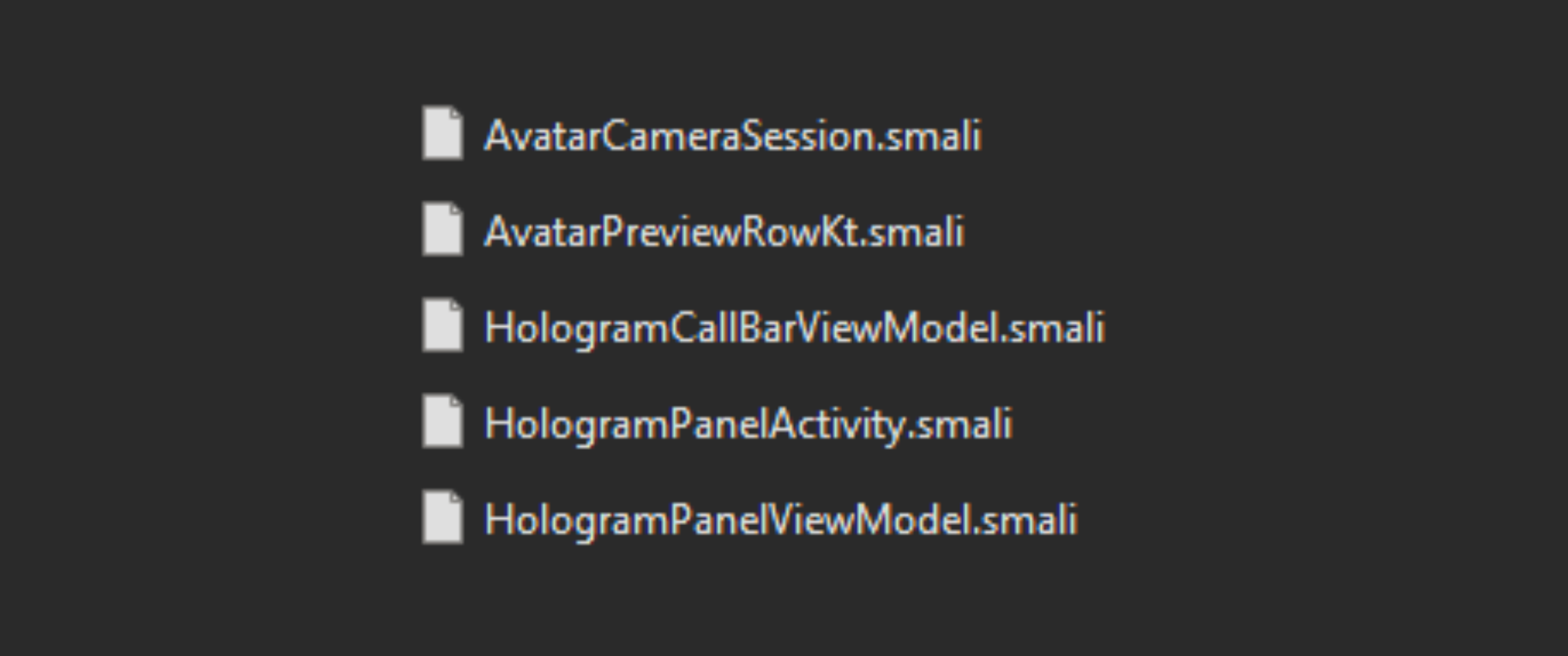
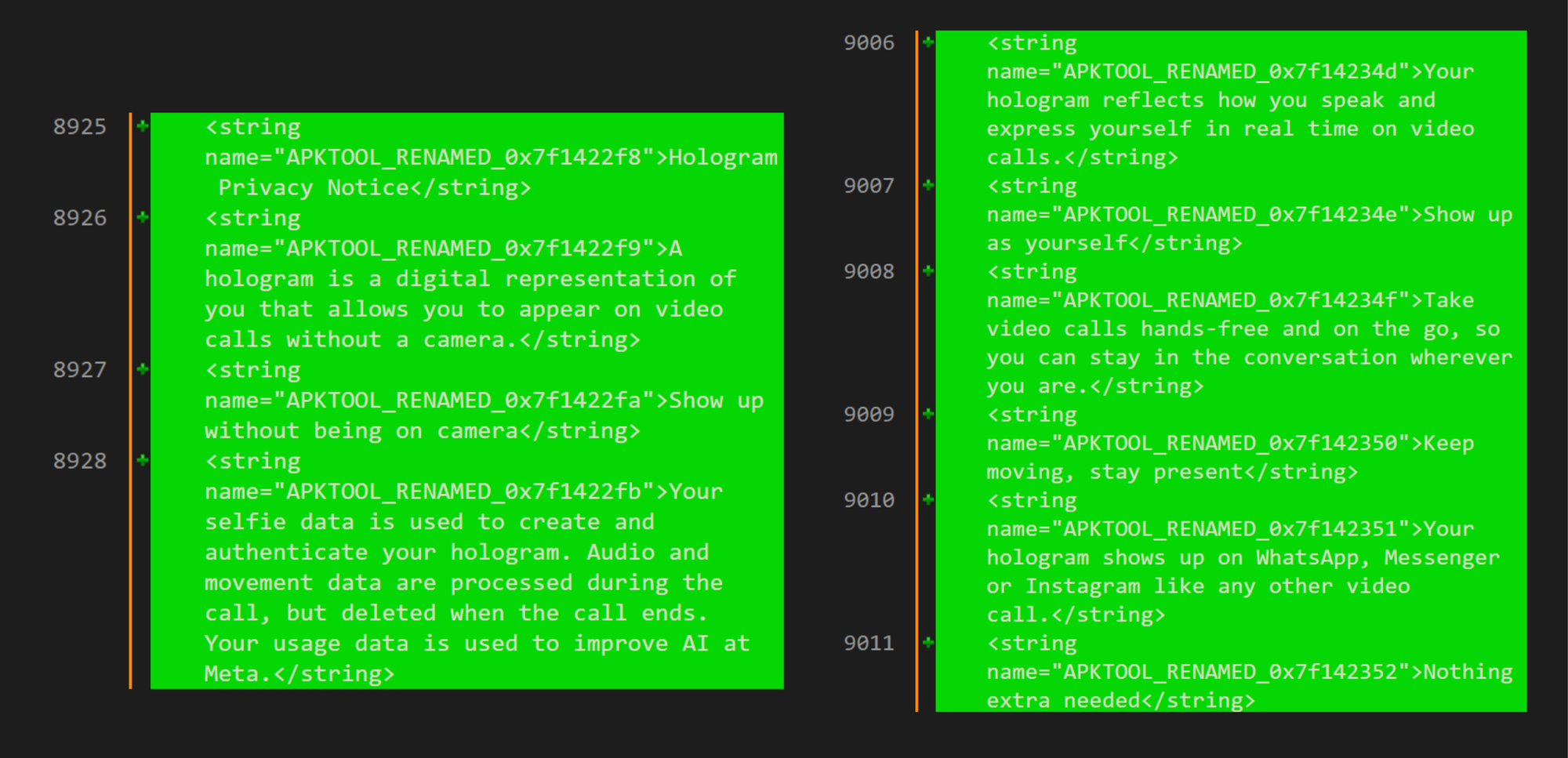
Taken together, the evidence strongly suggests that Phoenix is being developed with support for Codec Avatars in mind (possibly branded as Holograms), leveraging the device's inward-facing sensor data. Separately, assets showing Holograms on Ray-Ban Display-like Smart Glasses also suggest Meta may plan to support estimated avatar animation on devices without full tracking hardware.
The main remaining questions are whether Codec Avatars will be available on Phoenix at launch, and how broadly Meta will expose its inward-facing sensor data. That data could be available to third-party developers, as with Quest Pro, or restricted to Codec Avatars and other system-privileged apps, closer to the approach used on visionOS.
Display Systems
 David Heaney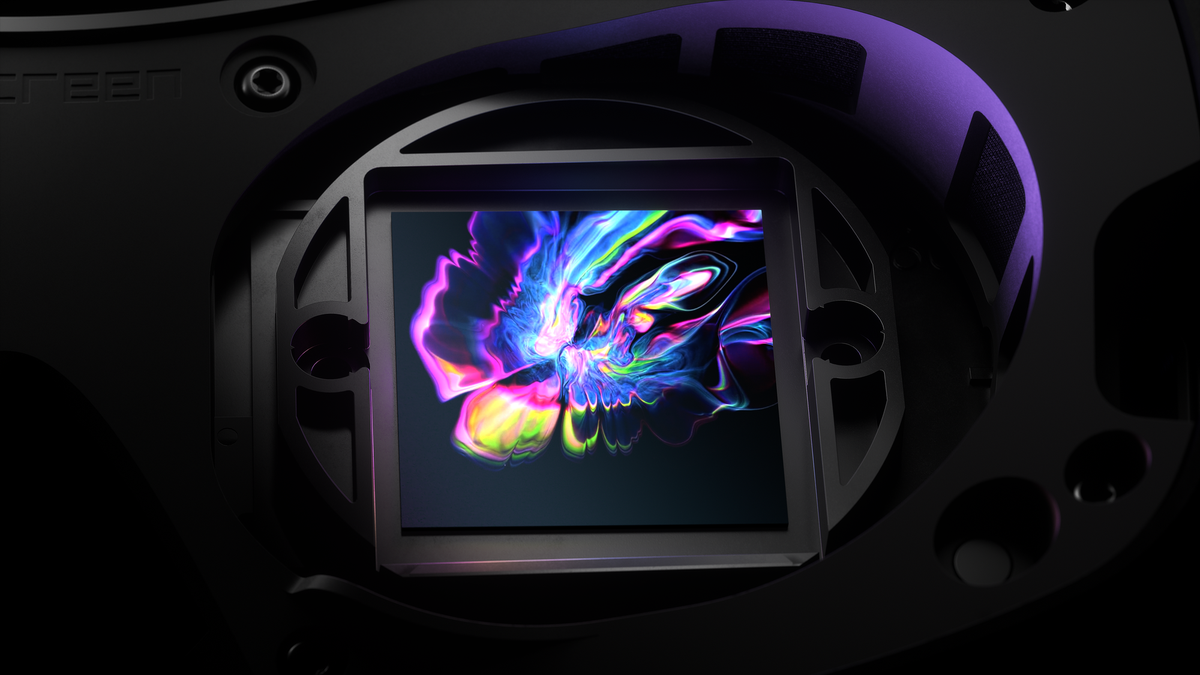
In March 2026, Chinese VR news outlet VRcoast claimed that Meta's next headset will use 2560×2560 micro-OLED displays, noting that SeeYA Technology plans to clear its existing production lines to dedicate its full capacity to the display for Meta's next headset. SeeYA is the provider of the micro-OLED displays in Bigscreen's Beyond PC VR headsets, both generations, which are also 2560×2560.
Bigscreen later told UploadVR that the report's suggestion about SeeYA's production is "wrong", but the claim is worth noting nonetheless.
If accurate, this resolution would place Phoenix above Meta Quest 3 in raw pixel count, though still below Apple Vision Pro. However, combined with the narrower field of view people familiar with Phoenix have described, this could give it substantially higher peak pixels per degree (PPD) than Quest 3.
Interestingly, around a week later in March 2026, Meta appeared to have accidentally enabled a global HDR setting for 2D apps in the initial versions of Horizon OS 2.3 PTC (Public Test Channel), visible even on Quest 3 and 3S.
Some 2D apps, natively Gallery and Instagram, have a weird over-contrast overlay on them in HzOS 2.3 PTC, making the panel super bright.
— Luna (@Lunayian) March 25, 2026
Hopefully Meta fixes this because it makes things like sideloaded media players near unusable.
This was disabled in later builds, but it suggests that Meta was experimenting with how the OS should render on headsets with the deep contrast of OLED or micro-OLED displays.
Qualcomm Chipset
 David Heaney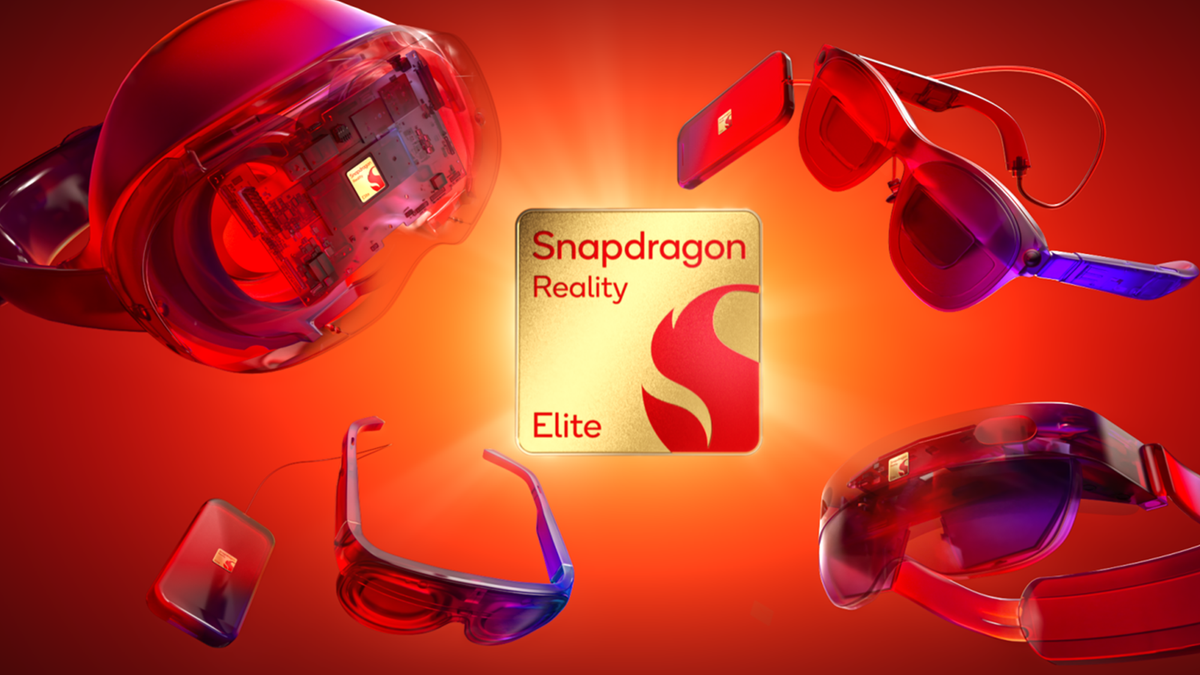
Evidence found in Horizon OS firmware libraries suggests that Phoenix will use Qualcomm’s Snapdragon Reality Elite, the successor to the XR2 Gen 2 chipset family.

The Snapdragon Reality Elite was announced in June 2026 and is explicitly designed to support multiple form factors, including the chipset being in the headset itself and the chipset being in a tethered compute puck. It's also designed to work in either passthrough or see-through display systems.
 David Heaney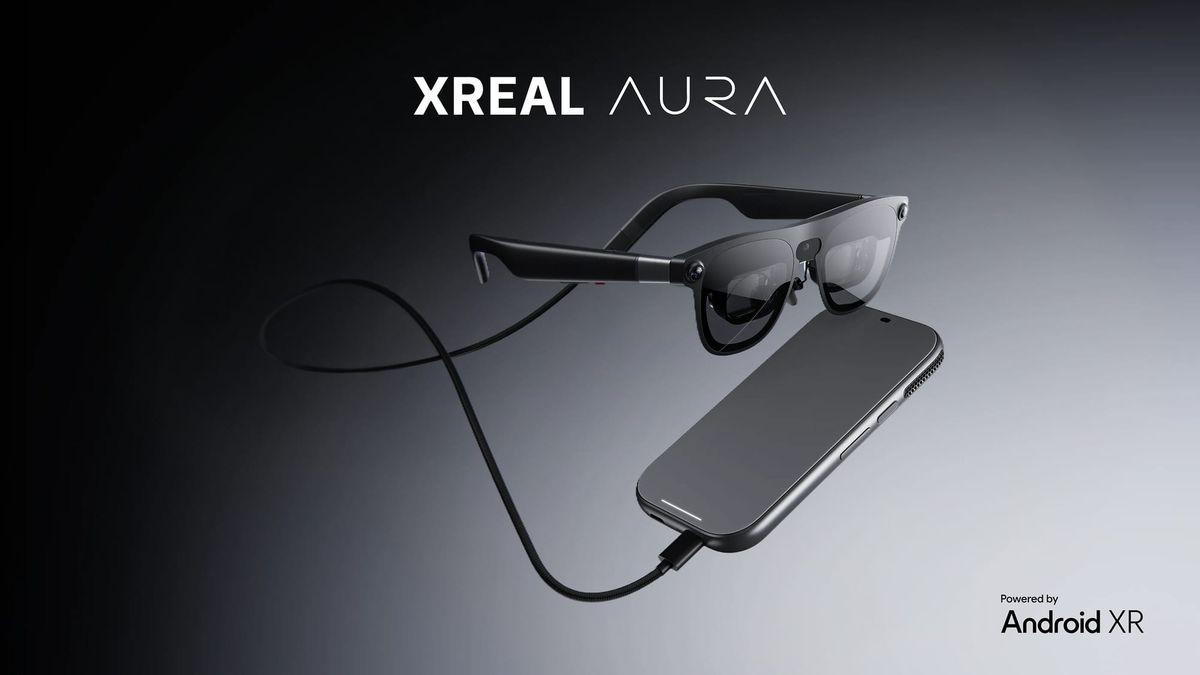
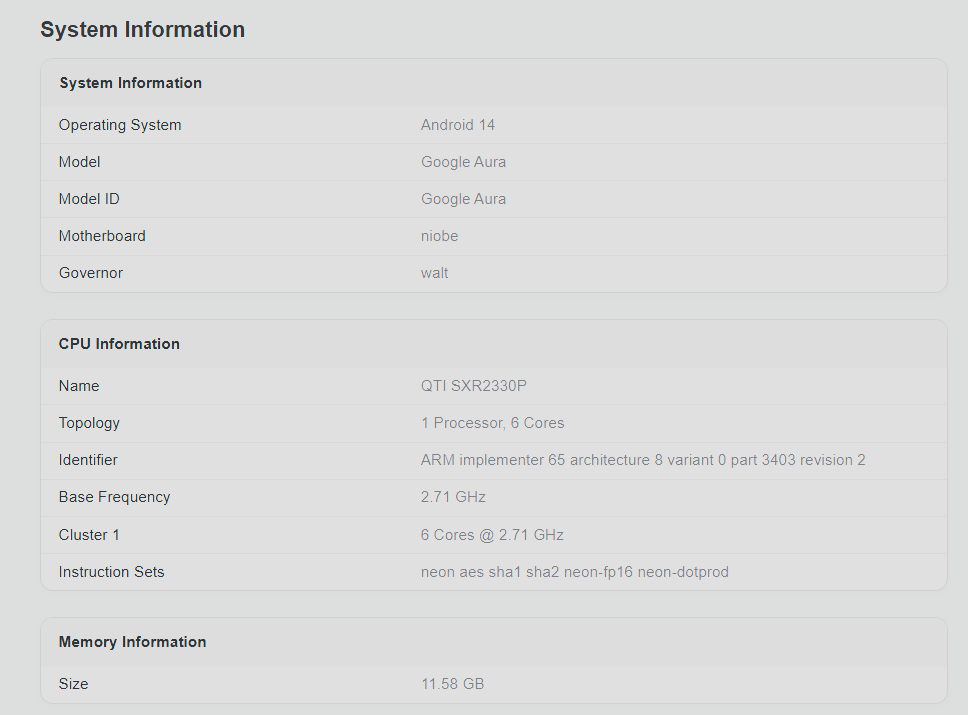
XREAL Aura is confirmed to use the Snapdragon Reality Elite, and it recently appeared on Geekbench 6 with the SoC model SXR2330P.
Most notably, the SoC reference board is labeled niobe.
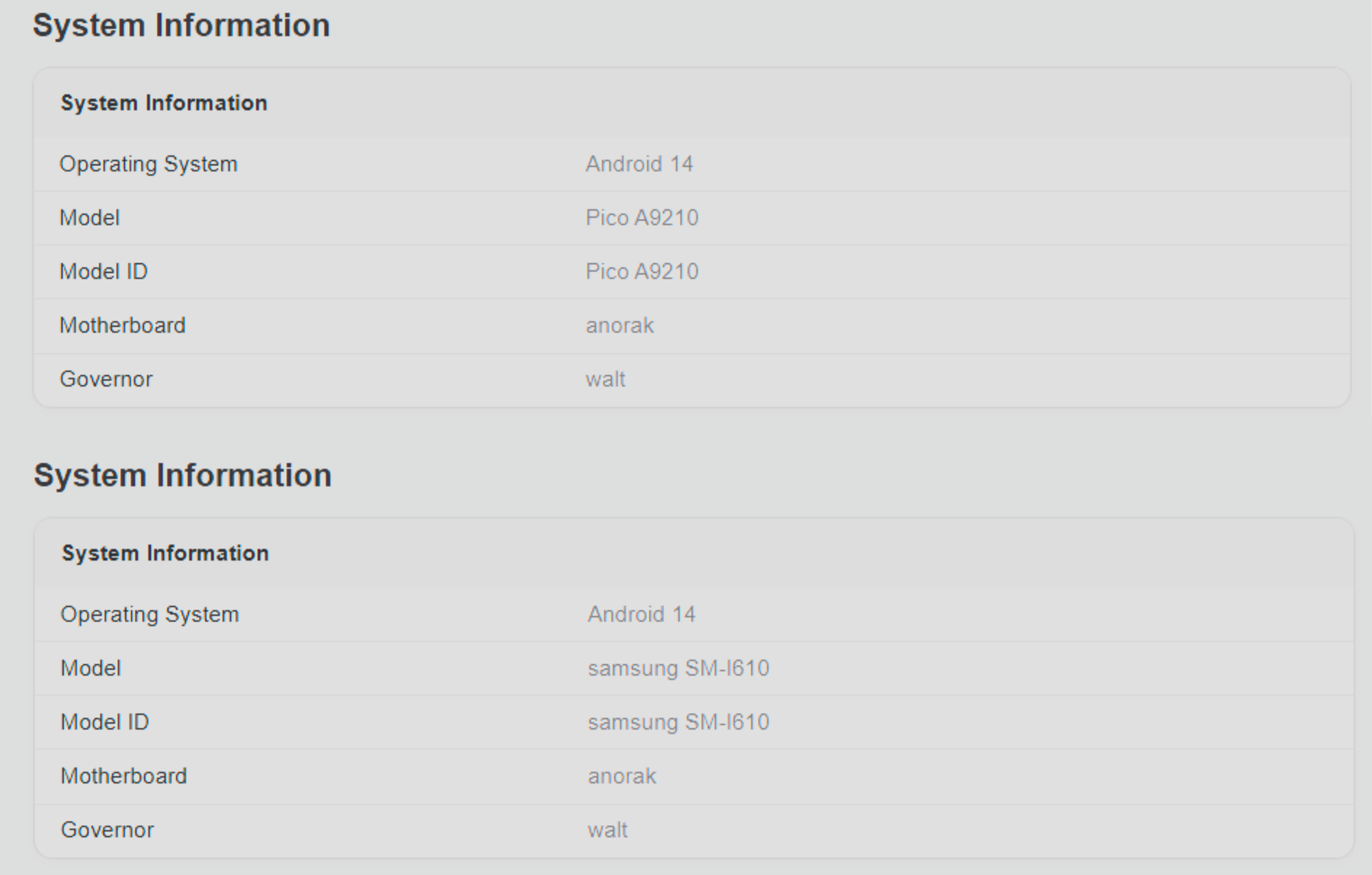
The previous-generation chips in the Snapdragon XR2 Gen 2 family powering devices like Meta Quest 3, Quest 3S, PICO 4 Ultra, and Samsung Galaxy XR are typically associated with the SoC model SXR2230P and the anorak reference board, though benchmarks for Meta hardware report proprietary device codenames as the board type instead, such as eureka for Quest 3 and panther for Quest 3S. Even so, the underlying anorak designation remains accessible on these headsets via system properties.

This is all notable in the context of Phoenix, because as of Horizon OS 2.7, niobe is already referenced across multiple firmware libraries in the OS. Moreover, the cam2_bridge library has code that describes a hardware configuration as Stanley/Niobe, along with Anorak.

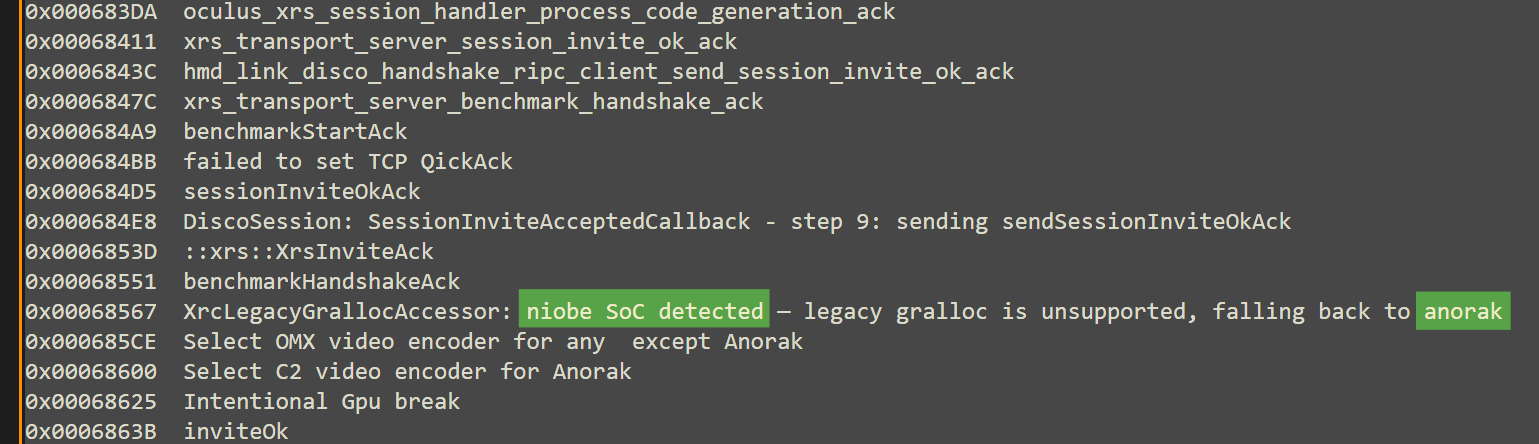
The association between Stanley, Phoenix's mainboard and software platform codename, and niobe within Horizon OS firmware libraries strongly suggests that the device shares the same reference board as XREAL Aura, which is designed for the Snapdragon Reality Elite chipset.
A New Home Environment

In August 2025, Meta overhauled the Horizon OS Home Environment to be built around a high-quality space called Loft, with unrestricted locomotion and customizable Scenery styles. As Meta moves the Horizon OS experience away from the Horizon Worlds platform, the company seems to be working on yet another overhaul.
Horizon OS 2.6 and 2.7 introduce strings and assets related to a brand-new Home Environment. It was initially named Loma Home, before later appearing simply as Home, New Home, or Home Environment 2026.
This Home Environment appears to move away from the Scenery system introduced by Loft, instead consisting of a single space that has Morning and Midnight lighting options in Settings, similar to most of the environments on visionOS and Android XR.
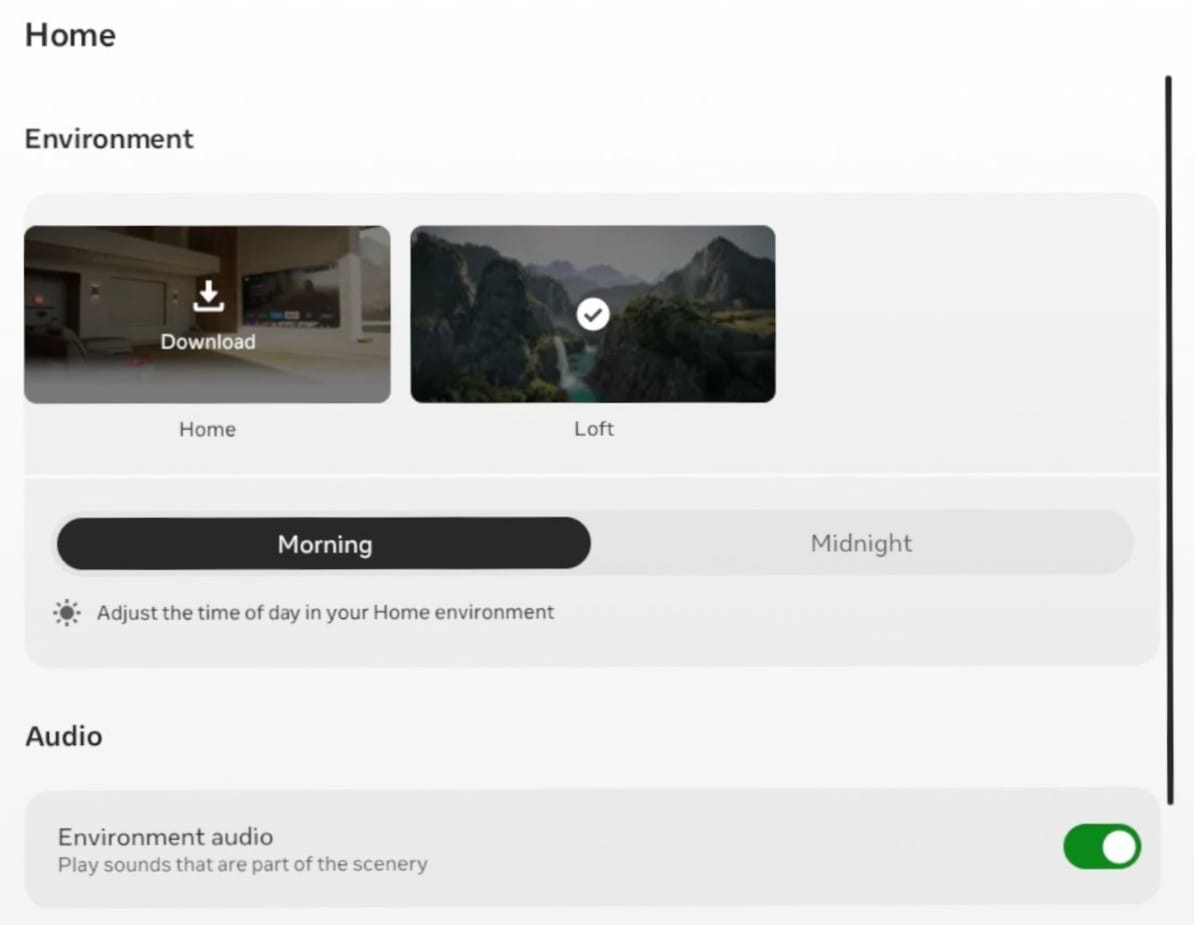
The space seems to be designed around a lounge-style home cinema and workspace, with what appears to be a large pre-anchored Horizon TV window in the center for easy access to media and immersive video content.
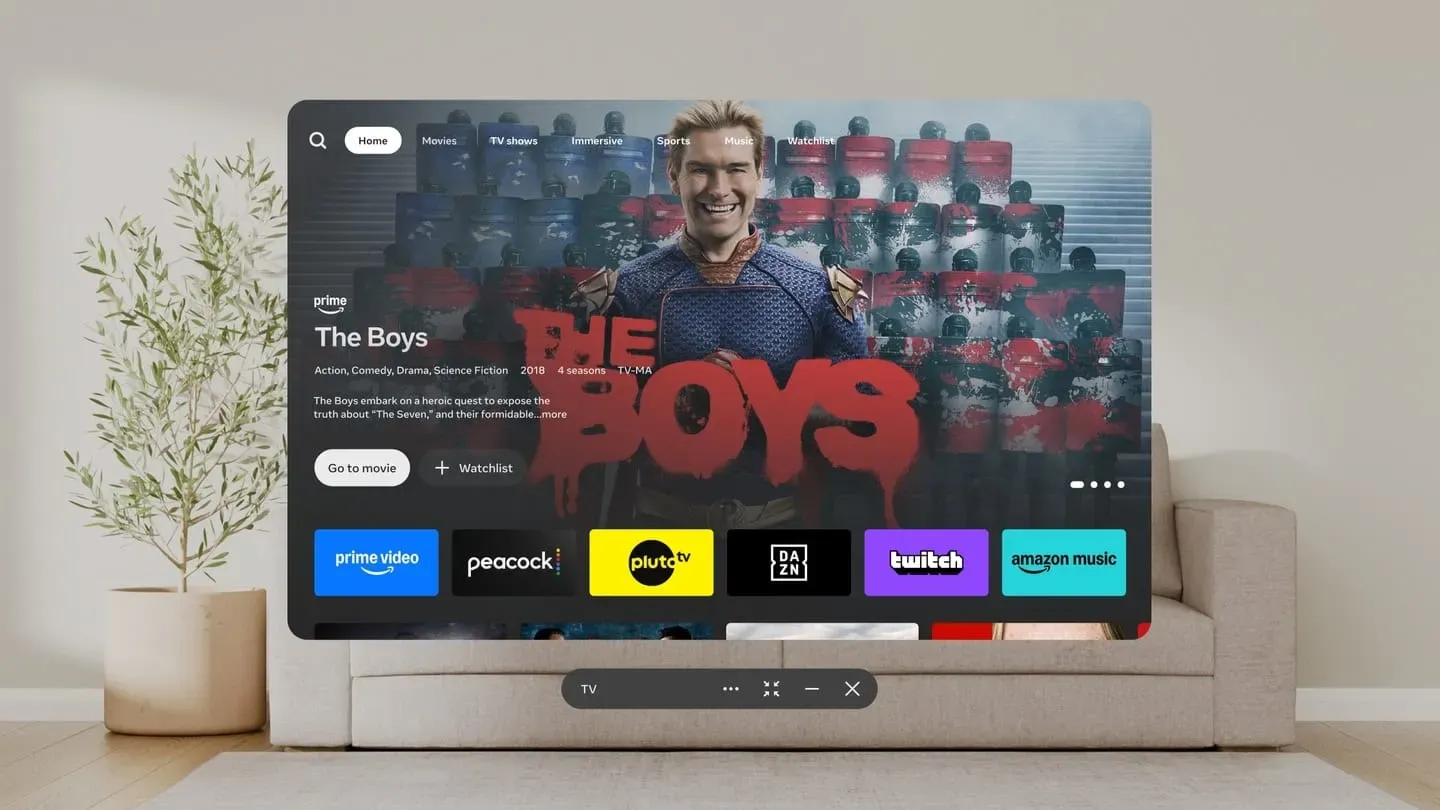
Meta is also experimenting with a feature called Dynamic Ambience, which could complement the Home's media-focused design. References found in Horizon OS 2.6 and 2.7 describe it as adding a rendered "halo" of light around focused theater panels.
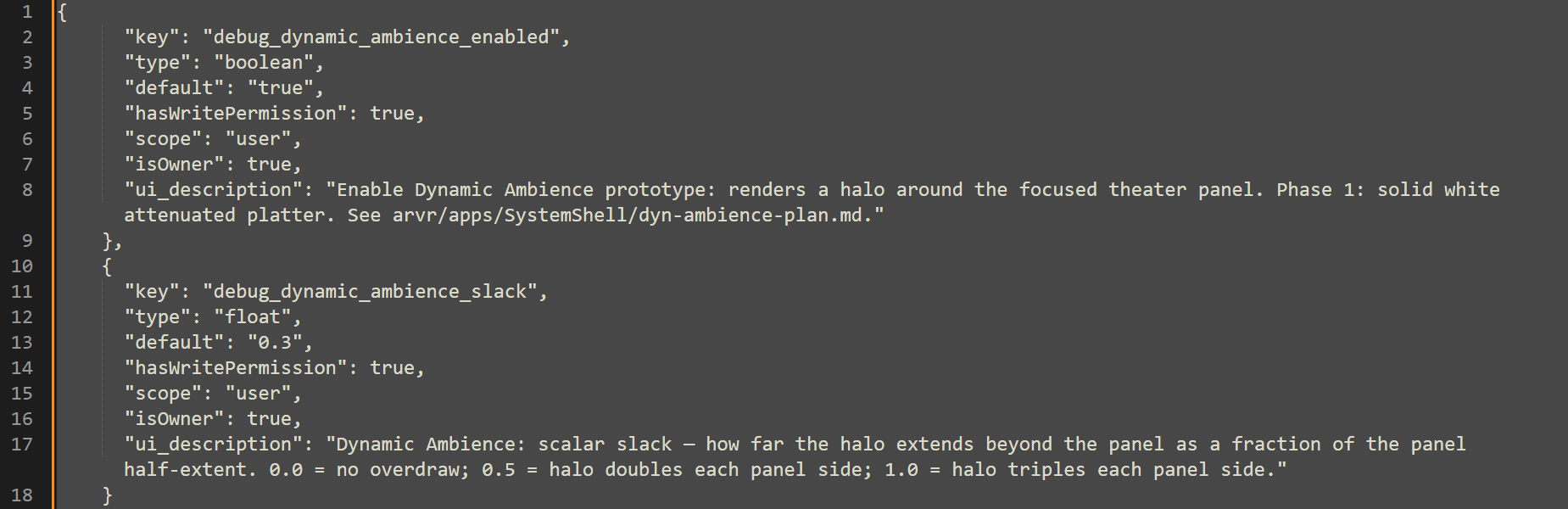
In practice, this would likely be similar to the media lighting features available on visionOS and in the numerous premium media player apps on the Meta Horizon Store, or real-world TV LED sync systems such as the Philips Hue Sync Box. A colored glow effect would appear around the currently focused window, with dynamic animations during media playback.
Example of how the Dynamic Ambience feature might look, using the player lighting in the app Spatial TV.
While reception of Loft’s higher quality and unrestricted locomotion had been mostly positive, many existing users were frustrated that Meta chose to deprecate all of the older Virtual Environments with little warning.
Meta now appears to be directly addressing that feedback with a new feature called Classic Environments.
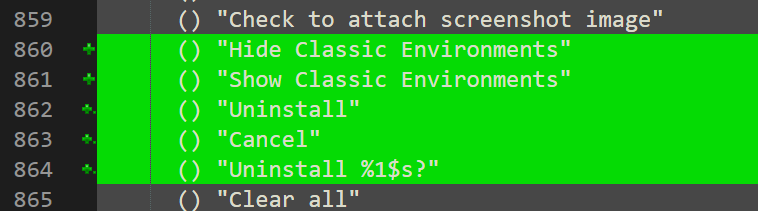
Dataminer and security researcher ToastConcern found evidence that Meta is actively testing updated versions of many previous Virtual Environments within the Classic Environments feature, with the environments being ported to the new Home framework for use as legacy options.
These are the homes getting ported to the new updates pic.twitter.com/nUJlry5f88
— ToastConcern (@ToastConcern) August 1, 2026
Phoenix & Meta Quest 4 Are Separate Devices
 David Heaney
While Pismo Low and Pismo High, which would have formed a potential Quest 4 product line, were effectively cancelled as consumer products, Business Insider reported in December 2025 that it had viewed an internal Meta memo in which then-Reality Labs leaders Gabriel Aul and Ryan Cairns announced that Phoenix’s target ship date had been delayed to the first half of 2027. The publication also reported that Meta was working on a next-generation Quest device focused on immersive gaming, representing a “large upgrade” in capabilities over its existing devices.
In January 2026, following the far-reaching layoffs and reorganization of the VR and Horizon teams within Reality Labs, Meta CFO Susan Li said during Meta's Q4 2025 earnings call that the company still had "optimism in the future of VR", and confirmed that it was still "building future headsets", with the plurality being key.
Then, in February 2026, in an interview with tech journalist Alex Heath, Meta CTO Andrew Bosworth seemed to confirm the leak that a Quest 4 is still on the roadmap, specifically saying:
"I think it's officially leaked we've got two devices on the roadmap that we're super excited about coming out over the course of a period of time"
Bosworth then reaffirmed this in July 2026, and hinted at a Meta Connect announcement in some form.
So, Phoenix is not a Meta Quest 4. Within Meta’s lineup, it is being positioned as a spiritual successor to Meta Quest Pro, while more broadly targeting a lower-cost, lighter-weight take on the kind of premium Mixed Reality experience offered by Apple Vision Pro. The new plans suggest that Phoenix will land in the first half of 2027, with Quest 4 following at a later date, likely in the second half of 2027 or in 2028.
Can It Run Quest Apps & Games?

Phoenix runs the same Horizon OS used by Quest headsets today. So, barring any device-specific restrictions, it should be backward compatible with most content on the Meta Horizon Store. This means that use cases such as gaming and even PC VR streaming via apps such as Steam Link and Virtual Desktop should be available on the device.
That backward compatibility may also extend to traditional tracked input, as early development units I saw could be paired with the Touch Plus controllers used by Meta Quest 3 and 3S. However, it remains unclear whether Phoenix will ship with them, or whether tracked controllers will instead be supported as an optional accessory.
Its radically different form factor is also likely to introduce trade-offs, including what people familiar with the device have described as a narrower field of view, potentially reduced stability during room-scale gaming and fitness activities, and the need to manage a tethered compute puck.
Devices such as Quest 3, 3S, and Steam Frame are likely to retain advantages such as a generally wider field of view, greater stability during active use, and all-in-one convenience. Phoenix, meanwhile, appears to prioritize a substantially lighter and smaller headset, potentially improved display clarity and contrast, and the ergonomic benefits of moving the battery and compute hardware off the head.
Meta Pegasus?
Many different product names have been rumored for Phoenix. At one point, Meta internally floated "Quest Air" as a possible product name, as well as names that completely separate it from the Quest line.
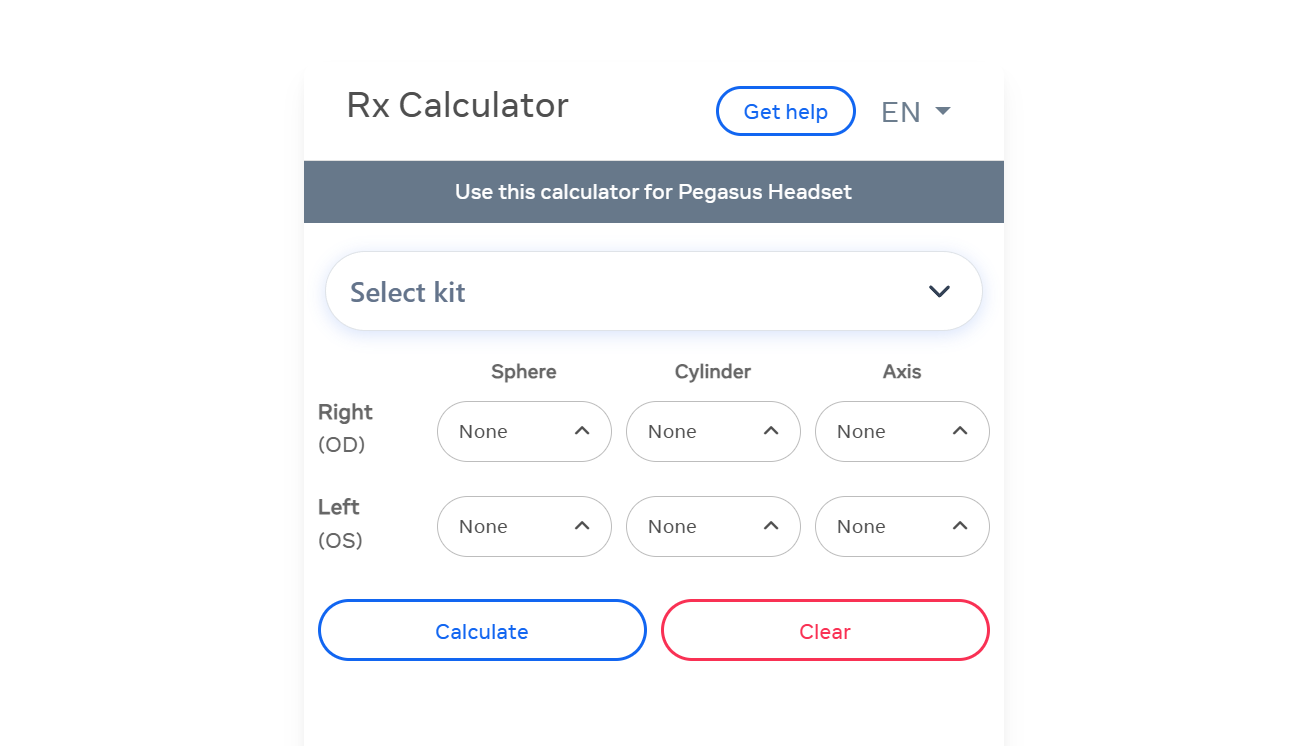
In June 2026, code added to the Meta Horizon mobile app contained hardcoded URLs that led to web pages titled "Loma Rx Calculator", which included the text "Use this calculator for Loma Headset" on the pages.
The websites were hosted by Pulse LTD, LLC, Meta's solutions partner for retail deployments via the Meta Sales Academy platform.
The "Get help" section on the pages provided detailed instructions for people who appeared to be Meta or Best Buy retail employees demoing the device to prospective buyers, covering topics such as prescription insert selection and pairing, Eye Tracking calibration, and more.
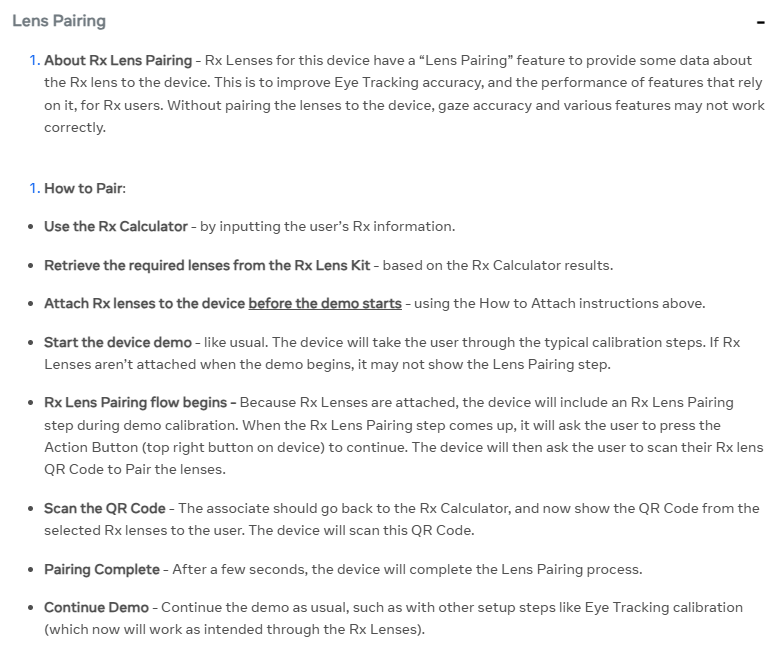
However, in August 2026, all front-facing references to Loma had been replaced with a new name: Pegasus, while the URL and backend for the pages still displayed Loma.
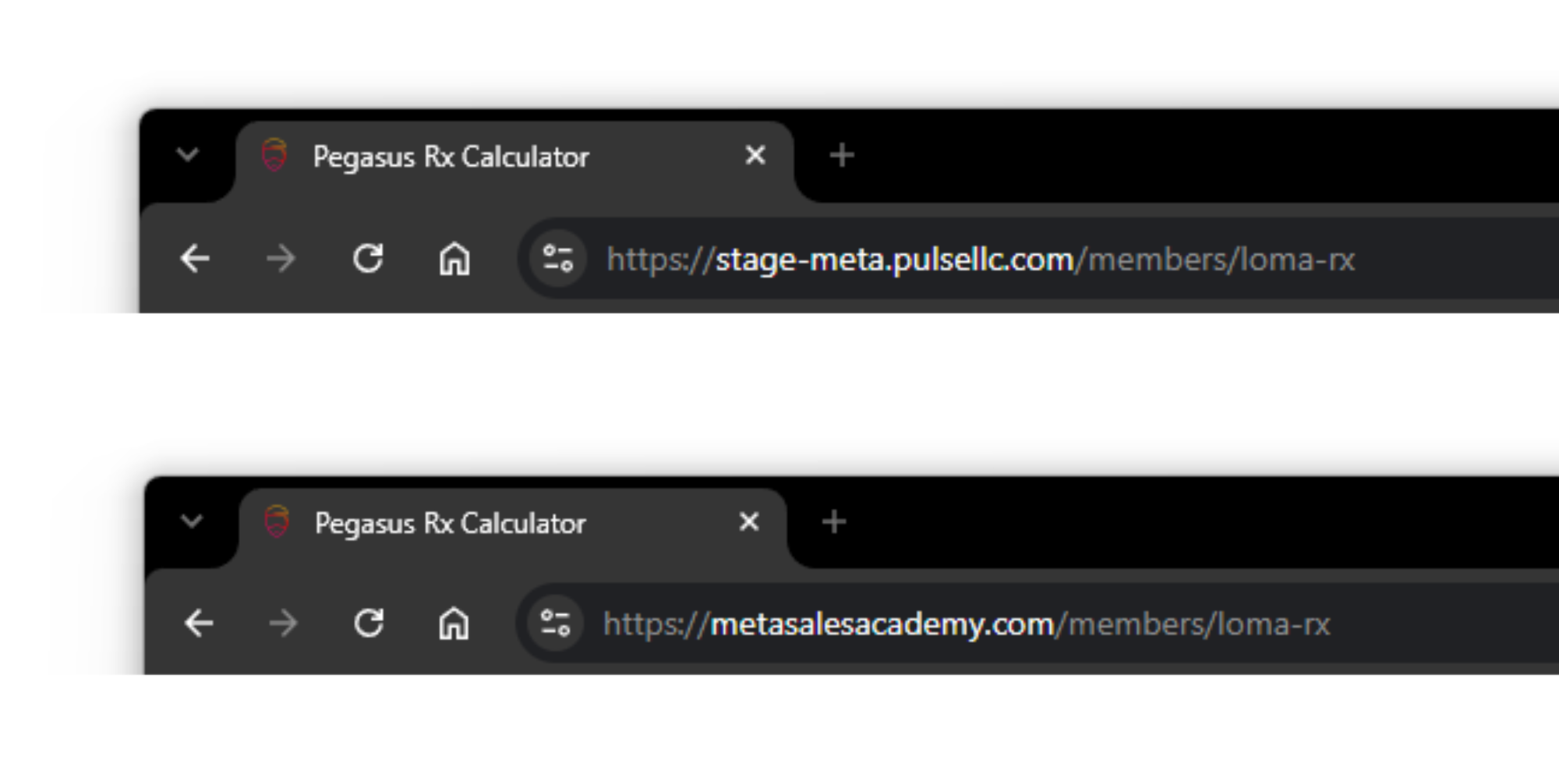
While there is a possibility that this is an interim or placeholder name, such as when the internal renders of Meta Ray-Ban Display featured text with the name "Meta | Celeste", this change appearing on a retailer-facing page suggests that Pegasus may be the product name for the device.
Redefining VR Form Factor
 David Heaney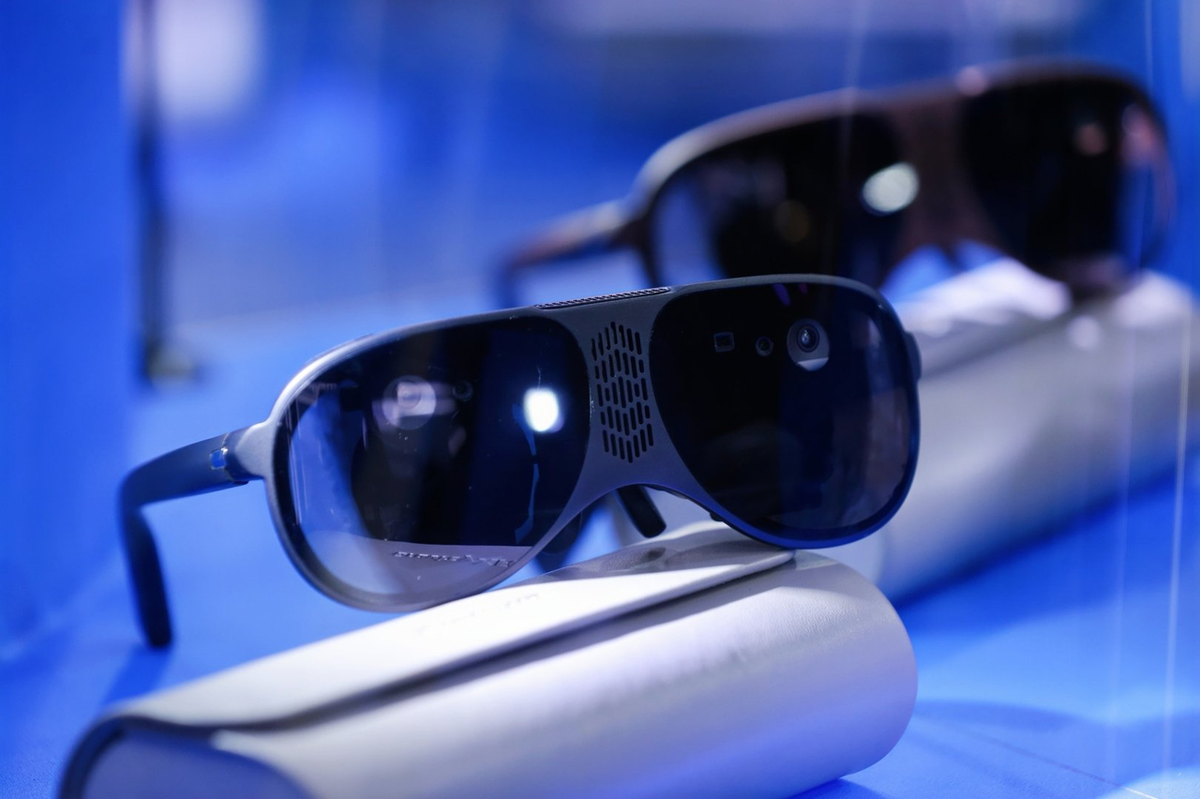
Meta likely sees a large opportunity for a device such as Phoenix. Smaller firms are already producing glasses-like Passthrough VR devices, and adjacent companies such as XREAL plan to ship puck-powered see-through devices.
If Meta can successfully combine the strengths of Quest Pro and Quest 3 into a smaller, more approachable form factor at a lower cost than competitors amid the increasingly harsh consumer electronics market, it could catalyze a new wave of adoption for VR from brand-new audiences. At the same time, it could also offer a compelling upgrade path for casual users with current-generation headsets that have lapsed due to bulk and weight, as well as the subset of enthusiasts who value long-session comfort and advanced features.
Ahead of Meta Connect 2026, the company has informed VR developers that at least one session at the event will focus on controller-free interactions, suggesting its next-generation headset plans could be revealed in more detail.
Meta Connect 2026 livestream registration is open! 🎟️
— Meta Horizon Developers (@MetaHorizonDevs) July 30, 2026
📅 September 23-24
Tune in for expert-led VR developer sessions covering SDK updates, AI development workflows, controller-free interactions and new ways to grow revenue.
Register 👉 https://t.co/KTH94smJln#MetaConnect pic.twitter.com/hS6hL6UBLV