
As an avid user of VR fitness, I've enjoyed improved health, stamina, and general fitness, not to mention the mental health benefits of the endorphins released from smashing targets with my fists. But lately I've been motivated to look at adding some strength training to my VR workout routine.
In early October I was investigating various types of workout equipment that would fit my room space and lifestyle. My son has a set of free weights, but he keeps those in our basement, and I usually work out in my office upstairs. I also travel for business frequently and wanted something I could easily pack with me. Resistance bands seemed like a great option for me, giving me an affordable, portable, and effective way to build strength.
I had just started shopping in earnest for a set of resistance bands when VR developer James Hough reached out to me. He had just released his new VR fitness app called PullFit in Early Access on Quest. PullFit uses resistance bands as its main modality. I took the timing of his outreach as a cosmic sign and immediately purchased a set of resistance bands on Amazon!
PullFit Trailer
Something New, And Obvious
Hough told me he was searching to find a VR fitness app that would fill the same gap that I was looking to fill. He didn't find anything that provided what he was looking for, so he decided to build it himself. He had the basic skill set as a longtime software developer and VR enthusiast, but had to teach himself Unity and C#.
PullFit calls itself a Mixed Reality and VR Fitness app. The default mode is mixed reality, and as I told Hough when we spoke, I have not been terribly fond of mixed reality, especially in the fitness genre. Even though several of the major VR fitness apps include a mixed reality mode, part of the VR fitness experience that I really enjoy are the beautiful naturescapes or fantastical environments that transport me somewhere else in my workout.
But for this experience using resistance bands, it works well and I find myself truly enjoying using PullFit in MR. Using external equipment such as resistance bands requires the user to see their hands, position the bands in various ways using their body, and being able to see yourself and your surroundings is very helpful in this context. Hough has now also included the ability to dial in a VR mode, cleverly implemented in increments, so it's not an all-or-nothing setting.


PullFit is hand tracking-only. This positions PullFit well as the next wave of Meta VR hardware is launching soon with a hand tracking-first philosophy. I usually use controllers with my VR fitness workouts because I love the haptic feedback it gives with the punching and slashing of targets. But hand tracking is the exact right solution here, and Hough's UI works well enough that I never wish I had the precision of a controller.
Up The Resistance
In traditional VR fitness, you punch or strike targets with your hands, fists, or bats held in your virtual hands. The exercise is mainly cardio, and it's a great way to burn calories, increase endurance, and work up a sweat. However, one missing component is strength, utilizing additional equipment to generate external resistance and work your muscles in a different way.
That's where resistance bands come into play. I believe resistance bands have several advantages over free weights and other sorts of bulky fitness equipment such as stationary bicycles and rowing machines, which are utilized as part of some other VR fitness apps.
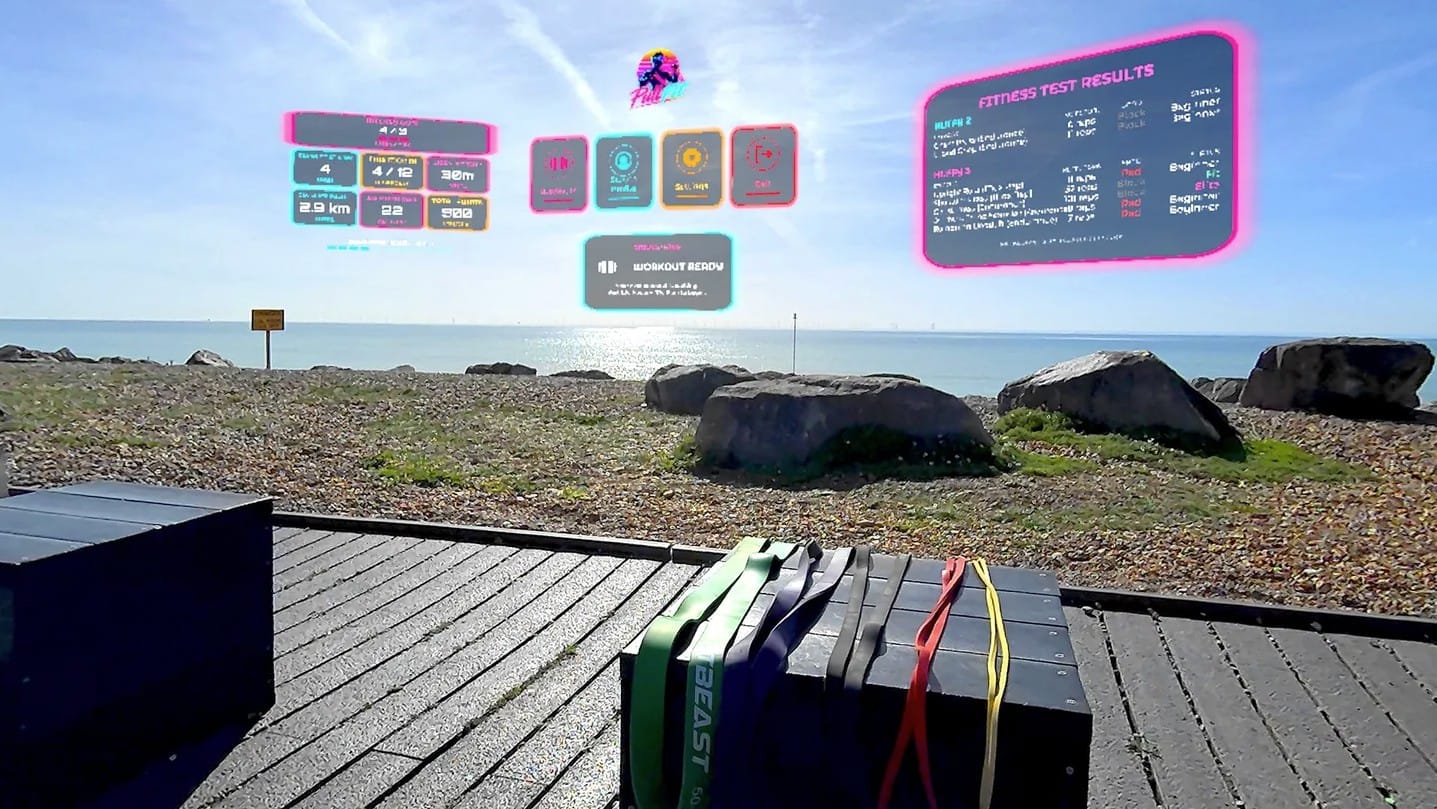
The first advantage is safety. This is something that Hough mentioned specifically when we spoke. Hough explained, "I did think originally about dumbbells and kettlebells and things. But it's the danger of it is a bit of a concern for me. I want to make sure the safety is there."
The second advantage is convenience. Resistance bands can pack up and travel with you, taking up almost no space in your luggage. In fact, that's how I've been using it the last few weeks. I regularly travel with my Quest headset for VR Fitness and a resistance band in my suitcase has allowed me to include strength training while on the road, with zero added bulk. That is something I would be unable to do with free weights.
The third advantage is cost. Resistance bands can be purchased for a relatively low price compared to other fitness equipment, making them an affordable way to try this kind of workout. This is especially helpful if you're not sure if it's for you.
Early Access, But Not Half-Baked
Hough built PullFit because he couldn't find what he was looking for, and now he is beginning to discover that there are other people who share the same need.
The result is a delightful app that over-delivers on its "Early Access" label with a high level of fit and finish, thoughtful design, plentiful options for customization, and a pretty good workout too!
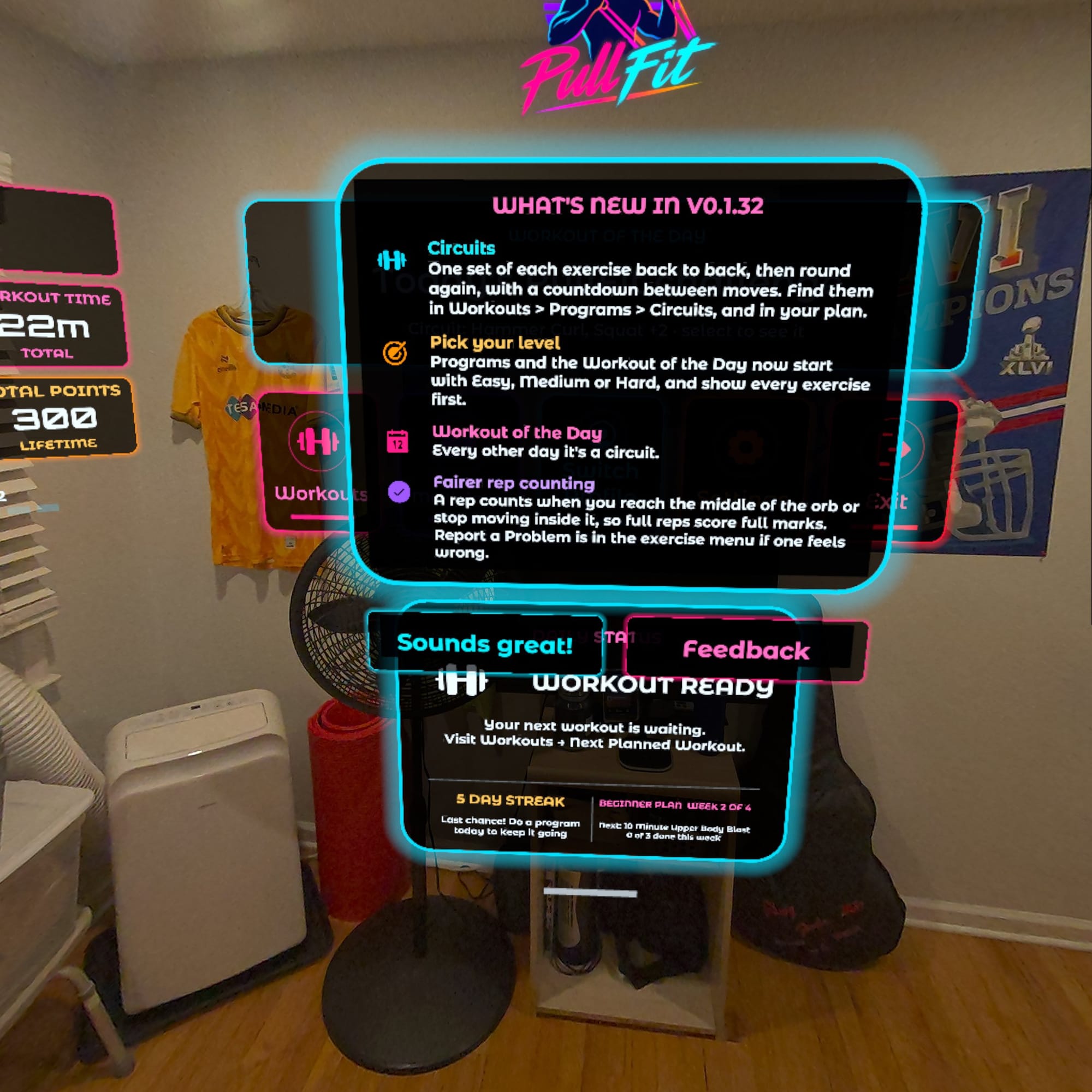
I've been using PullFit for the last six weeks, and in that time Hough has made several notable improvements and additions to the app, including adding circuit workouts, adding a skip and swap workout feature, refining the rep detection, and increasing options in settings to fine-tune your experience.
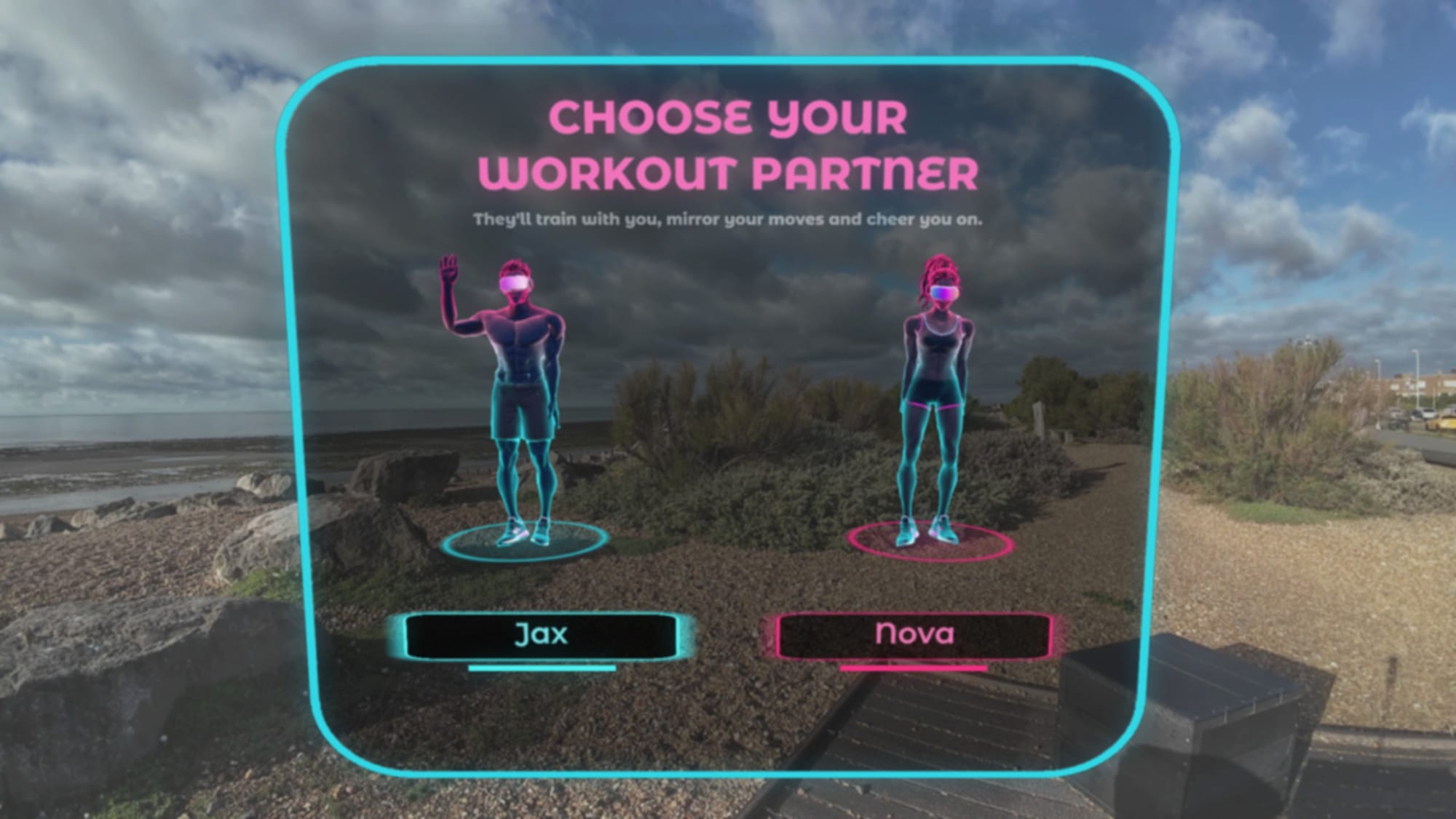
There's also been a large increase in refinement and polish. PullFit has two options for "mirrors" that help guide your movements: a 2D mirror showing a digital stick figure, or a 3D holographic workout "partner" that guides you in 3D.
Cleverly, the 3D partner disappears in certain exercises where the user must look up, such as the shoulder press, replaced with a visual indicator. It's clean, smart design that gets out of the way when necessary.
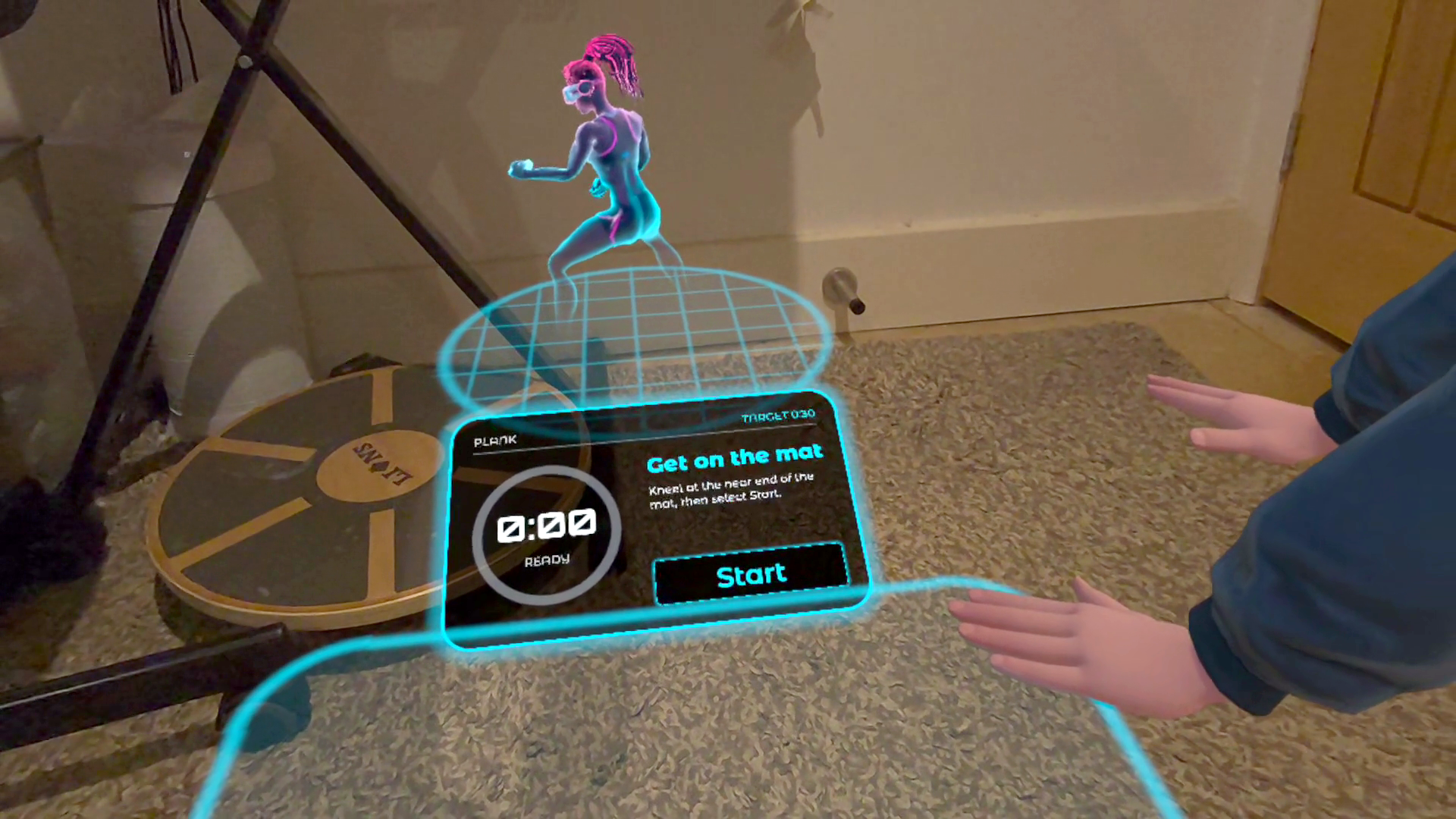
While most of the workouts are done standing, Hough has also included some floor exercises, including a plank exercise for abdominal work. Thankfully, he has added the ability to swap it or skip it entirely, since I work out frequently in hotel rooms and don't have a fitness mat handy.
Bring Your Friends
There are also multiplayer experiences, with three modes available: Co-location, Online, and "Pass and Play" which is a battle mode using a headset passed around among a group of friends.

I jumped into an online multiplayer workout with James Hough and tried the two online modes: workout and battle. Workout is just that; you pick a fixed workout sequence and proceed together. Battle is a competitive mode where you can compete to see who can complete the most reps in the allotted time. It was more fun than I expected, and my competitive nature pushed me to victory over the man who built the app, though I suspect he might have been going easy on me.
According to Hough, Co-location and Online modes support two users per session, while up to eight users can be included for the Pass and Play mode.
James Hough and I using the multiplayer mode. You can see my Meta avatar standing in James's office.
A Workout That Works For Me
The workouts in PullFit are exactly what I was looking for. Not overly strenuous, but with added reps, along with my choice of resistance band, they can become quite challenging. The smooth resistance of the bands provides a level of comfort and safety for my body that I appreciate.
I find myself enjoying PullFit more each time I work out. The combination of customizable modes, flexible workout lengths, clever design, fun music, and the portability of resistance bands has earned PullFit a spot in my regular VR fitness app rotation.
I recommend checking out PullFit on the Quest store. PullFit is available on Meta Quest in Early Access for $9.99. Resistance bands are widely available, including at online retailers such as Amazon.com.
Author's Note: The developer provided a complimentary key for PullFit for the purposes of testing and this article.