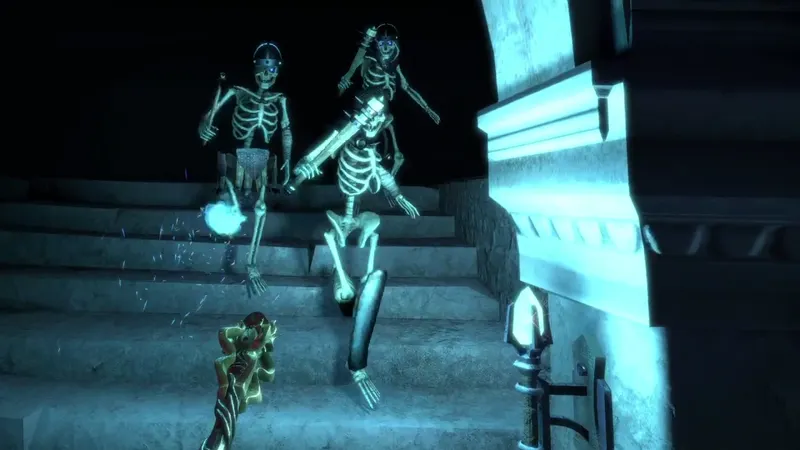
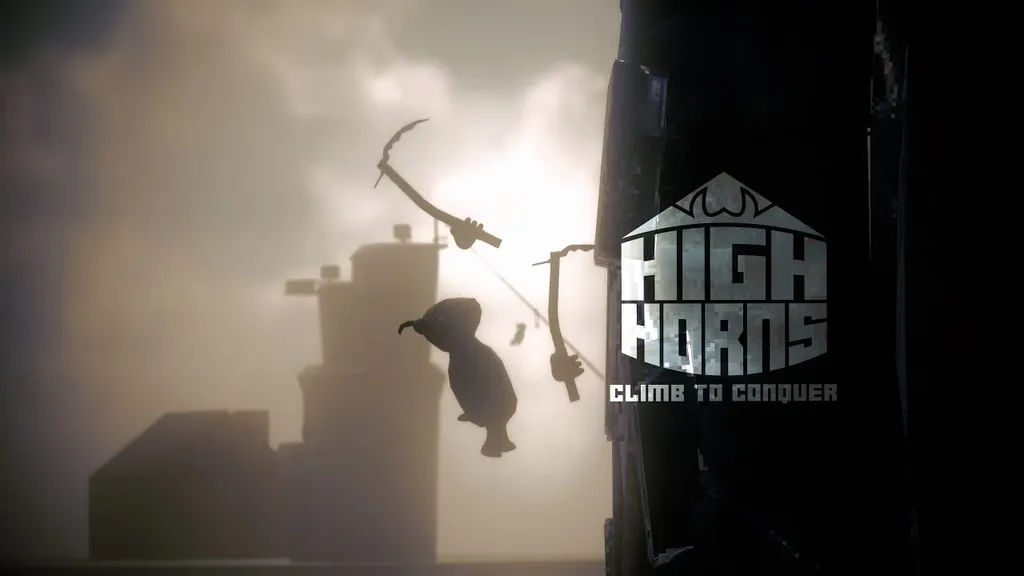
I played High Horns, an upcoming arm-based locomotion social hangout climbing game, at the Augmented World Expo (AWE) last month.
While my twenty-minute demo didn't present anything new or special, I am curious if we are approaching or already at the point of diminishing returns in the free-to-play social hangout VR market.
High Horns is the fifth game since December 2024 from XORWire. Its previous titles are BreakoutVR, Chemp Physics, Stupid Chimp Slop, and Munkie All-Stars. All-Stars was just launched on May 29, less than a month from my trip to AWE.
My time in the game was fine with only two issues: a peculiar 'sticky hands' issue where my virtual hand seemed to disengage from its grab point later than expected, causing a jerking motion while climbing, and the climbable mountain faces were indistinguishable from the non-climbing walls. I gave this feedback to the developer via the marketing team and moved to my next demo. I am very much not the target audience for High Horns and games like it, but playing it and meeting the team did offer some food for thought.
The five titles in a year and a half is an eyebrow-raising fact though. We at UploadVR have been actively reporting on all of the layoffs and shutdowns of VR games and studios. Many developers in those situations have pointed to a softer-than-expected VR market for these actions or the decision to pivot to flatscreen development after disappointing sales. With the notable exception of Rec Room, these studios have all been developing premium, paid titles. Meanwhile, the most popular games in VR these days are free-to-play.
This is a screenshot I took of the 'Most Popular' titles on the Meta Horizon Store just before starting this article. Note that only two titles in the top ten are paid apps: Beat Saber and Blade & Sorcery: Nomad.
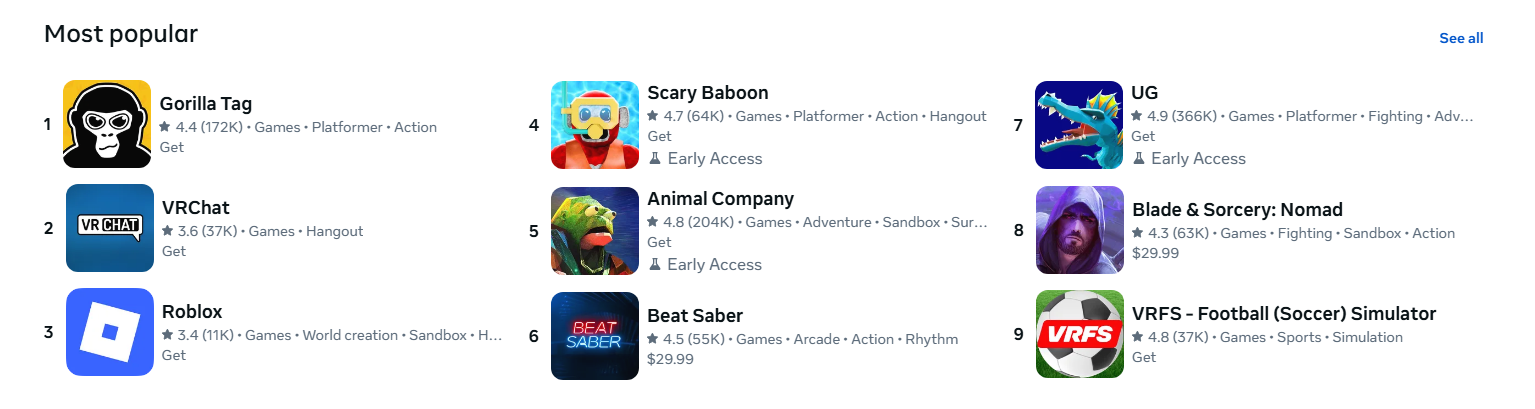
That number only increases to four apps when looking at the top twenty overall, adding Bonelab and Job Simulator. We are not sure what its current numbers look like, but Gorilla Tag at one point not too long ago had over one million daily users. Animal Company has half a million, according to its website. Those are numbers most flatscreen game studios on any platform would love to have and flatscreen developers have access to a pool of players upwards of ten times larger than virtual reality.
Hence why companies like XORWire continue to take swings at the proverbial plate, hoping to hit a home run. In recent years, Owlchemy Labs, My Dearest, Fun Train, and The Binary Mill have all dipped their toes into the free-to-play social experience market. Both the Ruff Talk VR Showcase and our own UploadVR Showcase featured a new title in the free-to-play category, OogaBonk and Jetpack Clankers respectively.
This is not unlike the push for live service games we have seen on the flatscreen side of gaming with some notable big budget failures like Concord, Redfall, and about a dozen other titles I could name. The general theory is the same. Even with a flop or three, finding lightning in a bottle on the level of a Fortnite or in VR terms, a Gorilla Tag or Animal Company, and the revenue such a unicorn brings, is worth the failed attempts and resources burned. The endgame for all of these is the same: a single title with steady recurring revenue without the increased development needs or finite gameplay of a premium title.
The catch with VR is the player base remains so much smaller than the flatscreen world, so the number of free-to-play titles (and their studios) it can reasonably support is much lower. One of the reps at XORWire told me it has a Discord of five thousand users, a perfectly respectable number for a single, hobbyist developer likely to drop another title within the next year. For a full studio though, even a small one with a handful of employees, that number is not viable long term, given only a percentage of them will be actively spending money in the game on a regular basis. It's a volume game, where the app's player pool has to be so large that even just a single digit percentage of it paying money into it is enough revenue to be profitable. The free-to-play model relies on in-app purchases of game add-ons and cosmetics for income, so only having a few hundred or so active spenders cannot support a sizable team. The math does not work. Just ask Rec Room.
Meta itself, it can be inferred, seems to be seeing this plateau coming, given its recent actions with its own free-to-play social hangout app Horizon Worlds. The market leader, armed with all of its data about user counts, ages, playtime, and so on, made the call to shutter VR support for Horizon Worlds (even though it pivoted later). That lone action, not even factoring in the closure of several of its first-party studios, is very telling. If the overall number is not growing fast enough to keep pace with the number of developers entering that specific category of VR, how much longer will developers continue to chase the golden goose?
High Horns is expected to release sometime this fall on Meta Quest.