

ByteDance's Pico announced the key display and compute specs of its "Project Swan" headset, coming later this year, and detailed the revamped XR operating system it will run.
Project Swan Headset
After years of rumors, ByteDance first officially teased a high-end Pico headset back in November, when its VP of Technology said during a talk in China that it would arrive in 2026 with micro-OLED panels with 4000 pixels per inch (PPI) and a dual-chip architecture with a self-developed coprocessor for computer vision and image processing.
Now, Pico has officially announced these details to the world, and also says that the main processor will have double the CPU and GPU performance of the Snapdragon XR2 Gen 2 in today's Pico 4 Ultra and Meta Quest 3 headsets.
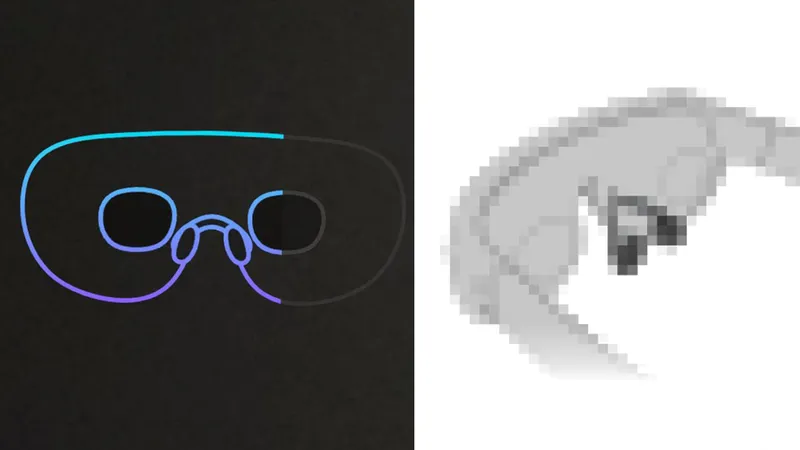
Pico's graphic depicting the "new generation" micro-OLED displays.
Pico says the "new generation" 4000 PPI micro-OLED panels will deliver an average angular resolution of 40 pixels per degree (PPD) and peak of 45 PPD, greater than that of Apple Vision Pro and good enough for text on virtual monitors. That strongly suggests 4K per-eye resolution, though this will depend on the field of view.
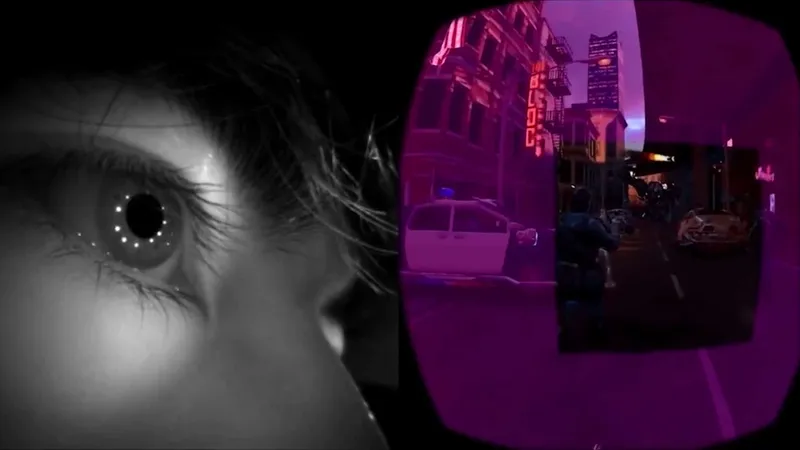
Meanwhile, the custom chip that powers computer vision and image processing will deliver "approximately 12 milliseconds of latency", the company says, the same figure Apple gives for the R1 chip in Vision Pro headsets.
Other than these display and compute specs, and confirming that it will feature hand and eye tracking, Pico isn't yet revealing specific details about Project Swan, including who is providing the powerful new primary chipset. It's possible it could be a Snapdragon XR2 Gen 3 from Qualcomm, but there's no direct indication of this.
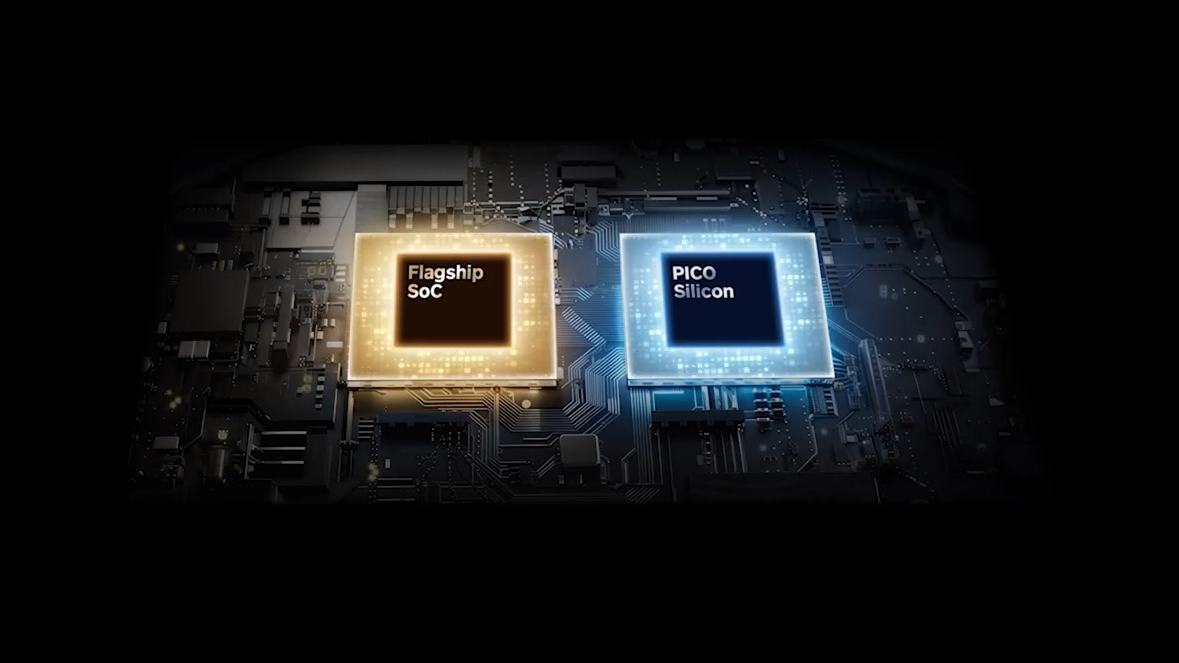
Last year, The Information reported that Pico was working on an ultralight headset a fraction of the weight of typical VR headsets, achieved via the use of a tethered compute puck. But the company isn't yet confirming the form factor, and a graphic during the announcement depicted the primary and secondary chipsets positioned alongside each other, not one separated into a puck. It's possible that report referred to a different in-development Pico headset.
Pico OS 6 & Pico Spatial Engine
While Project Swan is what will draw headlines, Pico's main focus with today's announcement is actually Pico OS 6, the revamped version of its XR operating system that the new headset will run.
We first learned of Pico OS 6 and some of its standout features last month via the listing for a talk the company is set to give next week at GDC 2026. The listing referred to Pico OS 6 supporting "a new paradigm for spatial experiences in which games and apps coexist, allowing a primary experience to run alongside companion applications in a shared environment", and today the company has explained what that means.
Pico OS 6
Like Apple's visionOS, Pico OS 6 features an advanced OS-level compositor with a unified rendering architecture that enables both 2D and 3D apps to run alongside each other, with either a virtual environment or physical reality as the background. The operating system handles rendering and interaction, enabling a cohesive experience where all system-level features are supported and consistent. That includes environmental lighting, dynamic occlusion, spatial audio, physics with real-world surface collisions, and scene understanding.
The company calls this system Pico Spatial Engine, and says it has spent the past two years building it.
This is in stark contrast to Meta's Horizon OS and Google's Android XR, which only support running a single 3D app at a time.
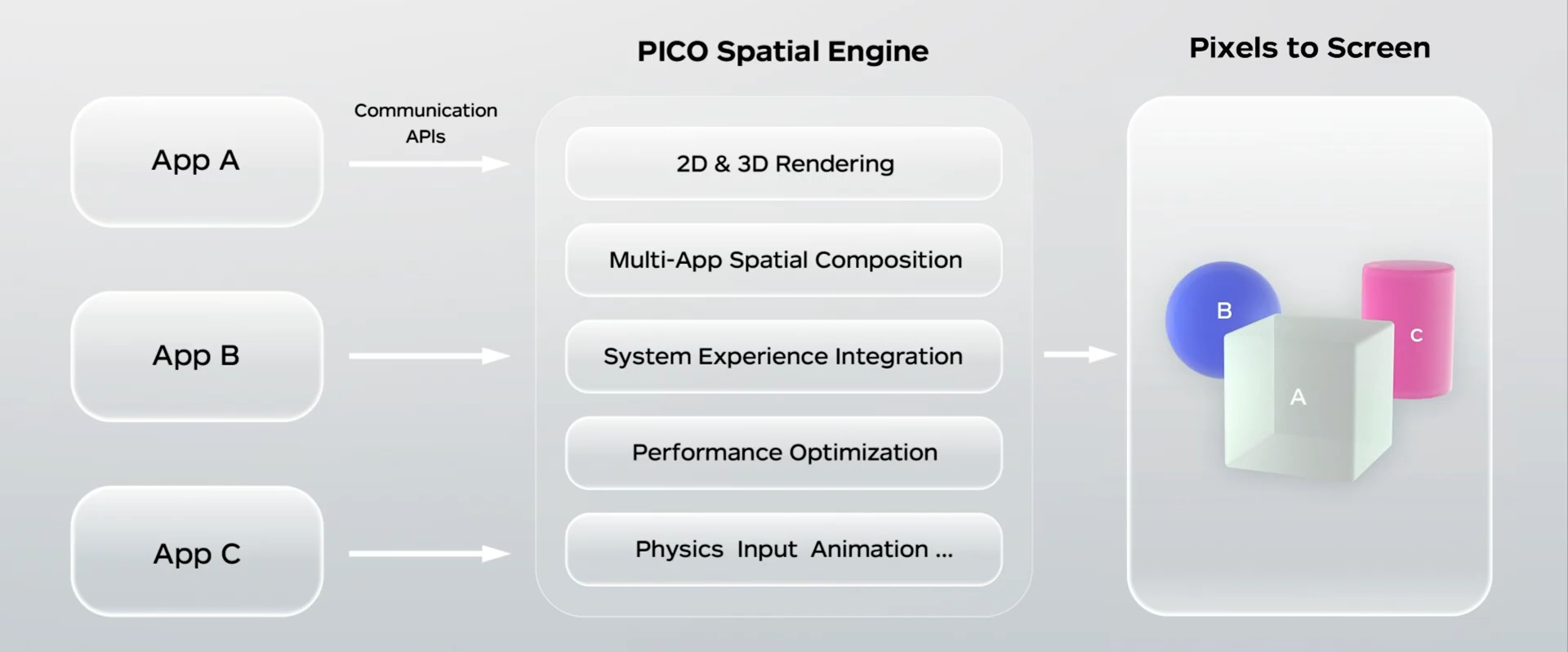
Pico OS 6 features a visionOS-like design language that the company calls Cloud Crystal, and developers will be able to use the Pico Spatial UI system to build interfaces that feel consistent with the OS and adapt to real-world lighting, leveraging Pico Spatial Engine.
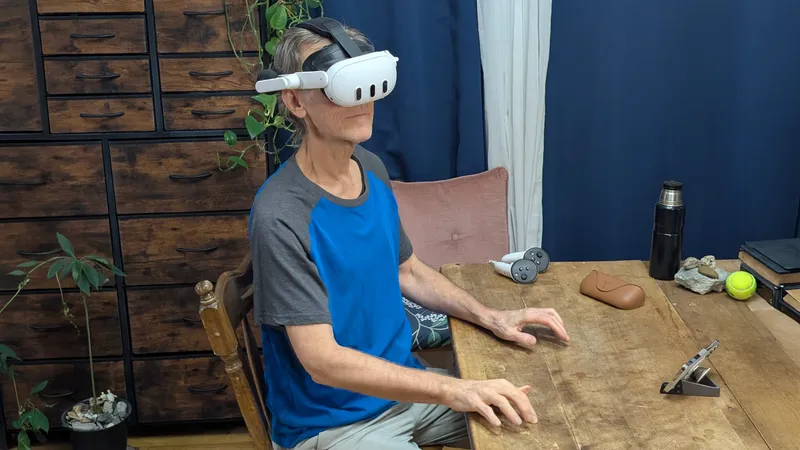
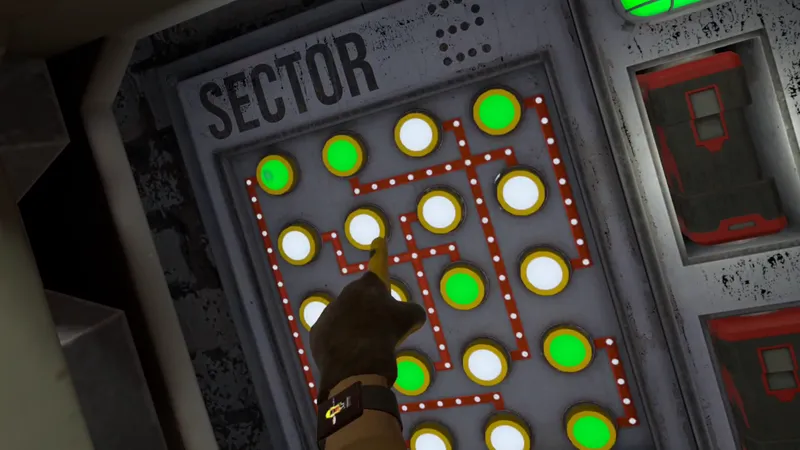
A mixed reality game running on Pico OS 6 alongside a 2D app. Note that the 2D app (correctly) displays behind the game's menu panel.
Developers can build apps using Pico Spatial SDK, with support for Android Studio and Kotlin, or continue to use Unreal and Unity, with Pico Spatial Support for both engines providing the key features of the Pico Spatial Engine.
Pico says the OS continues to fully support OpenXR, and that all apps that run on Pico 4 Ultra today will be able to run on Project Swan.
The company also introduced an open-source WebXR framework called WebSpatial, which it calls an "open, minimal extension to HTML, CSS, and JS" that lets web developers easily build spatial experiences.
Global Early Access Program
Pico has opened applications for closed beta access to Pico OS 6 and the Project Swan headset.
The company says it will choose "a select few with deep expertise across XR platforms" to join the program, and wants "rigorous feedback" on the hardware and software before a wider release.
Pico's full announcement video.
Interested developers and XR experts can apply using this ByteDance form.