

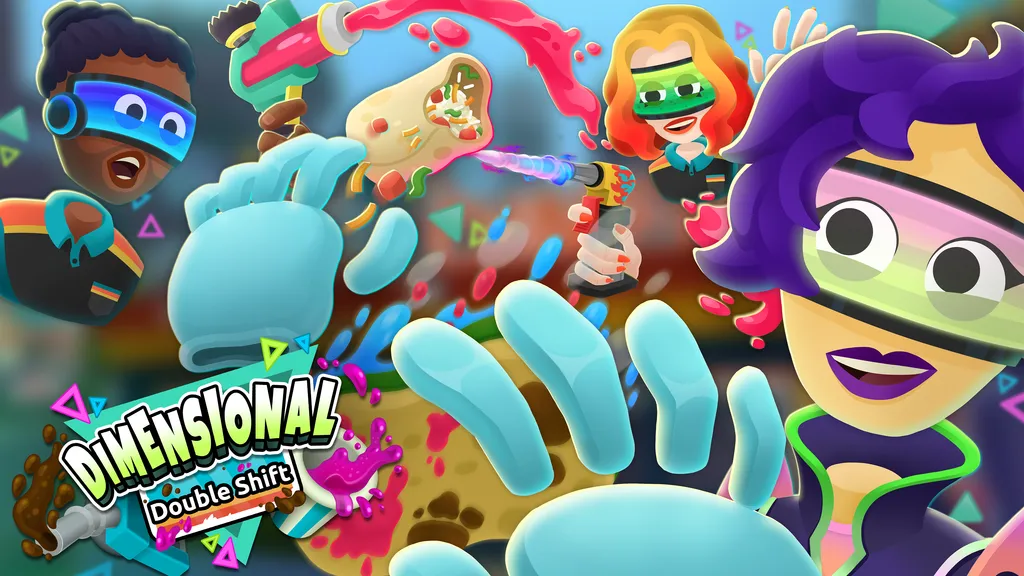
Andrew Eiche, the 'CEOwl' of Owlchemy Labs covers the longevity of Job Simulator across a changing VR consumer market, the unique challenges of multiplayer versus single player, and more in this wide ranging interview.
At GDC earlier this month, I had a chance to play Sporelando, the newest paid expansion for Dimensional Double Shift, on a Galaxy XR headset, with Andrew Eiche. The following is a transcript of my discussion with Eiche immediately following that demo.
 Mike Johnson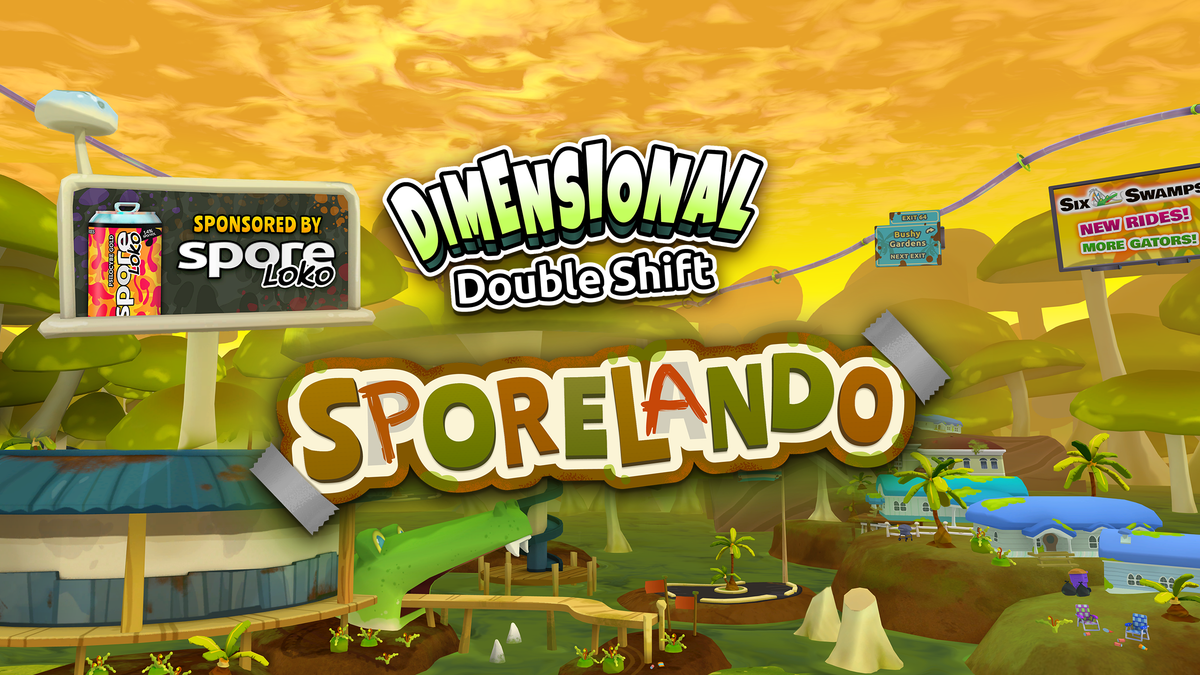
UploadVR: So, we just played the new world in Dimensional Double Shift. What was different about that versus the first [worlds] that you introduced when the game went out?
Andrew Eiche: Yeah, so this is our fourth. Each one has a different theme. You still do these kind of two consistent jobs, but what changes is obviously the environment, that's part of the biggest change, and the characters. But then the cars and what you do. We increased some of the complexity between things. So, in the Treeatle, our base dimension, things are very straightforward.
And now we’re having more of the kind of puzzles that you see where it’s like, “Hey, I’m wearing this and this, can you figure out how to dress this gator, for instance?” So, we’re increasing complexity. We changed the modules, we generally change all what we call the "appliances," which are the pieces around the outside. On the diner, we changed what food you make, and then we change those appliances too. So you’re still doing the same high-level job, but on the specifics of it, it’s all themed and thought of and brought to what Fungus Florida would be like.
Dimensional Double Shift Sporelando Trailer
UploadVR: How long in terms of QA and playtesting does it take you to get that balance right between, “Okay, this is intuitive, the player will understand this,” versus “We probably need to give a bigger signpost”?
Andrew Eiche: That is constant. That’s throughout the whole thing. It takes us about six months to make a dimension, and that is the whole time we’re doing that. So, we have a process where we write a one-page document of what we think it would be, we call it the brief, and then we review the brief. We have a ton of briefs and we kind of pare it down, and then we make a mechanical sketch. So, all of those pieces that we do, and there’s like five or six pieces, we’re doing that refinement over and over again until finally it gets to you.
UploadVR: You’ve been out for quite some time on the record saying that hand tracking was something that you really believed in, and it was pretty much the way forward for a lot of people who aren't comfortable with controllers. This is your first hand-tracking-first game, because hand tracking was added to your previous games. Were there any different challenges in doing hand-tracking-only versus Job Simulator, Vacation Simulator, your previous games?
Andrew Eiche: Yeah, so in hand tracking, you can do a bunch of things that you can’t do as easily in controllers. So, like because of your fingers, you can finally do fine movement, right? So we have lots of like small switches that you pinch with just two fingers. And that was always like off-limits. If you play Job Simulator, you’ll see every object is a certain size, like the keyboard being large is on purpose because we couldn’t track your finger. And then, you know, the other thing is like these secondary gestures that feel more natural. Like, on a controller, we could make that sprayer work, that air sprayer where you use your thumb, and it’ll work just fine. It won’t feel as natural; it’ll feel like pressing a button versus when you pick up that air sprayer and it has that thumb trigger, it really feels nice when you’re doing hand tracking.
UploadVR: Did you notice a difference between when you built it for Galaxy XR versus Quest? Was there a massive gulf in hand tracking, or was it pretty comparable to where there wasn’t a lot of fine-tuning to do?
Andrew Eiche: Each platform has their kind of own take on hand tracking, and I’d say in terms of technology, the Meta is the furthest along in like pure hand tracking, which is what we’re doing, right? So the Apple Vision that we’ve ported our other games to and the Galaxy XR, the main thing they focus on for hand tracking is that pinch gesture and making sure that’s right. And so that works like beautifully. But then we have to just put in a little more guardrails just because they’re kind of newer at making this. So they’re getting better every day, but, you know, Meta has the deep, long experience making hand tracking, so they’ve been doing it for a while. So you can just play it and feel it, right? Like, certain fast movements you’re going to lose tracking that you wouldn’t necessarily lose on a Quest, but I imagine that’s a temporary state of affairs.
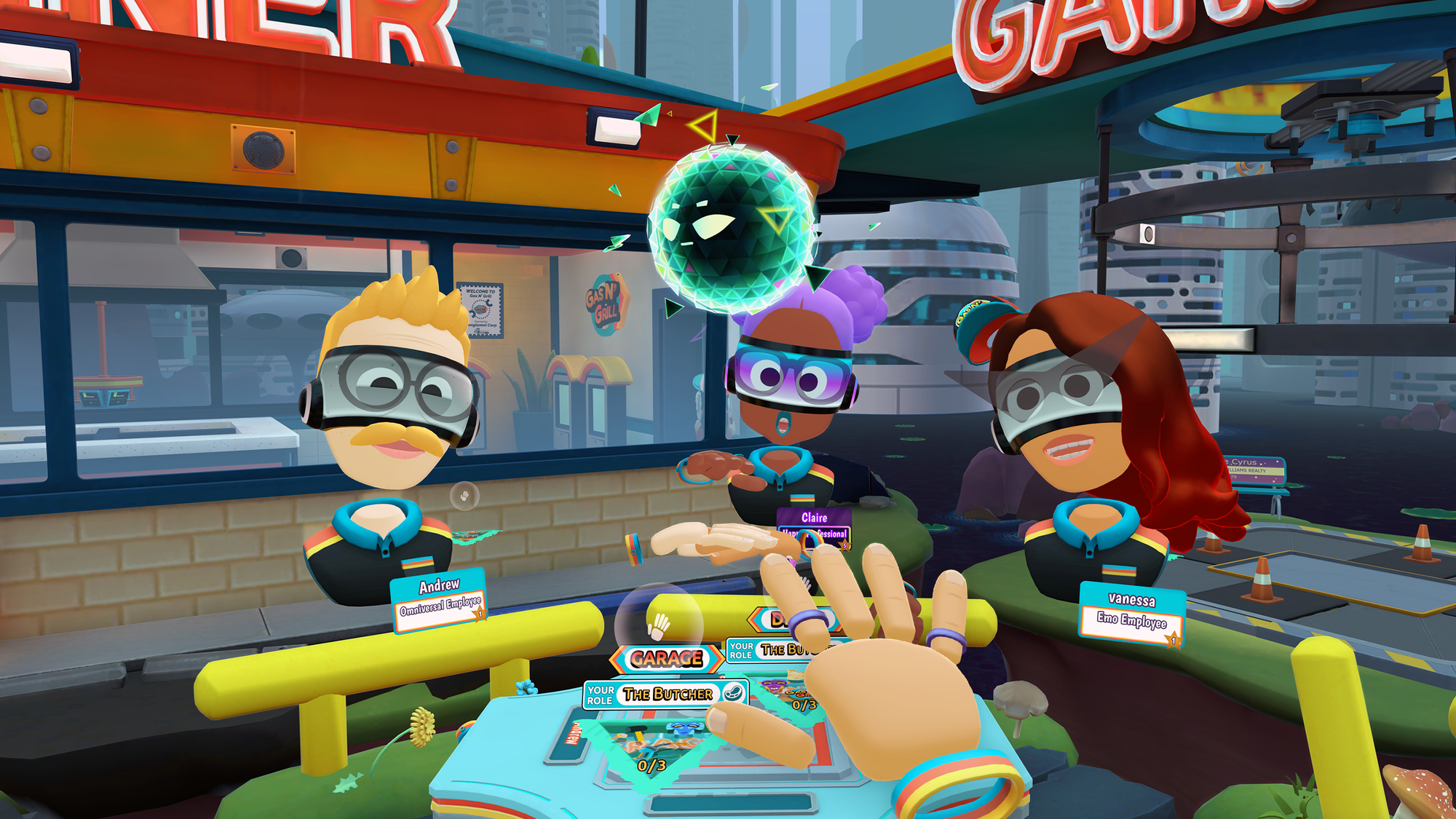
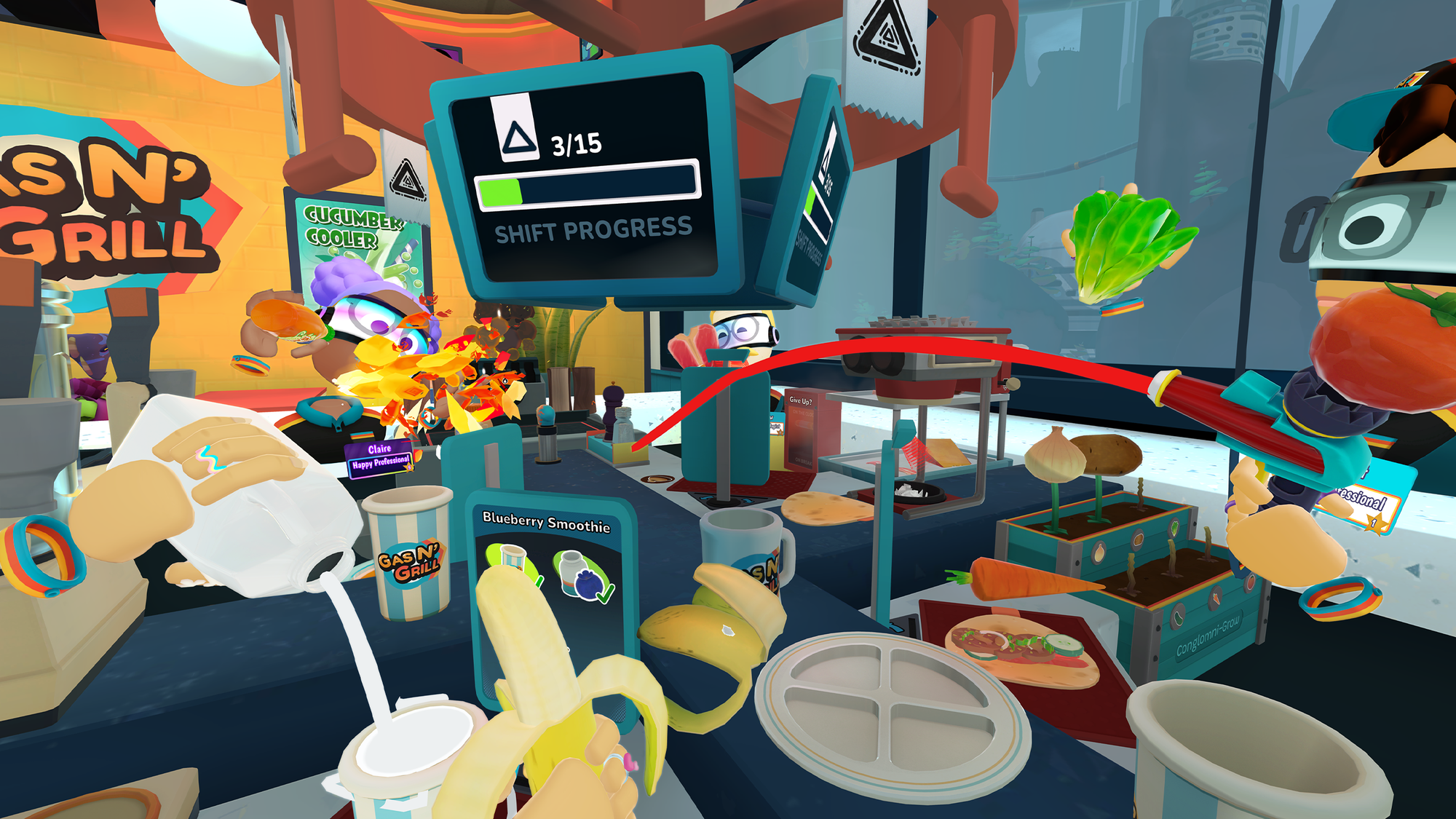
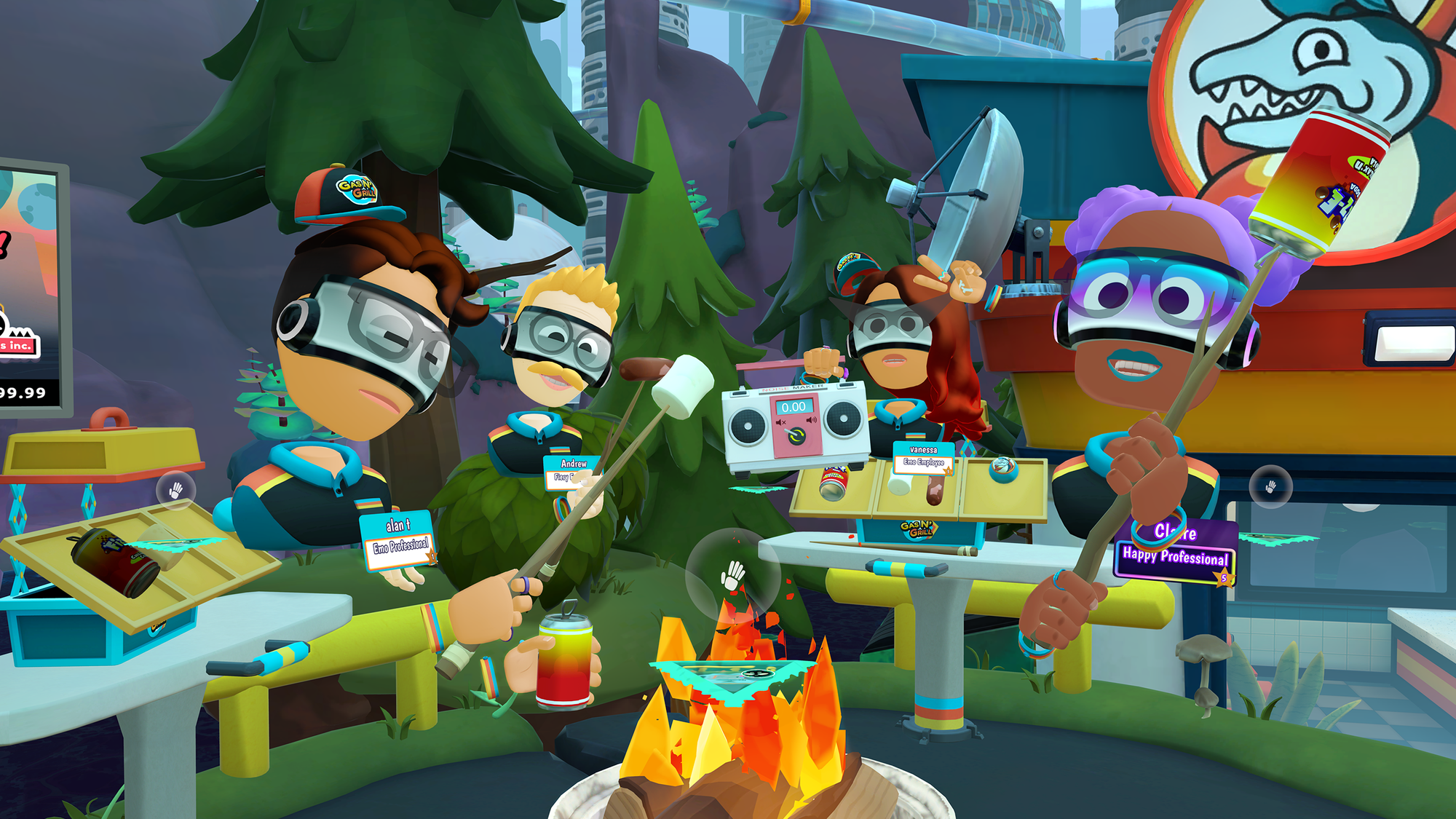
Dimensional Double Shift screenshots provided by Owlchemy Labs
UploadVR: Okay. This is also your first multiplayer game, from my understanding?
Andrew Eiche: Yes.
UploadVR: How challenging was that? You built Job Simulator, Rick and Morty, Vacation Simulator, Cosmonious High—they're all single-player. Just the simple act of, “Hey, pass me this,” how complicated was that?
Andrew Eiche: I mean, we threw it all away. We used to build on the same tech, and we basically threw it all away to rebuild. When we first started what would become Dimensional Double Shift, the game director at the time was like, “I don’t even think we’re going to get fluids multiplayer,” right? We have to start completely from scratch. That’s how much we went back. And so we were able to convince him otherwise and we got fluids in the game. But it’s totally different and we also violated some of the rules of multiplayer that we want to do, which was, “Hey, like, don’t have high-fidelity interactions where you cross spaces because, like, physics is a mess and all that.” We worked really hard to figure it out. I gave a talk last GDC where I walked through how we got there, and it was a lot of trial and error to get those to the fidelity where we finally felt comfortable that we could approach a multiplayer game. And now we’ve done the multiplayer game, and yeah, there’s all sorts of challenges and there’s bugs that you never anticipated where we have this concept of authority. It's... it’s exponentially more difficult to make the multiplayer game than the single-player game.
UploadVR: What was the biggest bug you encountered that you weren't expecting? Like, I’m sure you were expecting some roadblocks going into it.
Andrew Eiche: The biggest bug that we’ve encountered that is completely unexpected is... we have a lot of bugs where you don’t see it because we catch them, but there’s this concept where one player is what we call the authority. And so essentially that player is telling the other players like, if there’s a mismatch, they go, “No, no, no, I’m the right one,” right? And if the authority doesn’t tell the other players like, “Hey, I did this,” then you get these states where you’ll have one person go like, “I see the world this way!” and then everybody else will be like, “Uh, what are you talking about? Like nothing happened.” We got very adept at finding it, but yeah, it’s just one of those things you don’t think about.
UploadVR: Job Simulator turns 10 years old this year for initial release. It’s at 6 million downloads. It’s perennially in the top 10 on Quest and on PS VR2. Where do you think that staying power came from?
Andrew Eiche: I think Job Simulator, I mean, obviously there’s like a level of "we were there early," that kind of stuff, but I also think it meets the promise of VR. A lot of our games do in a way that developers still struggle to meet the promise of VR. And what I mean by that is the promise of VR as in no limits on a small scale. So we have a lot of games that are really good at no limits on a big scale, right? Like even Gorilla Tag in a weird sense is like, “There’s no limits if you can be the monkey, you can get there” kind of thing, right? But on the small scale of “Can I open every drawer? Can I fumble around with the items? If I do something with this, will the game block me?” right?
And we still have the problem in VR where like somebody puts a water bottle on a table and you go to reach it and you reach through it, right? And so it’s that kind of promise. And I think the staying power, especially the staying power we’ve seen from the younger generations, is that you get to be experimental. You get to play around in a space and no one’s going to yell at you that you can’t do that, and no one’s going to yell at you that you won’t. And it’s like the Fisher-Price play set, but it’ll actually light things on fire, right? And I think... I think that that’s... it’s that joy of exploration and that... that space to experiment freely that has really pushed it. And the lack of like strict goals of all things, right? And we see this time and time again in VR where, you know, the games that are really capital-V video games don’t perform as well as the games that have a little bit more like space to explore and be free and less guardrails around it.
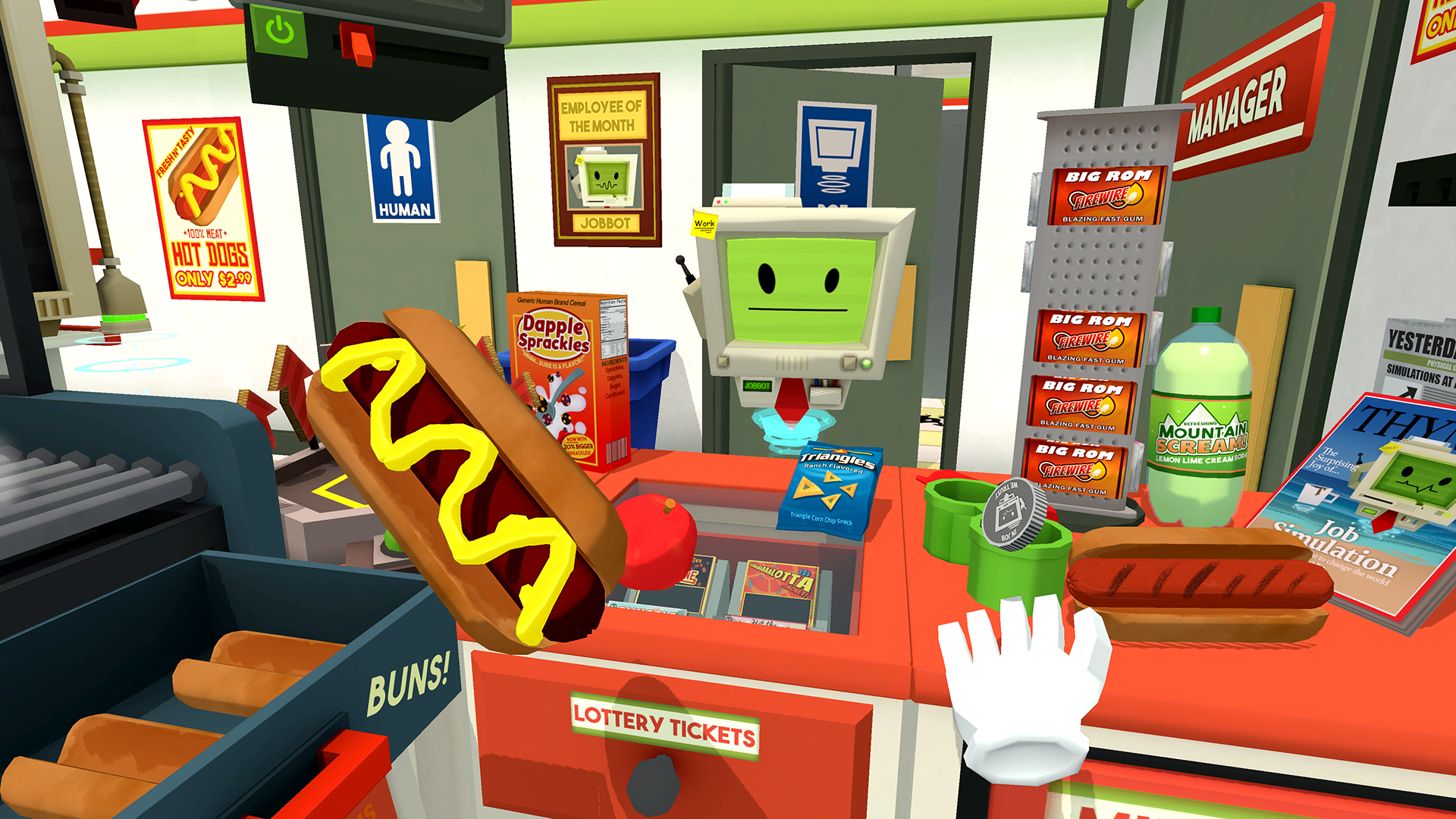
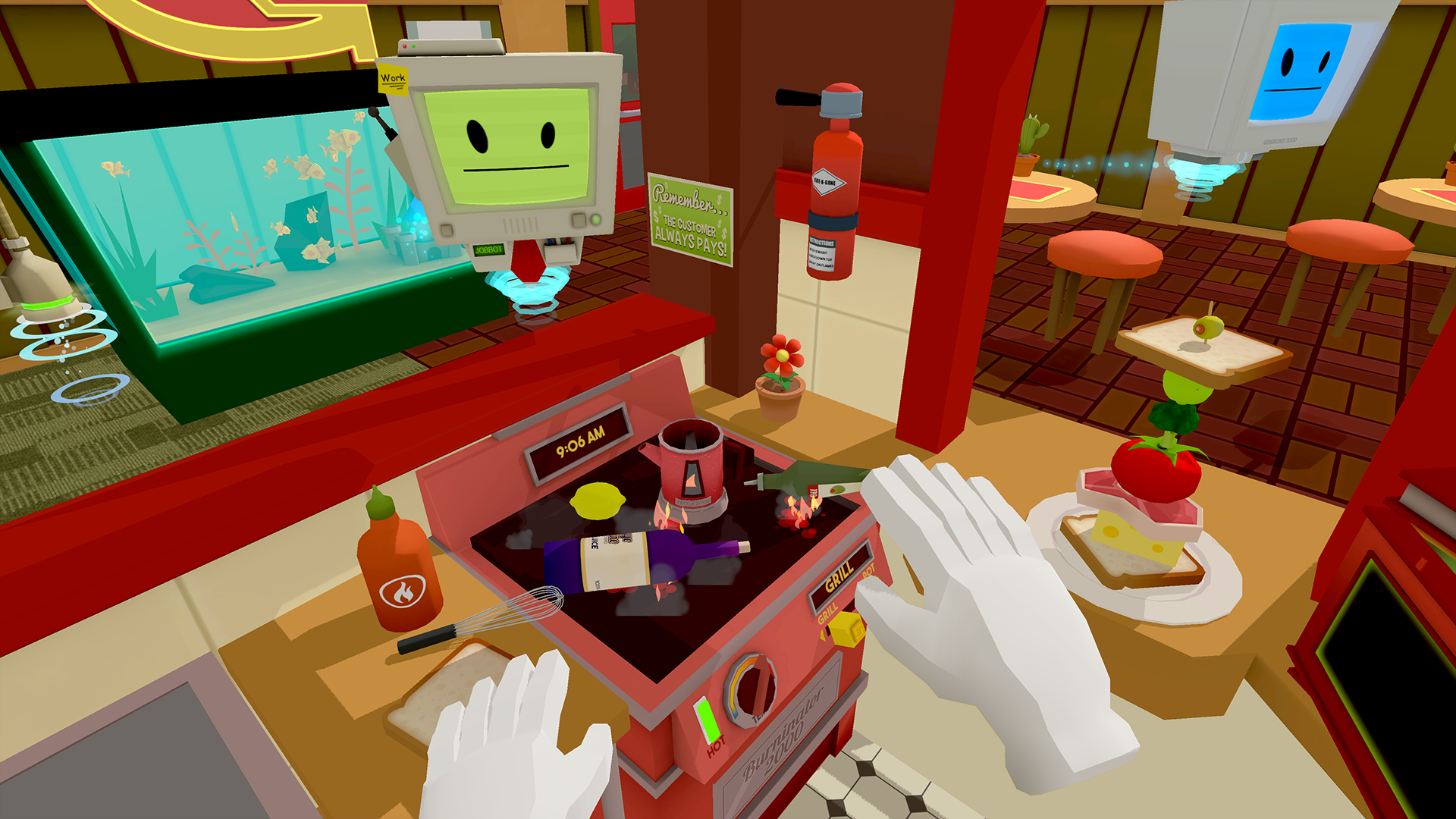
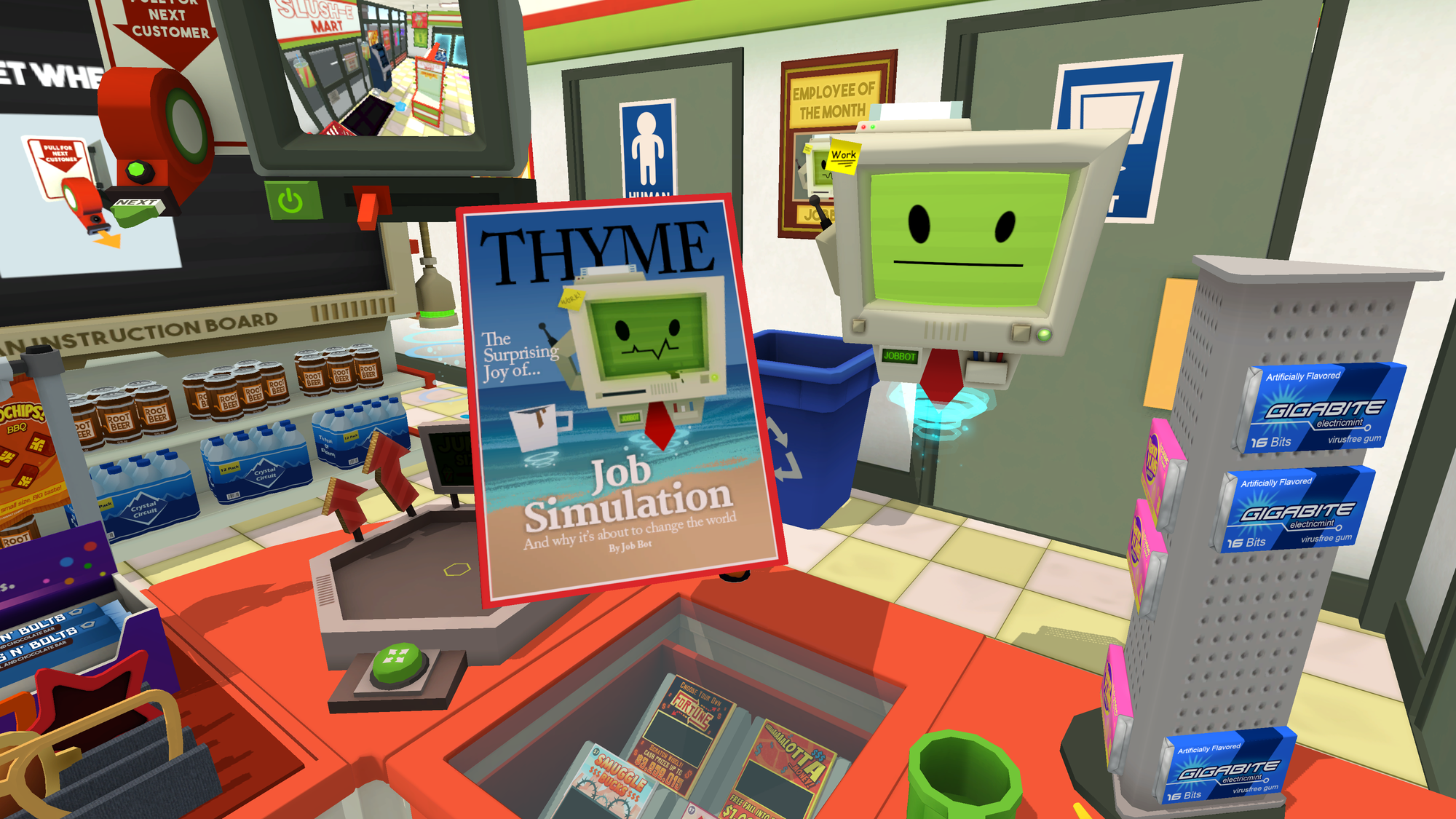
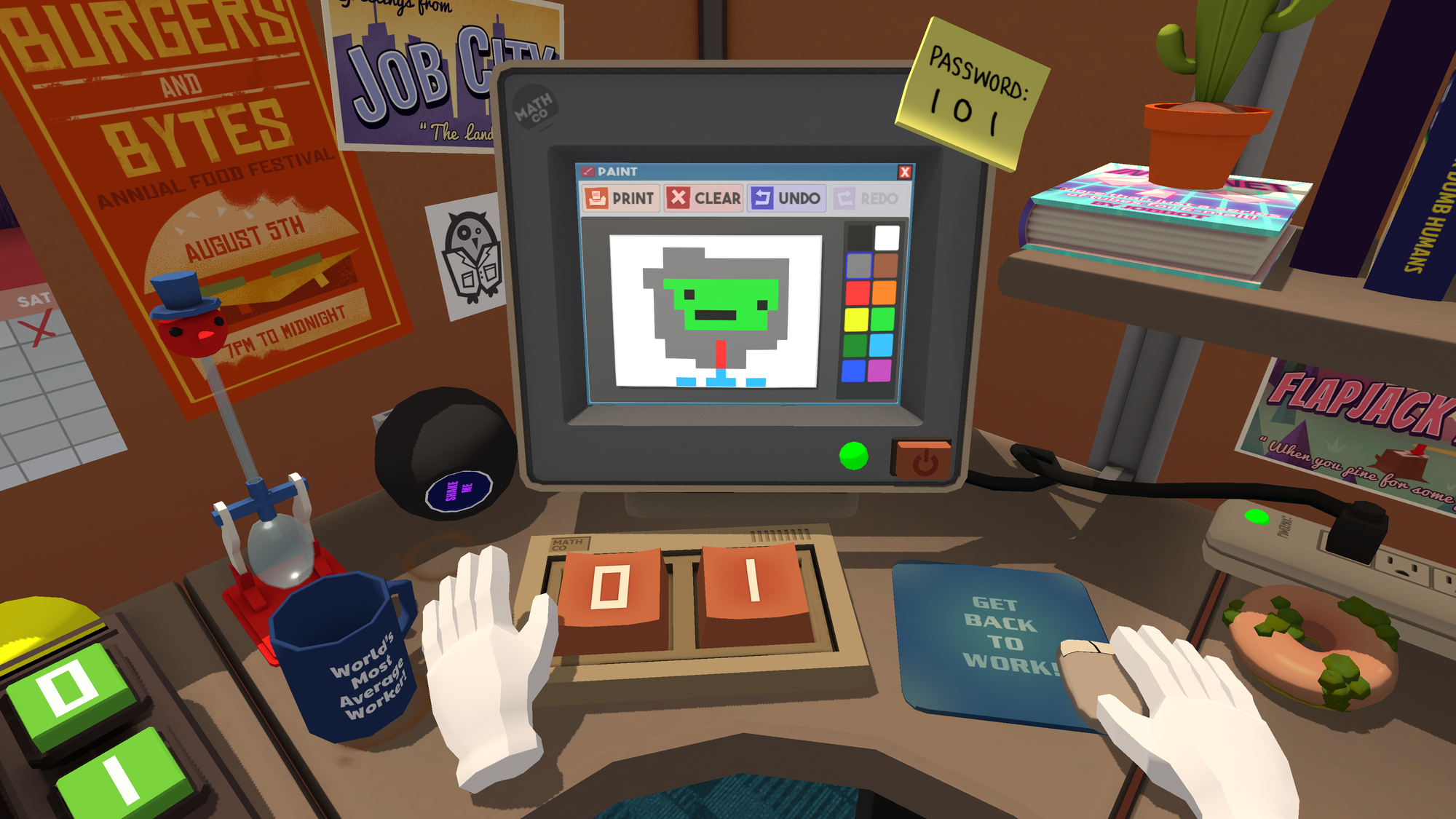
Job Simulator Screenshots provided by Owlchemy Labs
UploadVR: So I’m guessing that carried all the way through to your other projects, down to Vacation, all the way through to DDS?
Andrew Eiche: Actually, we took a diversion. So Cosmonious High feels very much like a video game, right? And it was not our best-performing game. I mean, it was one of our worst-performing games. And it has all these collectibles and all this story and all this stuff. And so when that, you know, it’s not a top-10 game, right? That’s when we took a step back and looked at what worked. And that’s kind of one of the parts of the inception of Dimensional Double Shift is looking at what players liked was there’s no goal in the game right now. We have a million downloads and the game doesn’t tell you that you have to do anything or not, and people seem to enjoy that.
And there’s a big group of people that want to play and be together, but they don’t want to be like, “Now is the time where you pick up fifteen widgets and you give it to this person,” right? And especially in VR, players are very resistant to that. And I think on the Gorilla Tag-style games, that’s like a wonderful example where like players are very resistant to that kind of goal setting and that boundary setting because it’s like... go nuts. And they do. And you can choose to be put in the box, but you don’t have to be. And so it’s more of an opt-in, in the same way that our game is an opt-in.
UploadVR: So in DDS, everything is directly in front of you. You could reach everything from a seated position, just like Job Simulator, for instance. But then in other games you introduced motion—Vacation Simulator was node-based, then Cosmonious you could move around. What made you want to pull that back and just say, “No, you’re going to stay in this station, everything’s going to be right here in front of you”?
Andrew Eiche: It’s a great question. We’ve come to the conclusion. after many, many years of doing this, that either your game needs to have locomotion as like a core mechanic in the game, or it’s better if you actually don’t do it. And we have very few players complaining about that. And the point is if you look at Bone Lab or you look at the Gorilla Tag games or you look at any of these other very popular games with high motion, Blade and Sorcery, right? Your position in the world and how you move and interact with it, that’s important to the game. That is a key mechanic and it’s worked out.
Movement is actually unimportant in Cosmonious High. If you look at Cosmonious High when you’re moving, you’re just kind of trying to get from one place to another station, essentially. And so movement actually acts as an impediment to what you want in the game. In Job Simulator we had all these tool switchers because we couldn’t move, and when we started moving, we started reducing that. And so what increased was this liminal time that was not very fun, right? Because in a flat game, when you’re riding your horse in Breath of the Wild, it’s awesome because you get these great vistas and stuff. In VR it’s like: boring, boring, I want to do something.
The physicality of the space matters, and so it just was like either your game has locomotion as a core mechanic or it’s better if you just remove it entirely. And we see very, very few complaints from the community. I mean, we do get the occasional “Can I please walk around?” thing, but a lot of our community, what they do is they actually back into a corner of their room, reset their space, and then they just run. They just run across... they just run around. But the thing is like if we make you not want for locomotion, then we don’t have to solve that problem, and not every game needs it. And in fact, I’d argue that there’s many, many games that would benefit from removing it entirely and stop worrying about it.
UploadVR: Was there ever a point where you considered DDS not being free-to-play? There’s been such an industry shift towards that model for multiplayer.
Andrew Eiche: It was actually not free-to-play until very close until... so it was originally not free-to-play, and we were going to launch all these dimensions all at once in the game. And then it was taking a long time to make dimensions and we’re like, “We do have to ship a game.” The other thing too is what really made us switch was less market free-to-play. We looked like geniuses because we made this like choice, but what really caused us to switch was we were looking at the game and we said, “It’s an $80 buy-in if we charge $20 for you and your friends to play.” We’re asking for $80 sight-unseen for all of you to play. And so we’re like, “But if we make it free-to-play and we do one pay, everyone plays,” now we’re just asking for one person to pay, and it’s much... it’s a much more straightforward transaction where you could try it, or one friend goes, “Hey, I picked it up and I picked up the dimension,” and you’re like, “Okay, I’ll jump in.” And given the size of the VR market, we just didn’t see a path where like we could convince a lot of people like these groups of four to drop 80 bucks, especially when there were other games that didn’t require that.
UploadVR: I’d be remiss if I didn’t talk about the state of the industry. In the last three years, over 200 companies have gone through layoffs. VR has not been immune from that. We just heard about Mighty Coconut earlier this year. Where do you sit with where the market’s going from when you started over 10 years ago now?
Andrew Eiche: At Owlchemy we’re an interesting case because we’re part of Google, so that insulates us a bit from a lot of what’s happening. VR, it’s entering a downturn, right? So is games in general, right? And, I think some of it is that we saturated it. We built a device, right? And then because there’s really only been one player, Meta, and Meta has its own goals and some of them align with games and some of them are orthogonal to games. Given that, what you’re seeing, as they realign to go like, “Oh, we should probably make something profitable,” they have to like unwind a lot of choices they made. And that’s causing a lot of the problem, is that had we done this slowly, had we said, “Okay, we’re going to unwind and this is like a three-year plan,” but it feels like what happened is Meta showed up and was like, “Yeah, let’s make a profitable division tomorrow, and we’re going just take an axe to everything.” And move around. The Galaxy XR is wonderful, it’s a great headset, but even Google will be the first to tell you it’s not supposed to replace, you know, the millions of Quest 2s. It’s the first headset in a line of headsets which will be coming out for Android XR. So, looking at the big picture of the industry here is like: there’s one major player, and when they make changes, the ripples are enormous to the rest of us.
UploadVR: With that said, what excites you about it, about the future outlook that you have now? What do you see?
Andrew Eiche: We’re really excited about some of the new form factors of headsets. Project Aura, which is the Google headset, so that’s a collaboration between Xreal and Google. That’s really exciting. There’s some others along that line. I think one of the big hang-ups that we’ve been sitting at and why we’re reaching this market saturation point is like looking like a dork, right? We all don’t care clearly because we put on the headsets, but there’s a large percentage of population that really cares about that kind of look. And like, you have to answer the question: would you wear this in a coffee shop? And if we can start answering that "maybe" or "yes," that starts to swing VR and XR more in our favor. So that’s really exciting to us. Ebb and flow is normal. VR is not going anywhere. There’s an entire generation that lives and breathes VR. We can tell you this. I go and talk to people and they know Job Simulator. We do this "allocation vacation," and if you wear an Owlchemy shirt around the kids, they’ll like bother you if they recognize it. It’s pretty ubiquitous. So I’m not worried that like VR is going to go away, you know? It’s really like: when is VR going to come back?
UploadVR: So do you feel like there’s a full generation of kids who are growing up with this tech as just... this is part of their lives, in the same way that we grew up with Atari, Nintendo, and all that?
Andrew Eiche: A hundred percent. That’s it exactly. So there’s a kids... I’ve heard stories where lunchrooms divide in half on whether or not you have VR. I had a friend who had two undergrad babysitters that they alternated, and both of them individually knew and had played Job Simulator.
UploadVR: That's fantastic.
Andrew Eiche: Yeah, but this is what I’m saying, right? And then we pop up on like random shows where somebody will complain about their kids or like, “He’s doing a job in VR!” Gen Alpha is VR native. They don’t see it like as novel. It’s not a new tech, it’s just part of their life. And every time I say this, I always get a parent who’s like, “Oh yeah, we went and visited, you know, the cousin’s house and one of the cousins was just in the headset the whole time.”
So some of the downturn is just us waiting for this generation to have a salary so they stop having to ask their parents, some adult to be like, “Give me money so I can spend money,” right? They don’t need to conduit that money anymore. So it’s coming.
UploadVR: Coming back to DDS, do you have a cadence of how often you want to release new maps?
Andrew Eiche: We have a plan for dimensions, but we’re still in early access, so there’s a lot of experimenting happening with the community, right? We’re thinking about all the things the community wants and kind of swinging around and addressing some of that. So we have the direct communication with the community and then our metrics and everything. So it’s less about cadence of dimensions and more about like what’s going to make this game the best thing possible, right? So we have four dimensions out now. We’re going to see how this one does and we’re going to look at the metrics, look at all that stuff, and then see where our efforts are best spent next.
UploadVR: Okay. So you haven’t figured out what the next two or three are, you’re taking it one at a time?
Andrew Eiche: We do know what we would make if we’re going to make another dimension.
UploadVR: Last question: anything else you want to tease out for future of DDS, future of Owlchemy, anything you're working on that you want to talk about?
Andrew Eiche: Owlchemy has some really cool stuff coming. You know, we’re very excited for the anniversary of Job Simulator. For Dimensional Double Shift, Sporelando is the big thing, but looking at Sporelando and beyond, we have a lot of really cool stuff in the pipe that I can’t talk about. I think that the people who play the game are going to be very happy with where things are going, and I think that the people who may have been sitting on the fence or maybe they played a little bit will be really excited to come back and play with their friends. 2026 is going to be a really cool year for Owlchemy.