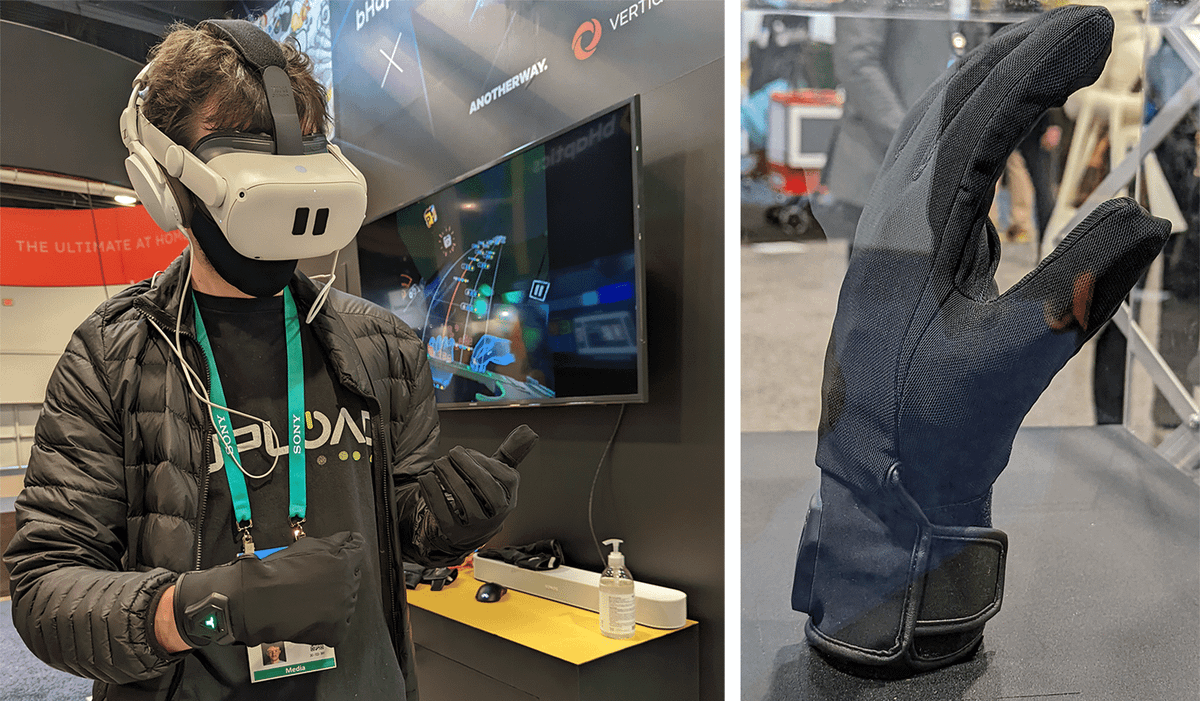
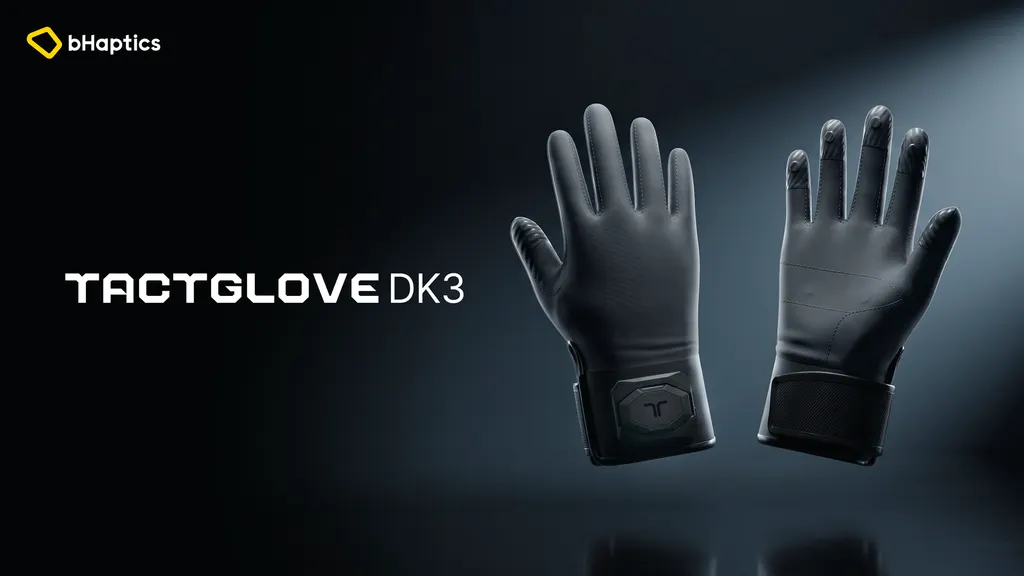
I had a chance to demo bHaptics' latest haptics gloves, the TactGlove DK3, at this year's Augmented World Expo.
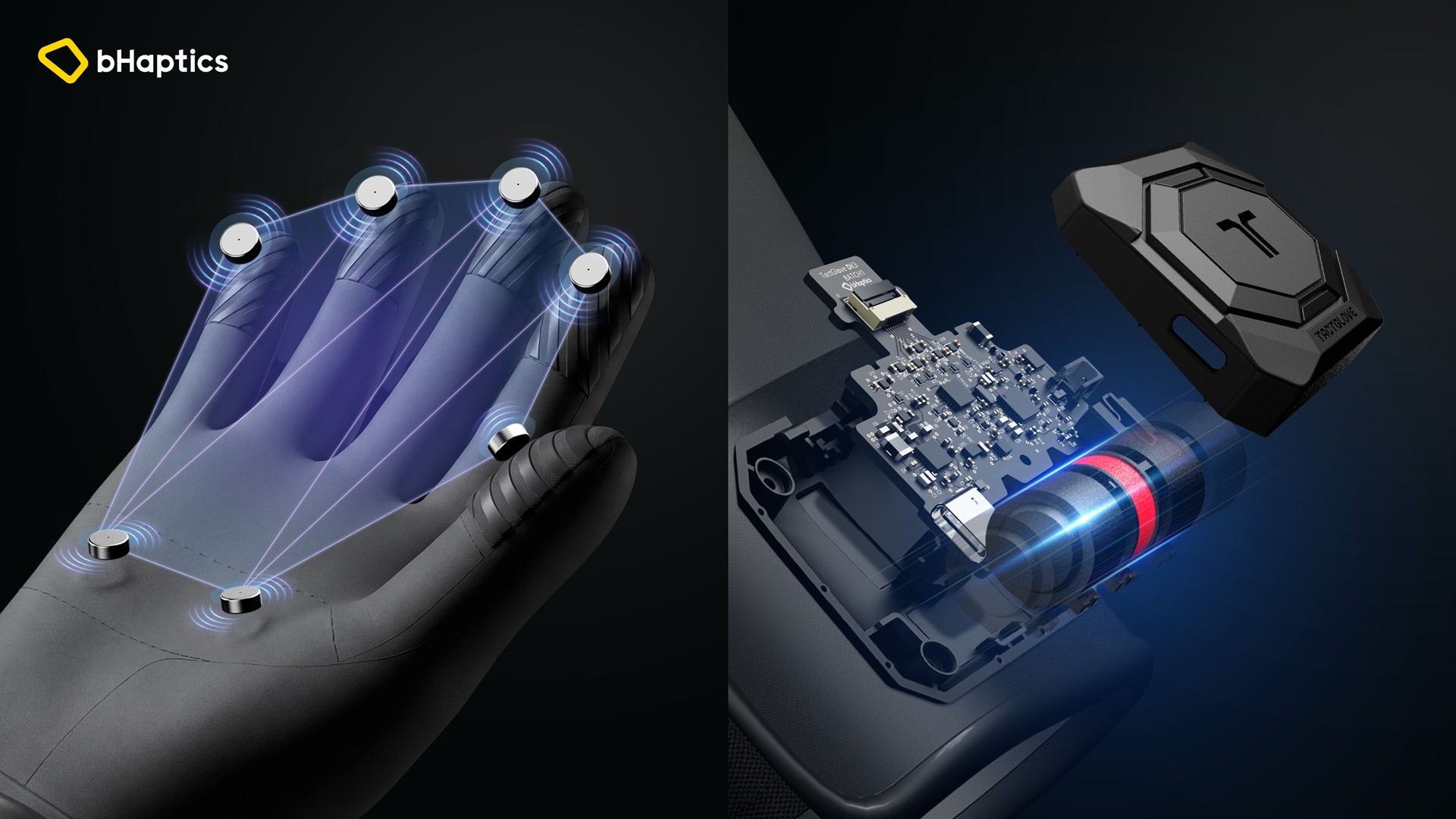
TactGlove is a haptic glove, meaning it provides the sensation of texture to your fingers and palms through the use of vibration motors. To be clear, though, it isn't a resistive glove – it can't make you feel as if you're holding an object.
Compared to the previous iteration the new DK3 increases the number of motors in each hand from six to eight, adding two new contact points in the lower part of the palm of your hand. At release they will come with a set of inner gloves, but for the demos at AWE, the reps were using disposable gloves. I was thankful for this when I finished my demo and noticed how sweaty my hands were.
The game I played was Galactic Repair, a short Quest exclusive experience built by bHaptics to show off the gloves. In this short, 10 minute experience, I was an interstellar pilot whose ship was damaged while traveling through space. I worked through a series of modules to repair systems and reconnect the power, all via hand tracking. One of the first actions was a hand scanner that sent feedback through the entire glove to set the tone for the rest of the session. Every activity after this, grabbing handles, plugging cords into sockets, and moving electric balls into their pedestals, was all well made. After repairing the ship, I was shifted to a series of sandbox-like tabletops with multiple cubes of different weights to pick up and other interactable objects. The largest cube required both hands to lift and the intense feedback in the gloves if I tried to lift it with one hand was easily my favorite part of the demo. Overall, the experience got the job done in terms of proving how much the gloves add to immersion, but therein lies the issue.
While I waited for my turn at bHaptics' booth, I asked the technician about app support and he admitted game developer adoption for glove support has been slower than they would prefer. This is no fault of bHaptics, mind you. The company provides official SDKs (software development kits) with support for Unity and Unreal Engine. The underlying issue is hand tracking itself. The ratio of hand tracking to motion controller applications in VR gaming is fairly drastic, with most of them being on standalone VR headsets. It's not reasonable, given the size and flexibility of the gloves, to expect to play a game with controllers and gloves comfortably.
I checked the bHaptics PC application for glove-supported applications and got eleven results, one of which, curiously, was Half-Life: Alyx. That is an experience I'd be curious to try if Upload can secure a pair of review units. Of the remaining ten, one is the official bHaptics app on Quest and Pico, two were bHaptics demos including the one I played, and a third is a volumetric video player. Alyx aside, other supported games include Synth Riders, Rogue Ascent, Masters of Light, and Pathcraft. All of these are perfectly fine games, but player options are limited.
While the haptics suit can use the audio-to-haptics feature to simulate feedback in games without official support, that feature simply adds general feedback using the in-game sound. I use it all the time with my TactSuit Pro, but that is not exactly viable for gloves.
It's no secret game developers in VR have been struggling. We have been actively monitoring and covering the multitude of layoffs, studio closures, and developers pivoting into flatscreen development in the hopes of keeping themselves afloat, with mixed results.
Hand tracking in XR has come a long way and some developers like Owlchemy Labs are bullish on it, but it is fair to say controllers will remain the predominant input system of choice in VR gaming for the near future. It feels like a tough ask, in the current VR gaming ecosystem, to expect game developers en masse to not only adopt hand tracking as a primary input, but take it a step further and devote time and resources to adding support for a fairly reasonable, but still costly accessory in a struggling market. It is telling that many developers who have already added hand tracking support to their games, like Owlchemy Labs and Resolution Games with the Demeo series, have not already taken this step.
That all said, the DK3 gloves are great, addressing the user feedback that the haptics were limited to fingertips and thankfully offering enough size options to fit most players. Like all of bHaptics' products, modded game support is available for those willing to put in the time to develop it as well.
The TactGlove DK3 can be preordered now on the bHaptics website for $385. Shipping is expected to begin on June 28.
 David Heaney