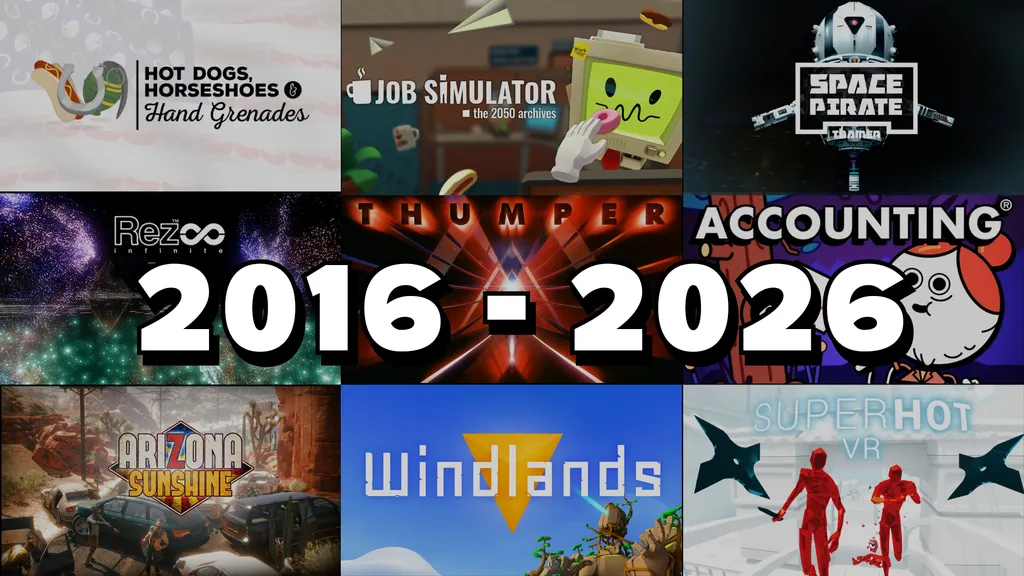
2016 was a strong year for VR with multiple games that have endured in popularity ten years after their release. As these classics turn ten years old this year, with a decade's worth of gaming layoffs and studio closures sandwiched between, it's only right to give them their proper due as the landmark titles they have turned out to be.
As always, this is by no means a comprehensive list, and keep reading to the end for a few honorable mentions.
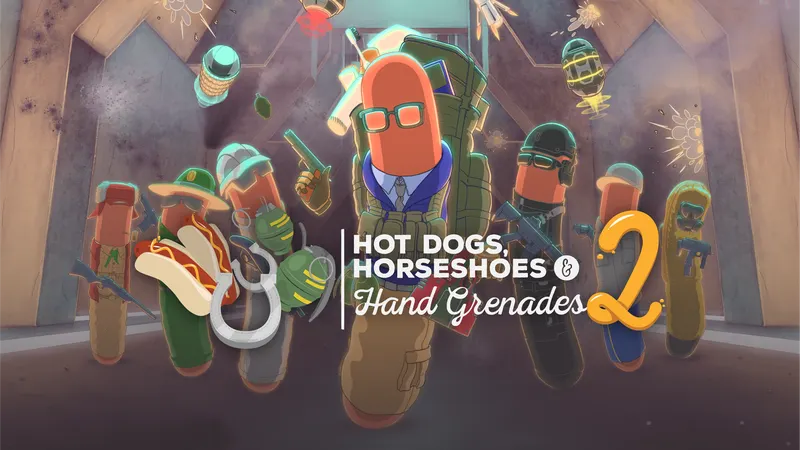
Hot Dogs, Horseshoes, and Hand Grenades

It only feels right to start this article with one of the two games that inspired it.
Where to start with the accolades? Over nineteen thousand reviews with a rating of 'overwhelmingly positive.' Well over one hundred updates since release. It has also never been discounted in an age where PC players (in and out of VR) buy the bulk of their games on discount. Hot Dogs, Horseshoes, and Hand Grenades (H3VR for short) stands as one of VR's earliest and most enduring success stories.
The sandbox FPS has five hundred different guns with over two hundred fifty different attachments, many of which were contributed by community members who sent Rust the actual guns to model and add to the game. H3VR has been regarded as having the most realistic gun mechanics in VR, a large part of its sustained popularity.
All this while shooting animated hot dogs, known as Sosigs, much to the chagrin & complaints of a vocal minority that creator Anton Hand merrily swats away. You have to appreciate the dogged confidence of Hand to basically say you will pay full price, you will shoot hot dogs instead of people, and you will love it anyway. It's also, as of the writing of this article, the only game on this list to have stayed on PC VR and never port to any other platform.
A sequel, Hot Dogs, Horseshoes, and Hand Grenades 2, was recently announced for Steam and Meta Quest 3/3S.
H3VR is available on Steam.
Job Simulator
Now to the other game that inspired this article.
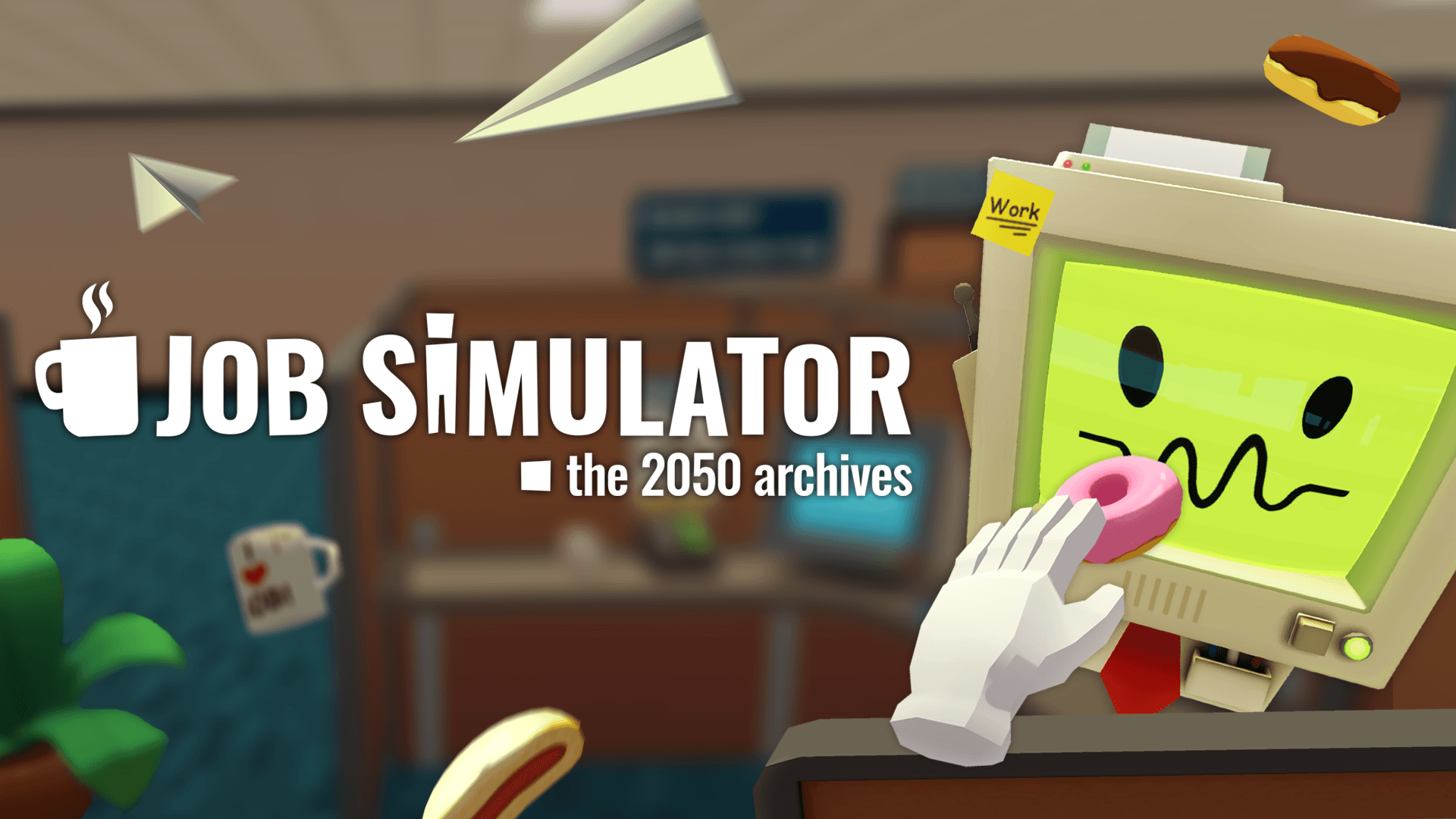
Job Simulator, like H3VR, is a game that if one were to simply watch the trailer, especially now in 2026, it would be difficult to understand why it is special. It is special though. It sits in rarefied air, along with several other entries on this list, to have sold over a million units, a major milestone for VR games. Ten years post release, it still rarely leaves the top ten best sellers/downloads on Meta Quest and PlayStation VR2 and the top seller scroll of VR titles on Steam.
Owlchemy Labs' Andrew Eiche told me in an interview at GDC that kids, in 2026, recognize the game if he is out in public with a Job Simulator t-shirt on. In his own words, it "delivers on the promise of VR" in ways that other games do not. On its face, it is a wacky slice-of-life simulator that one would expect consumers to turn their noses up, declaring "I don't want to do real life work in a game" or "this game is for kids." Yet it still works thanks to the tone, the self aware humor, the tangible interactions that set a blueprint for countless games after it, and its accessibility as a safe game for any newcomer to VR. That was true in 2016, when very few kids, presumably its target audience, were in headsets, and it remains true today.
As an aside, Owlchemy Labs in general should be celebrated as well. It is one of the only, possibly the only, VR studios to have multiple games crest one million units sold (Job Simulator and its successor, Vacation Simulator).
Job Simulator is available on Steam, Quest, PS VR2, Pico, Apple Vision Pro, and Galaxy XR
Windlands

You can't fly or swing in VR. That will make people sick!
Don't tell that to Ilja Kivikangas and Simo Sainio.
Windlands started life as a tech demo way back in 2014 before the duo joined Psytec Games and fleshed it out into a fully realized VR title. If you peruse the 2016 VR catalog, you will find a staggering number of 'kiosk' games, where the player does not move within the world, or 'on rails' games where the game moves the player through the environment. Most of this list falls into one of those two buckets.
To make a game that foregoes all the established "safety" rules of VR, at a time where most developers were building on underpowered hardware and low resolution headsets, is incredibly bold. Windlands also dared to be cozy in the burgeoning age of wave shooters and other high-octane action titles. There was nothing like it at the time and the soothing, calming atmosphere of the high flying world is still relevant today, arguably even more so than its sequel, Windlands 2, which added combat, and action-heavy spiritual evolution Titan Isles.
Get Windlands on PlayStation VR1, Steam, and Quest.
Space Pirate Trainer
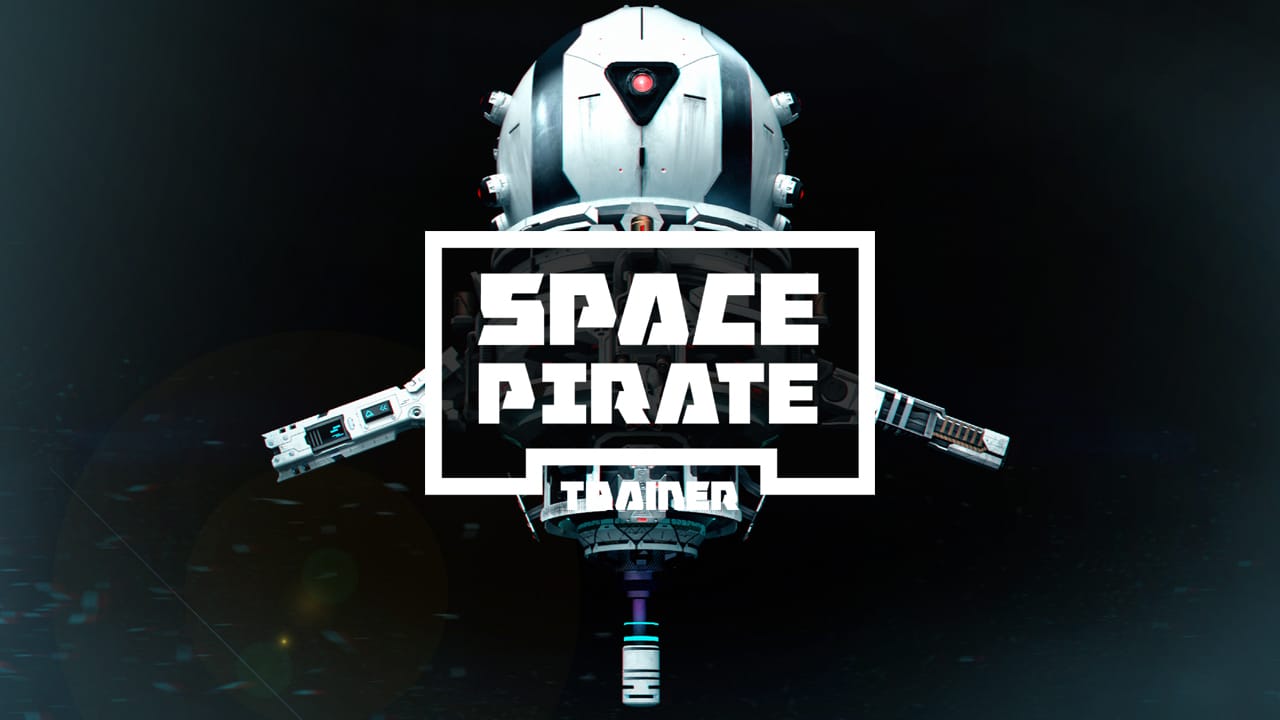
Ten years after its Early Access debut, Space Pirate Trainer remains the default answer to the question what is a great roomscale VR game to play? Those of us old enough to have played retro classics like Galaga felt right at home in this sci-fi wave shooter. SPT taps into the kid in all of us, harkening back to a time where we would bounce off the walls of our home, jumping on and off furniture ignoring the protests of our parents, shooting at an endless number of imaginary enemies.
Space Pirate Trainer makes that real. It is one of the few justifiable reasons in VR to push your tables and furniture to the far recesses of your room, opening enough space to play the game properly. Just try to play Space Pirate Trainer while standing still. It's not possible. The game begs you to move and flow with it in ways countless other VR shooters can only hope to emulate.
Get Space Pirate Trainer on Steam, Quest, PlayStation VR, and Pico.
Superhot VR
Before my job here at UploadVR, I was an active VR content creator (still active on Twitch, check my writer bio for link). Two of my most popular YouTube videos are about how to deal with motion sickness in VR. To this day, and those videos are years old, I still get comments and DMs thanking me because someone tried VR for the first time and got sick in a matter of minutes. When I reply asking what game they played, it is a first person shooter nine times out of ten. Lately it has been Ghosts of Tabor, Contractors Showdown: Exfil Zone, or Forefront. No knock against any of those games. They are just not something I would recommend for a new VR player.
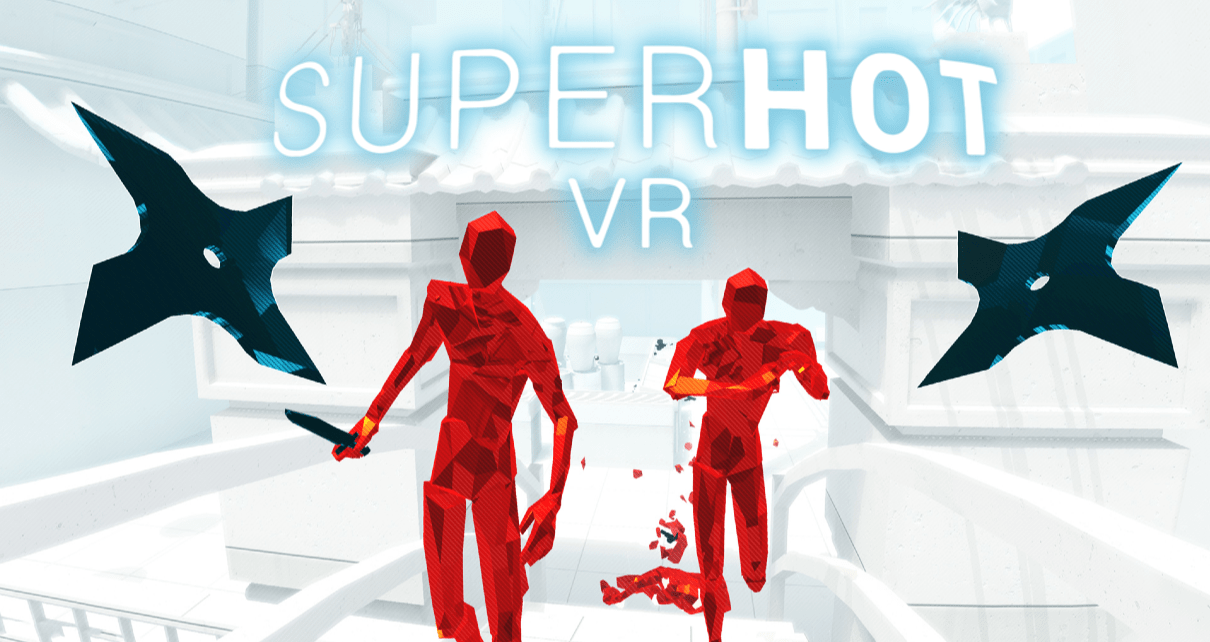
All that preamble is part of why time bending FPS Superhot VR remains relevant ten years on from its December 2016 release. As fast paced and intense as it is, the game is still (relatively speaking) safe, allowing experienced VR users to put their FPS-loving friends and family into it without too much concern. Superhot's innovative enemies-move-when-you-move mechanic remains unique after a decade, with countless Superhot wannabes trying to duplicate or riff off one of the most unique movement styles in gaming.
If you ever hear a diehard VR fanatic say "VR always makes games better," Superhot is a prime example of why. The flatscreen game is great. The VR is brilliant.
Superhot VR is available on Steam, Quest, PlayStation VR, and Pico.
Arizona Sunshine
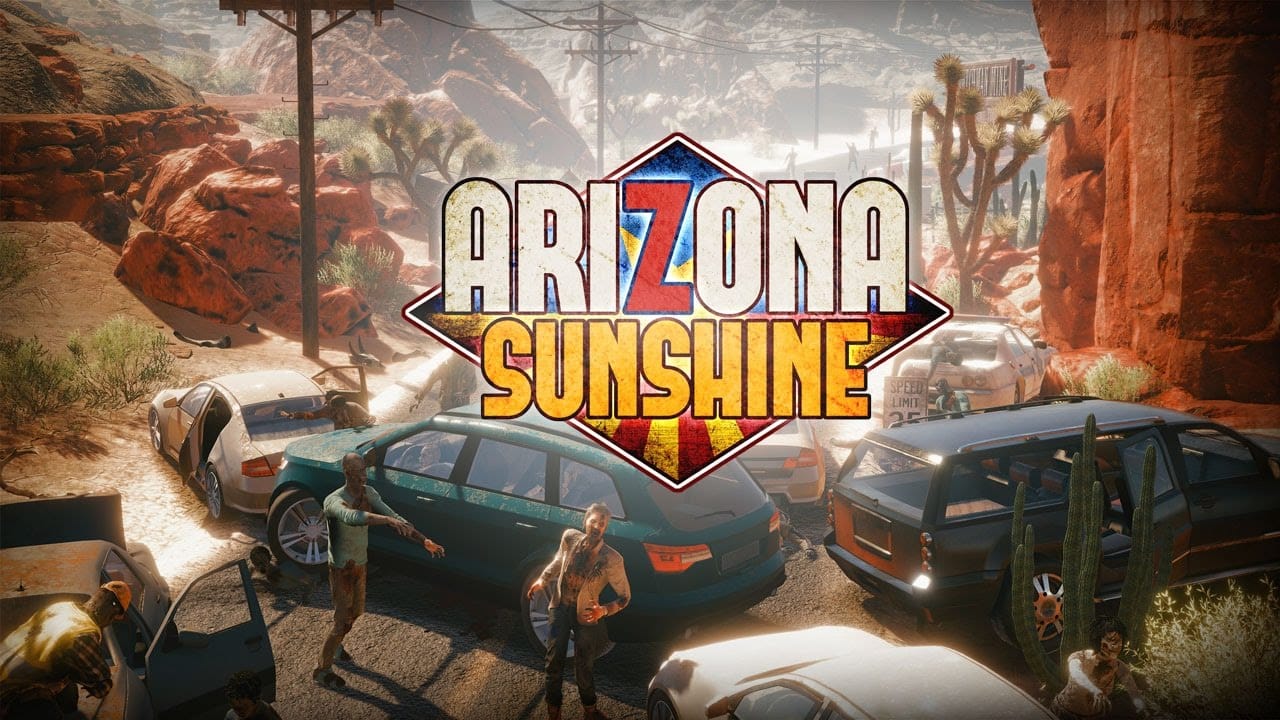
It is a bit dated by today's standards, so much so that Vertigo Games saw fit to release a remake in 2024, but the original Arizona Sunshine's legacy cannot be denied. In the late 2010s, when the average VR skeptic would be more likely to visit a VR arcade and drop $20-$30 an hour to try virtual reality than invest in a VR ready PC and HMD, Arizona Sunshine was the zombie game to play. I say this as one of those converts. Spending an afternoon killing hordes of zombies in co-op eventually led me to buy my own headset. I should note that the multiplayer for the original game (not the remake) was removed last year.
It is hard to recommend playing the OG version since the remake modernizes its controls, but there is still such a charm, no matter the version you choose, to playing an irreverent, vulgar blowhard mowing down every 'Fred' in sight. I describe the protagonist that way with love. His lines are half the fun. He is, sadly, not present in Arizona Sunshine's two DLCs, but they are still worth the price just to spend another twenty minutes per add-on in this world.
Get Arizona Sunshine on Steam, Quest, PlayStation VR, and Pico.
I Expect You To Die
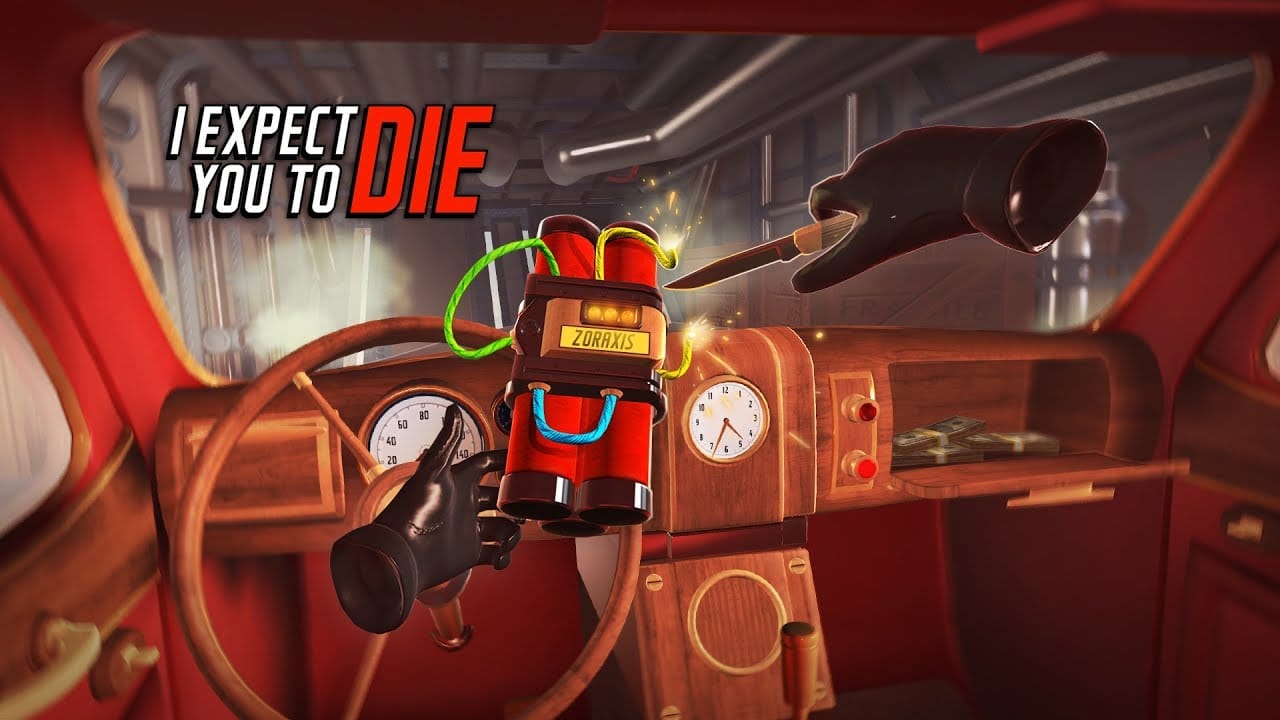
The opening credits alone, a clear homage to the cinematic musical introductions to James Bond films, make the initial entry to Schell Games' signature series, worth the price of admission. Seriously, go watch them (and the two sequels) on YouTube. They are, in this writer's opinion, the best VR game intros ever made.
You play as a spy, only referred to as Agent by your delightfully voiced handler until late in the game, in a series of espionage themed escape rooms. This is another safe game, with zero artificial movement to be found. Objects are grabbed and brought to you with an easy-to-use telekinetic grab that worked flawlessly years before Half-Life: Alyx and its gravity gloves popularized the mechanic. The MacGyver-like gameplay has you using whatever tools are within reach to complete each mission.
Like any good spy thriller, the threat of death is ever present, but I Expect You To Die welcomes this, as evidenced by its title. The creative methods of death, hilariously reiterated in a memo on the game over screen, are part of the fun. Even for people who do not particularly care for puzzle games, the IEYTD games are too enjoyable to deny.
I Expect You To Die is available on Quest, PlayStation VR1, and Steam.
Thumper
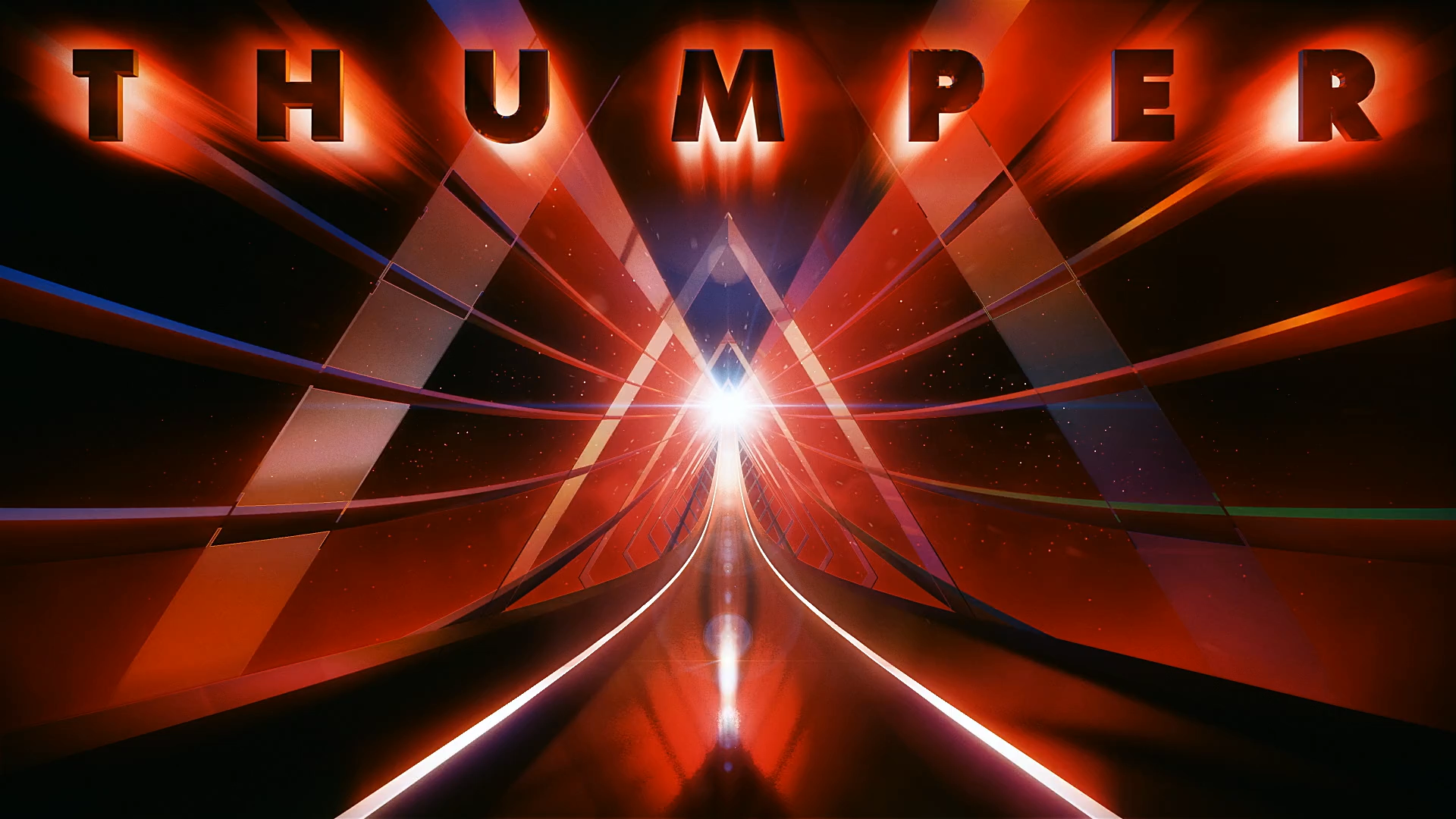
Before Beat Saber, there was Thumper, a psychedelic, pulse-pounding race through a stylized void. Its rhythmic gameplay is accompanied by one of the best soundtracks you'll find in VR. Imagine futuristic sci-fi racers like F-Zero or Wipeout doused in a tsunami of neon light with a soundtrack that wouldn't be out of place at a blacklight-lit underground rave.
That's Thumper in a nutshell, another simple-but-brilliantly-executed relic of 2016 that still plays like a gem today. Its spiritual successor, Thrasher, was quite good, but if I am stuck choosing between the two, Thumper wins out almost every time.
Get Thumper on Quest, PS VR2, and Steam.
Rez Infinite - October 2016
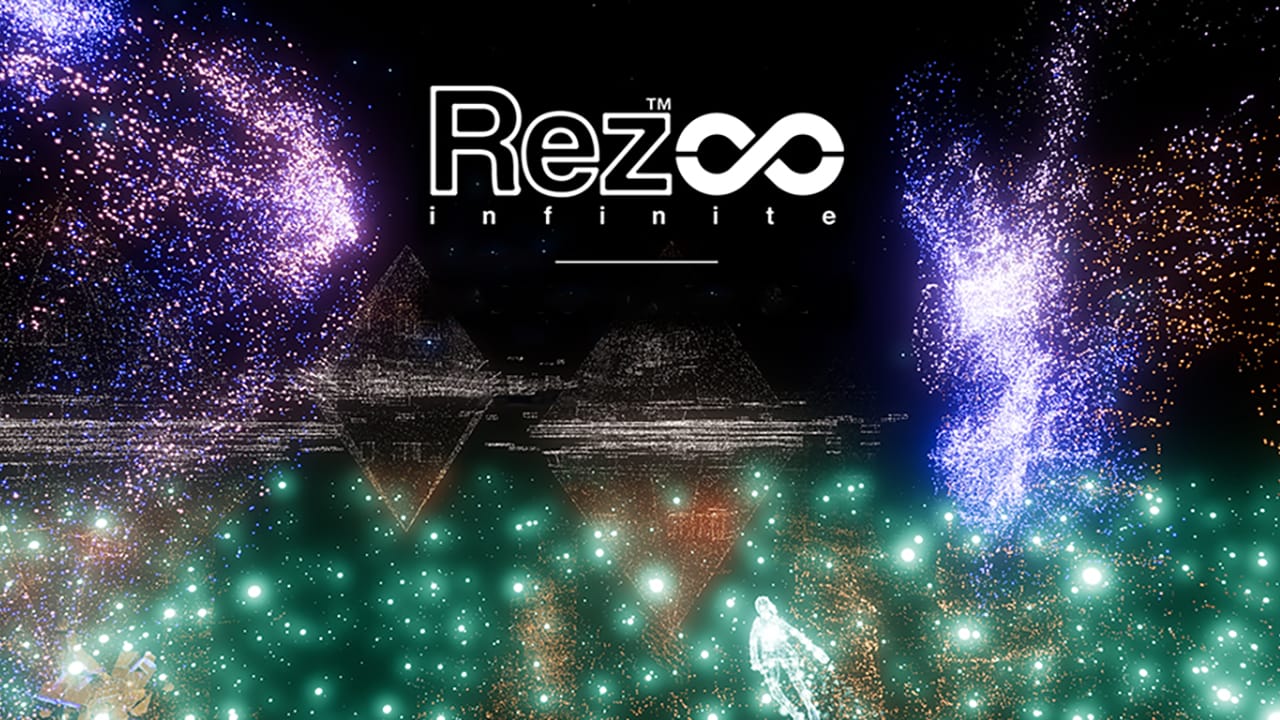
Rez Infinite, first released on PlayStation 4, was an expansion on Sega's original rhythm wave shooter Rez. Infinite introduced both VR support and the exclusive mode Area X, a free roaming alternative to the original's on-rails gameplay.
Not to get too nerdy and technical here, but the particle rendering in the Area X mode is a technical marvel. Consider that in most rhythm-based games, the player is not in control of where they move. It is either stationary, with notes coming at you a la Beat Saber, Synth Riders, Ragnarock, and so on, or on rails like the original Rez mode or something like Pistol Whip. The arrangement, creation, and dissipation of particles that comprise the arena keep the game "on beat" despite players having free range of motion. It is terrific game design that uses the immersion of VR to its advantage while still staying true to the original game.
Get Rez Infinite on Steam, PS VR2, and Quest.
Accounting
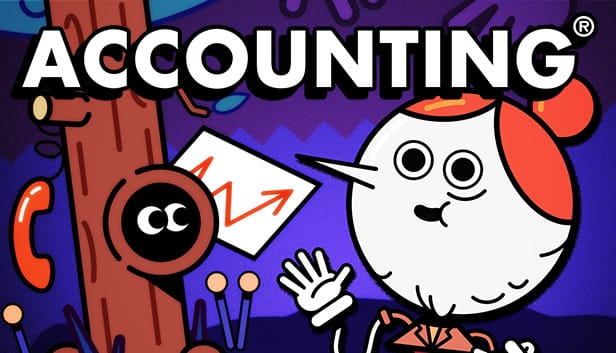
Can a VR game be funny? More to the point, can the humor entice a player in a headset to stand still long enough for the jokes to land? Accounting, the legacy version still free to play on Steam as of this article, is an unhinged, dark humor alternative to Job Simulator. It is also the reason no trailers are included in this article, as it drops enough F-bombs inside sixty seconds to make the late, great comedian George Carlin blush. Go watch the trailer on Steam (link below) and try not to react if it's your first time watching it.
You play as an accountant trying to get back to the real world, with hysterical mishaps tripping you up along the way. Like Arizona Sunshine, Accounting's more modern version, 2017's Accounting+, is the better experience, but Accounting brought brash comedy to VR ahead of Rick and Morty: Virtual Rick-ality, Trover Saves the Universe, and most recently, Space Control.
The original, free-to-play, legacy version of Accounting is on Steam.
HONORABLE MENTIONS
These are either non-gaming applications or in one case, soon to be gone entirely.
SteamVR
SteamVR was officially announced in 2015 in collaboration with the original first-generation Vive and the software officially released in April 2016. I think it can safely be said this is the application on the list least likely to fade into obscurity anytime soon.
Despite other available platforms springing up like Meta's Oculus Rift storefront, SteamVR and PC VR are virtually synonymous with one another at this point. The platform currently has over seven thousand games available, according to SteamDB.
Rec Room
Once thought to be a social VR juggernaut, Rec Room sadly will close its doors on June 1, the date of its tenth anniversary. The wind down process has already begun, so it is hard to list it among its peers as a classic still relevant today when it is possible you are reading this article after its closure.
With that said, Rec Room was one of the first platforms in VR alongside VRChat to openly embrace user-generated content and provide proper creative tools to realize their creators' visions. It would be too easy to dismiss the social VR app as "for kids," but that does a disservice to the over one hundred fifty million users it built up to in its decade long run. To put it another way, Rec Room's user base is higher than all but eight countries on Earth.
The story of Rec Room's downfall, signposted by two sets of layoffs in 2025, is much too long to articulate here, but it really is a shame to see a legitimate titan of VR collapse under the weight of ill-fated platform expansion and a monetization model that never reportedly proved to be profitable.
Since Rec Room shuts down soon after this article will publish, we will not link where to get it. New account sign ups have already been deactivated.
Bigscreen
If nothing else, the social movie viewing application Bigscreen Beta was creator Darshan Shankar's primary impetus to create the popular small form factor Bigscreen Beyond headset. Simply put, (then) current-day headsets failed to provide the sharpness and clarity to maximize the viewing experience Shankar wanted for his virtual movie theater experience. In response, the Beyond was born and is already on its second generation.
The average cost for a movie theater ticket, at least here in America, is a hair over $16 each. That's before paying for the ludicrously overpriced popcorn, drinks, and candy. A family of four can expect to spend one hundred dollars to catch the latest release and those numbers are not far off what they were ten years ago when Bigscreen first launched. Bigscreen is an alternative option for those with headsets and was a veritable social gathering godsend during the COVID-19 pandemic.
Bigscreen Beta is on Quest and Steam.
Virtual Desktop
Considered by many to be the best way to connect a non-native SteamVR headset to Valve's PC VR dedicated platform, it is easy to forget that Guy Godin's seminal app started life in 2016 as exactly what its title suggests, a virtual way to view your PC's desktop in headset.
It has become so much more than that in its decade of existence, enduring despite reports of Meta blocking it from reaching the main store fully featured and relegating it to the underground side loading doldrums of SideQuest if players wanted to actually stream their PC games using it. Even in light of free alternatives like Meta's own Horizon Link, Valve's Steam Link, and ALVR, Virtual Desktop remains the go-to connection method for a large number of PC VR users, yours truly included. It offers a wealth of options to tailor the experience to the user's liking across multiple headsets.
Get Virtual Desktop on Quest, Steam, Pico, and Google Play Store (for Galaxy XR and Play for Dream).
Tilt Brush - April 5
Another HTC Vive launch title along with several others in this article, Tilt Brush is a creative app that lets users paint whatever their minds can conjure in a free flowing 3D space. Offered for free by Google, this is one of those "the magic of VR" apps for those of us who liked to draw on the walls of our homes with crayons, markers, and paint as kids. In addition to being the reason Magic Erasers exist now, reviews like the following from user 'Ka$h' summarize why Tilt Brush still gets play a decade post release:
Tilt Brush is VR’s “fine, I guess I’m an artist now” button. You put on the headset, grab a brush made of pure imagination, and suddenly you’re painting in mid-air like you’ve been doing it your whole life.
The experience is magical in the most immediate way possible: you draw one glowing line and your brain goes, “YES. I AM CREATIVE. I AM POWERFUL.” Then you try to write your name and it looks like a doctor’s signature on a roller coaster.
It later evolved with an open source version, Open Brush, that is available on most VR platforms.
Get the original Tilt Brush on Steam.