

The Snap Specs standalone true AR glasses will launch this fall, veteran tech journalist Alex Heath reports, priced around $2500.
The company behind Snapchat officially announced that it would release standalone true AR glasses, called Specs, just under one year ago.
 David Heaney
Compared to the bulky and heavy Spectacles standalone AR development kit glasses, which the company rents to developers for $99/month or students for $49/month, Snap CEO Evan Spiegel claimed the consumer Specs will have "a much smaller form factor, at a fraction of the weight, with a ton more capability", while running the same Snap OS operating system and supporting all the same apps developed so far.
Snap OS is relatively unique. While on an underlying level it's Android-based, you can't install APKs on it, and thus developers can't run native code or use third-party engines like Unity. Instead, they build sandboxed "Lenses", the company's name for apps, using the Lens Studio software for Windows and macOS. In Lens Studio, developers use JavaScript or TypeScript to interact with high-level APIs, while the operating system itself handles the low-level core tech like rendering and core interactions. This has many of the same advantages as the Shared Space of Apple's visionOS: near-instant app launches, interaction consistency, and easy implementation of shared multi-user experiences without friction. It even allows the Spectacles mobile app to be used as a spectator view for almost any Lens. Snap OS doesn't support multitasking, but this is more likely a limitation of the current hardware than the operating system itself.
Since releasing Snap OS in the latest Spectacles kit in late 2024, Snap has repeatedly added new capabilities for developers building Lenses, and late last year launched Snap OS 2.0, adding and improving first-party apps like Browser, Gallery, and Spotlight to bring the AR platform closer to being ready for consumers.
David Heaney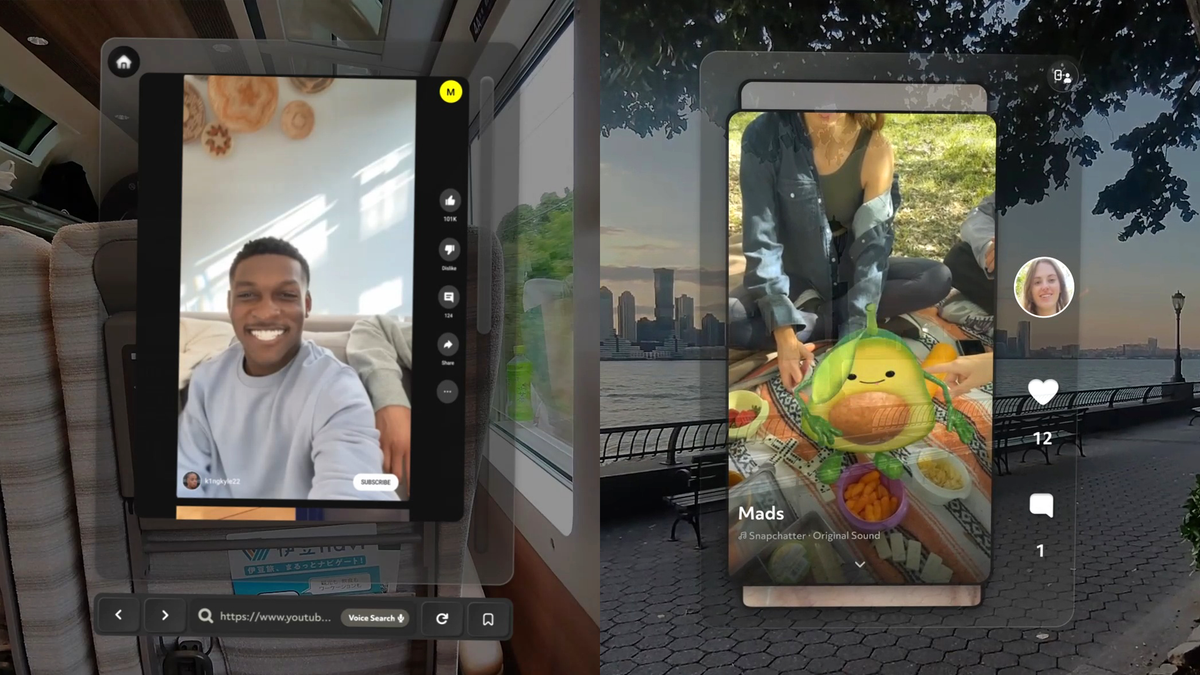
In April, Alex Heath released a report via his Sources newsletter wherein he claimed that Snap will preview its new Specs glasses in the next couple of months, followed by a consumer release in the fall.
In an October edition of Sources, Heath said that Snap was targeting a price of around $2500 for Specs, and a production run of around 100,000.
That price puts it squarely in the realm of relatively wealthy early adopters, like Apple Vision Pro. But, assuming it isn't beaten to market by something we're not aware of, Specs will be the first standalone true AR glasses (meaning relatively normal-looking glasses that can place interfaces and virtual objects into your physical space, without significantly dimming or distorting your view of the real world) from a major tech company.
Meta's $800 glasses are considerably more affordable yes, but also vastly less capable, showing only a small fixed heads-up display (HUD) in one eye, while Snap is targeting a relatively wide field of view binocular display system with head tracking, hand tracking, and realtime environment meshing.
Multiple reports suggest Meta plans to ship its own true AR glasses in late 2027, and Bloomberg's Mark Gurman has reported that Apple won't launch AR glasses until 2028 at the earliest. Meanwhile, there are some obscure Chinese products that technically qualify as true AR glasses, but they're bulky, their onboard compute is significantly limited, and their software is not particularly fleshed out.
David Heaney
The news of Snap's plan to launch this fall comes a few months after it spun its AR hardware ambitions into a dedicated subsidiary, Specs Inc.
We'll keep a close eye on Snap in the coming months for any sign of a proper reveal of the design and specifications of Specs, a product that could be a milestone moment for consumer AR.
I'm actively writing on UploadVR again, and this article is one in a series of "catch up" pieces where I report on some of the interesting things that have been happening in the industry in recent months. And yes, VR Download is coming back very soon!