
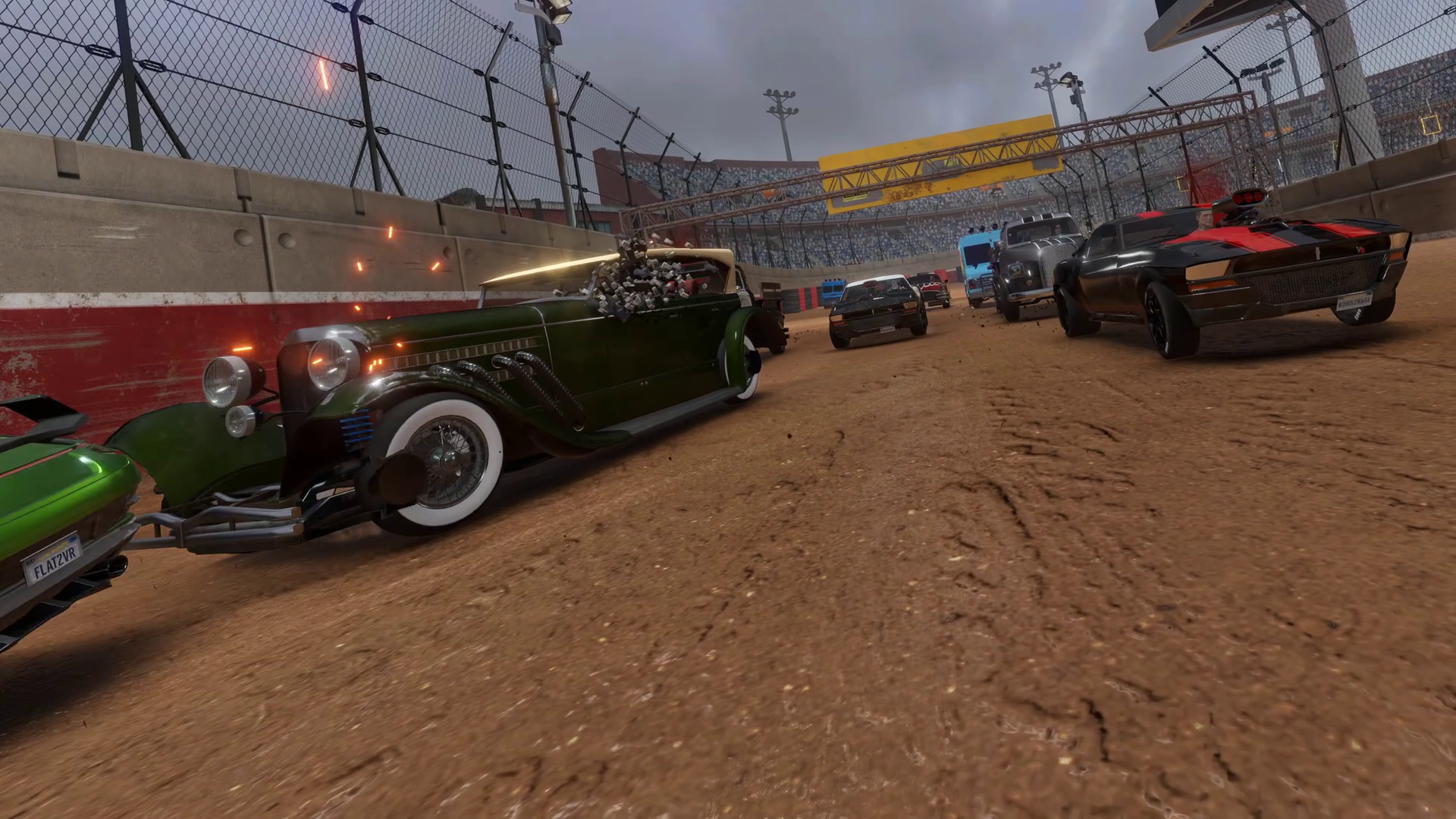
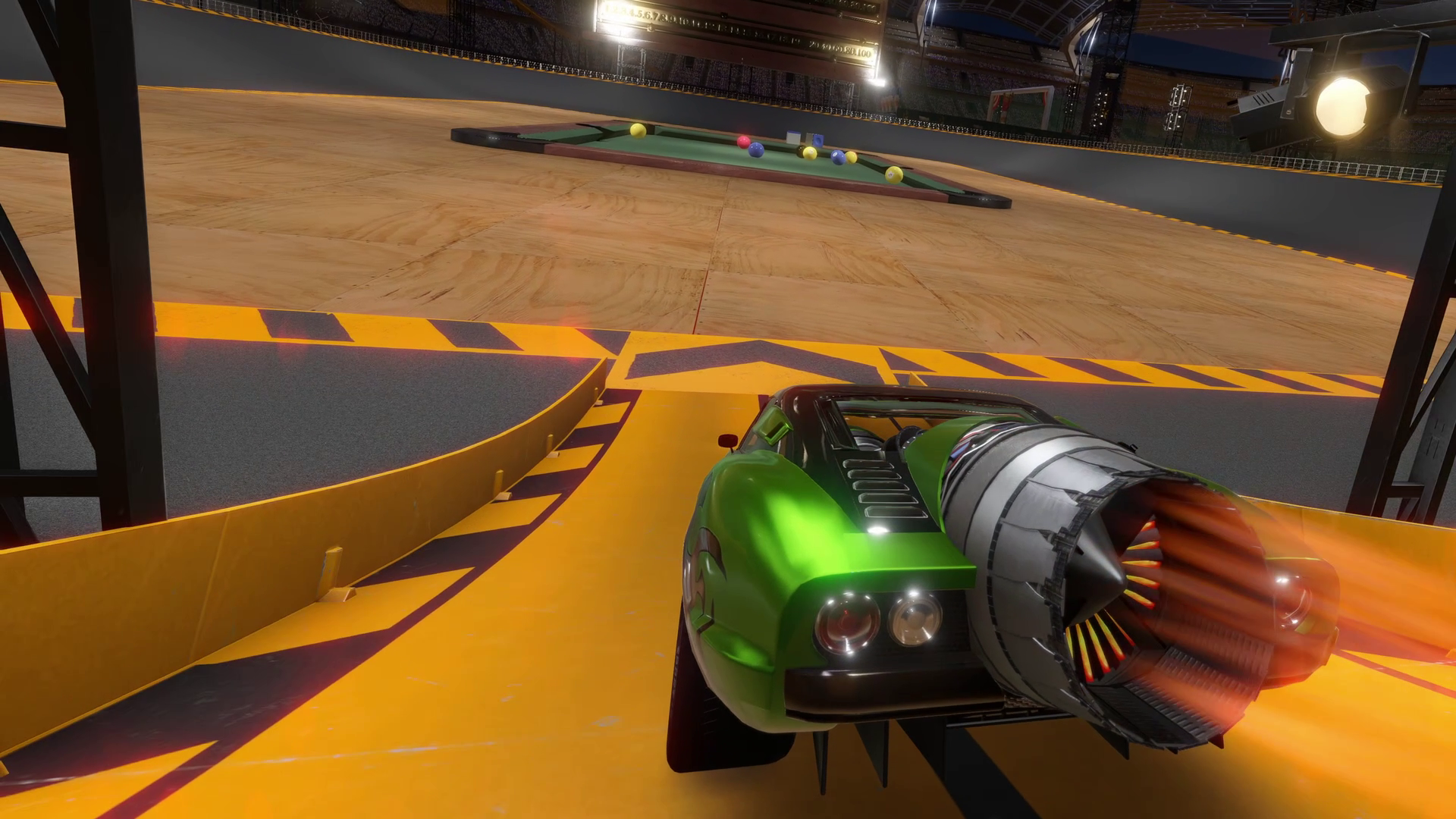
FlatOut 4: Total Insanity VR is the first official release from the Flat2VR Spark initiative. Spark is a program spearheaded by Flat2VR Chief Creative Officer & Chief Technical Officer, Elliott Tate, to pair experienced VR modders with game developers interested in porting their games to virtual reality.
We spoke with Tate about the origins of Spark, how Flat2VR balances Spark projects vs its in-house games, and the unique challenges behind bringing FlatOut 4: Total Insanity to VR.
This is a transcript of the video interview, edited for clarity:
UploadVR: Okay so before we get into it, we're supposed to talk about FlatOut 4: Total Insanity VR, but before we get to that, this is the first release from the Flat2VR Spark program. So for those who don't know what Spark is, can you kind of explain what that program is?
Elliott Tate: If you know how we began with Flat2VR, it was just passion projects on the side, and it's really incredible how when you are just passionate about wanting to see your favorite games in VR and you connect with the right people, just what you can do. So when Beat Saber first came out, I started the Beat Saber modding group [with] a similar goal of "let's get talented people to build something cool here" and it really just exploded and helped pave the way for that. Flat2VR was something I always wanted: to see more of some of my favorite games in VR.
So [we] built a whole big community around it and it's grown in a really cool way and just so many incredible talented other developers have joined in and shared talents. A lot of them have full-time jobs and aren't ready to quit like we did and go all in on just game dev, but love pouring their talents out to make VR happen and so Spark was kind of built around this mix between Flat2VR Studios, where we do super polished, bigger-team [projects] making VR ports of some of our favorite games to in between like a mod and done kind of part-time with lots and lots of love without as set deadlines and still officially licensed.
We have the source code, but working with modders in the community and putting a lot of off hour love into making it happen. So it's a really cool way to get games that probably wouldn't happen otherwise and get other really talented people involved that wouldn't necessarily have the time to [fully] commit, but can work [in] a Spark capacity we call it, which is just an on-the-side the way we build mods and build that out into VR experiences. It doesn't mean it's any less or worse. It just means probably longer timelines and sometimes that means it's a better product because you really spend the time to get in every night and play it all the time and really see how it's going and build it out that way.
UploadVR: What goes into the decision process behind something being a Flat2VR project versus something that you say "this I think would be a good candidate for Spark and let a modder get some experience." How do you balance that decision?
Elliott Tate: Yeah, well I guess it started because we had our plates so full we were like "we're going to have to turn down games unless we figure out another way to make this happen" and that's what grew out of Spark. Some of our games Meta has funded and that can mean our budgets get even bigger. Some games like Postal 2, we did the Kickstarter for it, which really opened the door for a bigger budget on that. I don't know if there's an exact system. It's if it doesn't fit in the studio. With our team size, we do have a limit of how many projects we can take on at a time and then Spark allows us to continue other projects.
UploadVR: So Mutar worked on this one and I think you say he's been a friend of yours for quite some time. Walk us through the process of pairing a specific game like FlatOut with this specific modder. What does that look like?
Elliott Tate: That's where the magic of these smaller teams that take longer, when you find someone who has passion for a certain genre, they'll often act like a game designer or a game producer. As you're playing and as you love this game, you start coming up with ideas in your head in a way that a typical dev team, you'll have some of that, but not to the same extent. So it really works to find someone that just loves the game, number one. Somebody that has talent [because] FlatOut is not Unreal and not Unity, so it requires a special dev skill.
He's a senior developer who's got lots of experience working on custom code and so that put him in one bracket to be the right fit to work on like a very custom engine that has a lot of custom physics and all kinds of custom systems. So his talent level fit that where we have some equally talented people just in Unreal Engine and that would put them in a different category. I guess it's more do you love this game [and] do you have a lot of kind of design ideas yourself because we try to empower a lot of that to come as they're building. It's kind of how you build a mod. It's like "wouldn't it be cool if I did this? Oh man that would feel so cool" and then you try it yourself and you just fall in love with it and you expand it and keep working on it.
UploadVR: Was the design team planned to be involved from the very beginning? In the last Dev video you put out, you talked about bringing in an artist to do all the interiors for each car.
Was that always planned from the beginning or did you discover that when you were scoping the project and said okay we might need to get someone involved here to finish the game out?
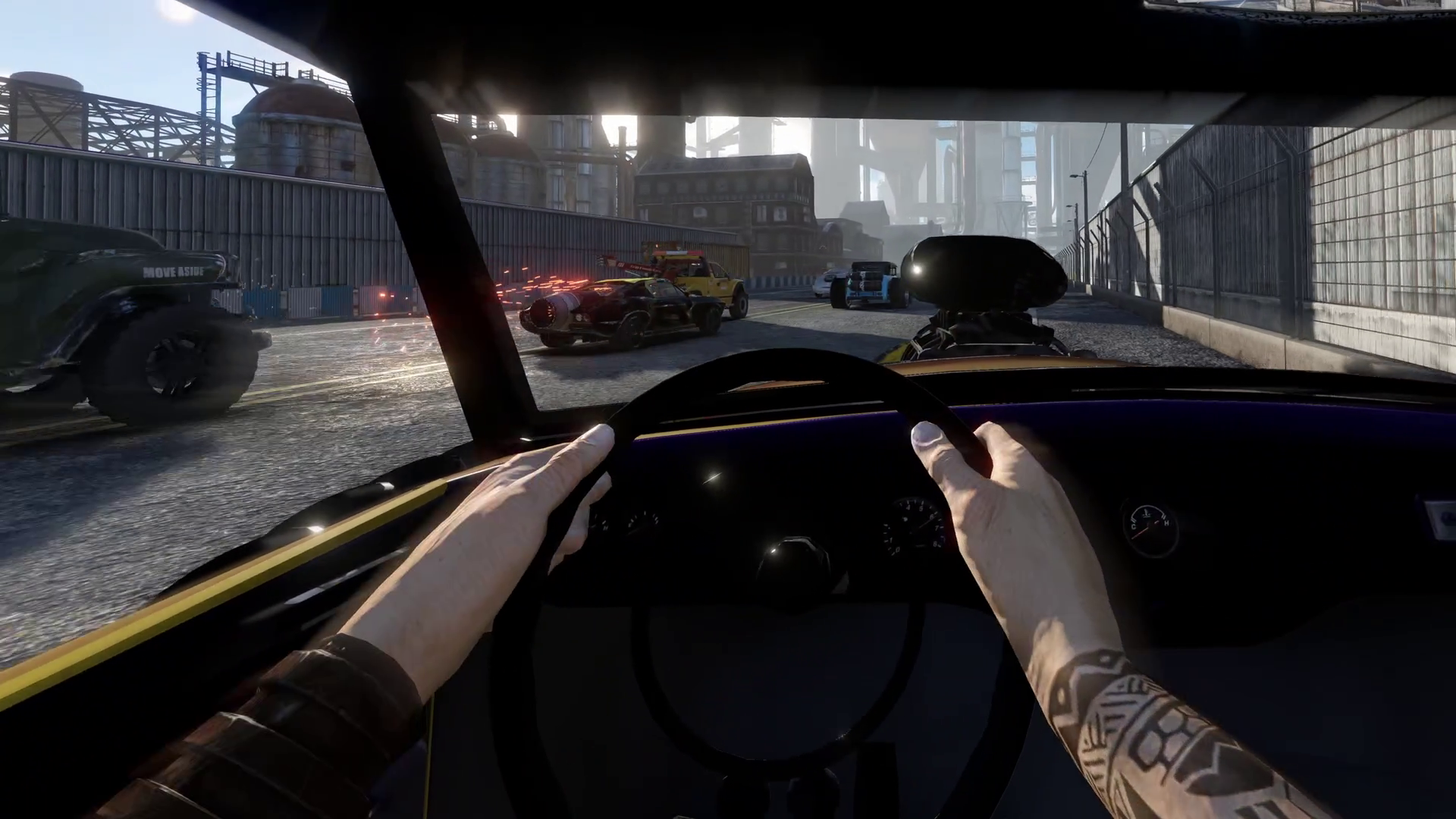
Elliott Tate: A lot of times, it does come later. At the start, whoever's starting to work on it is really scoping out "okay, what could I possibly do? What talents do I have?" Mutar is not a 3D modeler or an artist, so for this game, once we looked at "can we reuse the interiors?" and we were like "Nope, there's no interiors in here! You probably need to probably need to recreate this from scratch."
I oversee a lot of the projects too. I just love to share ideas, so that's a big part too. Just coming in and brainstorming with them and what would work. So just supporting them and then where they get stuck or if there's more that's missing, even pre-early access, if we launch it in this state, let's at least try to get it to an early access state by adding this and this. Kind of getting it to at least that level that it should take off and yeah it's a case by case basis.
UploadVR: You're the CCO, and now CTO I just learned a few minutes ago, of basically two companies. Which means you have oversight into a lot of projects you're involved with a lot of things. How often do you get to get your hands dirty now? I know when you're trying to have that 50,000 foot view, sometimes you don't really get to like dig in deep on a project. Do you get to do that anymore just get to get in there and play around?
Elliott Tate: I've really fought to keep that and so I try to have about half the time in the trenches developing myself and being very in touch with the projects and then the other half trying to run a company or two companies or no, three now. It's a little crazy. We don't get a lot of sleep, but I think it's really important just because we're trying to do things so differently and yeah, there's business books, but there's no exact rule book for how this works. I think it's really important to still stay very in touch with development. I think one thing I'm always looking at is the experimentation we did as modders.
When I worked with Praydog on UEVR, it was this wild idea of what if we could inject some level of VR in every Unreal Engine game and a lot of people from a traditional sense would say no, that's not a good idea, no, that can't be done, but if you really kind of come with that hacker mentality of "well, why not like? Let's figure out a way! "Let's build something. Let's think outside the box." That's been really fun to continue to do, but it's not easy to juggle at all.
UploadVR: Is it hard to switch your analytical brain off when you play a game that's not your company's? You look at it and you go "well that texture and this menu, why'd they set it up?" Is it hard to switch that part of your brain off?
Elliott Tate: Curse your brain! Even in high school, I did landscaping and I couldn't walk across a yard without looking at edges and that shrub needs to be cut. You have to fight it and I think one of the beauties of VR is it helps to be so immersed that you are just in it and you feel it and that's more than those technical details, which I always have to switch to and I can be very detail oriented when it comes to those things. It's more the feeling of how does something feel like the dance in VR.
In Beat Saber notes come at you and when we map, it wasn't just where do you place a block, where do you place a block, but it's how do you set up the next block, so your player moves swings back and then the force like swings this way, but does it jerk you if you have to then hit another block. I think of all VR development like that dance where if you're just doing one action like shooting, well that's just using your finger and you're no longer completely engaged in all your senses, so what are some things that you can do that switch it up? That makes the experience feel more complete.
Trombone Champ, at first, we had just flat notes coming at you and redesigning that so it really moves your hand out as you're playing and then you have to move from left to right and interact a complete body experience with different things happening like a different visual experience, fireworks exploding above you. There has to be, in that dance, the right amount of components and then suddenly you forget everything. You're connected, you're teleported, and you're there and I think, by default, a flat screen game, if you just put in VR can do that with amazing visuals, but for most people you'll hit spots where okay the visuals aren't enough anymore. I want other stuff. I love that process of bringing that dance into game design. How do you reimagine this so it feels like it was built from the ground up for VR.
UploadVR: Let's go into FlatOut specifically. You might have already answered this, but I'll ask it anyway. Do you have a preferred mode that you play in the game? Or have you been in debug so long that you really haven't had time?
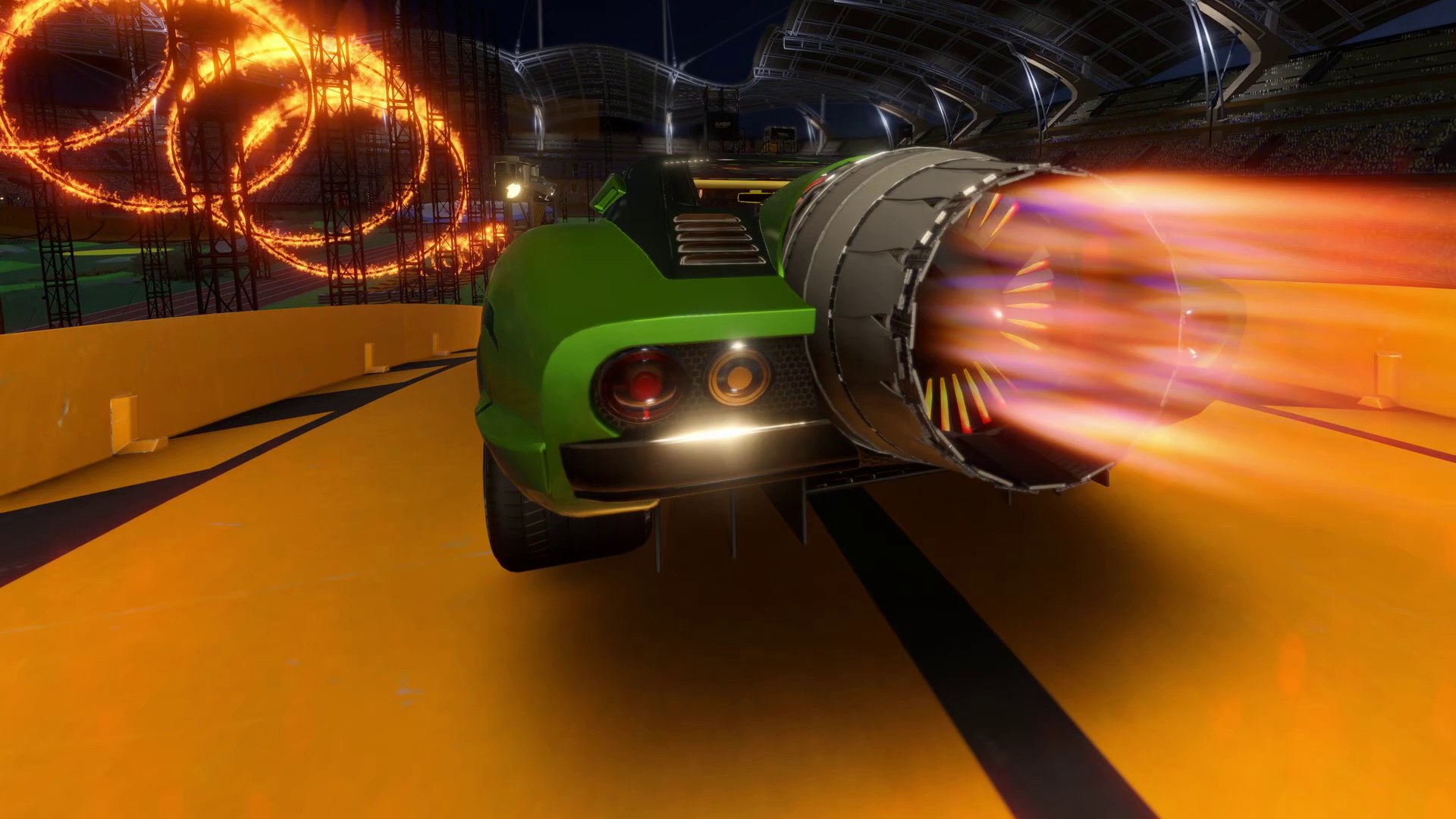
Elliott Tate: I did get pretty sick with this. But some of the knockout modes [stunt modes] and flying as first person when you're flying, it's actually not enabled in the game right now, but I probably will enable it at some point. You are the person. You get this thrill being launched out of your car and you're just flying. I think we'll probably add it at some point to allow for first person on that. It's just wild and fun and especially when you don't expect it, even just racing, you hit something and the player goes flying. In VR, it's almost like unexpected but you're just like whoa okay I'm really in this car. I really can fly out at any moment.
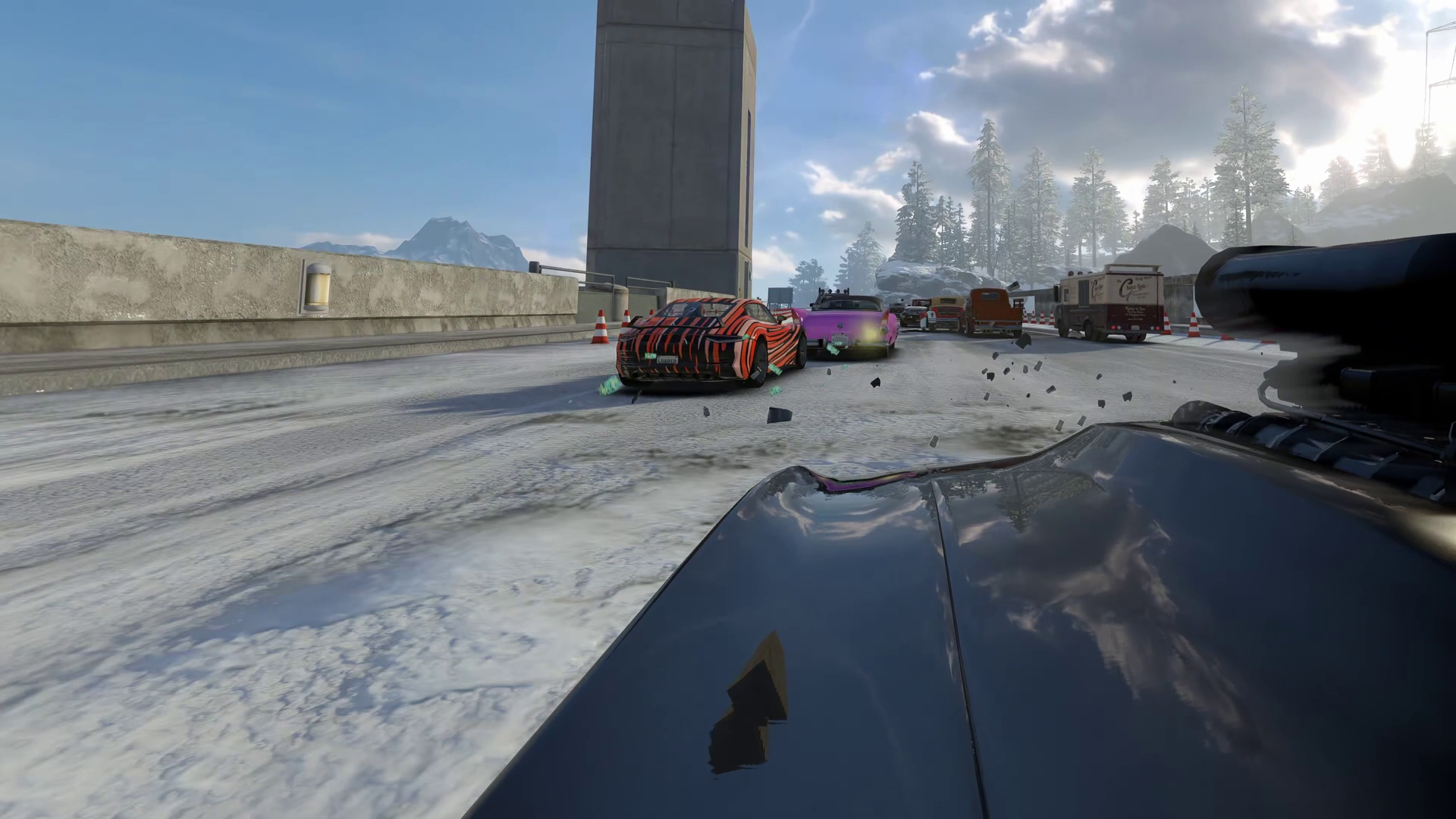
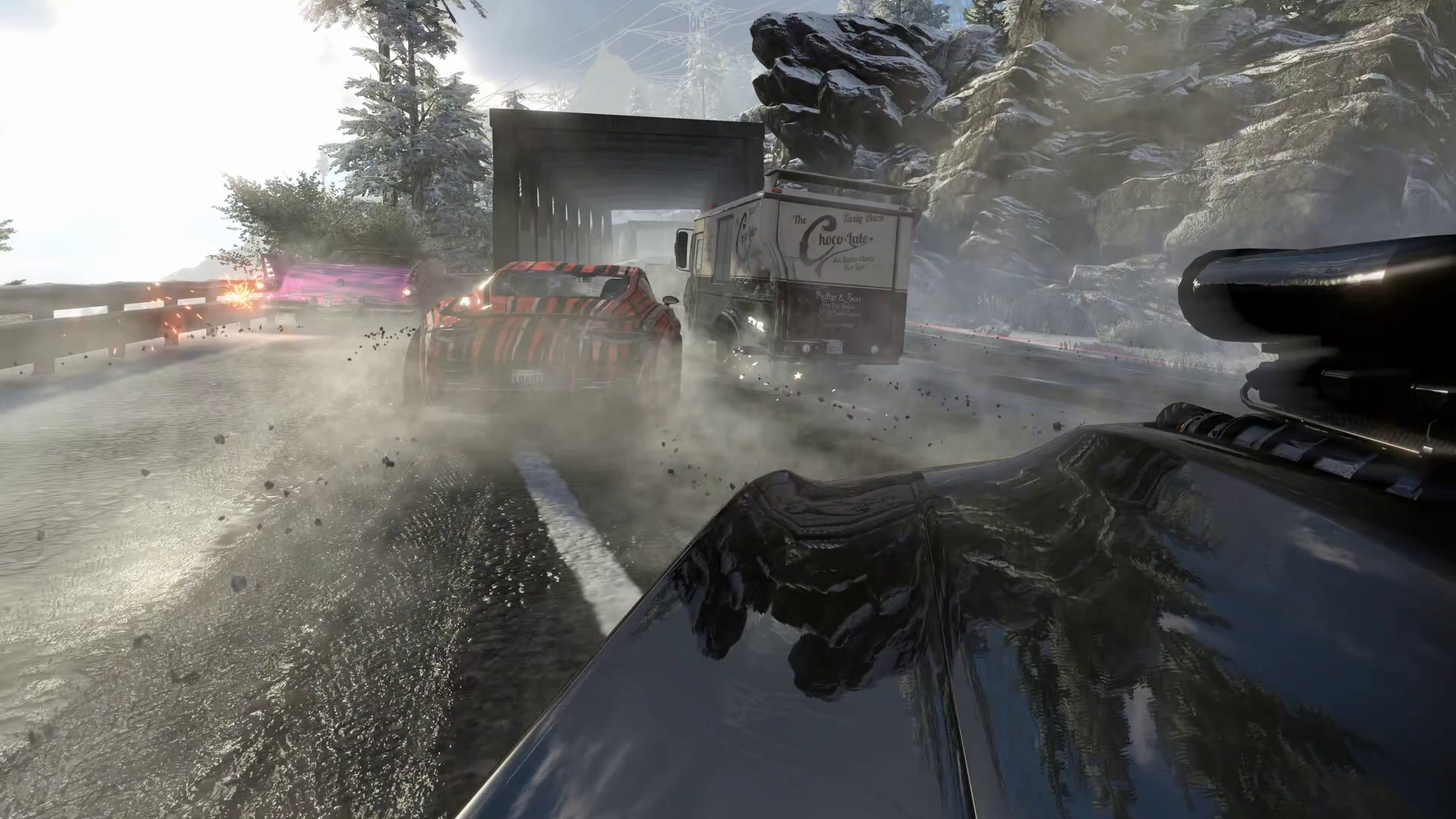
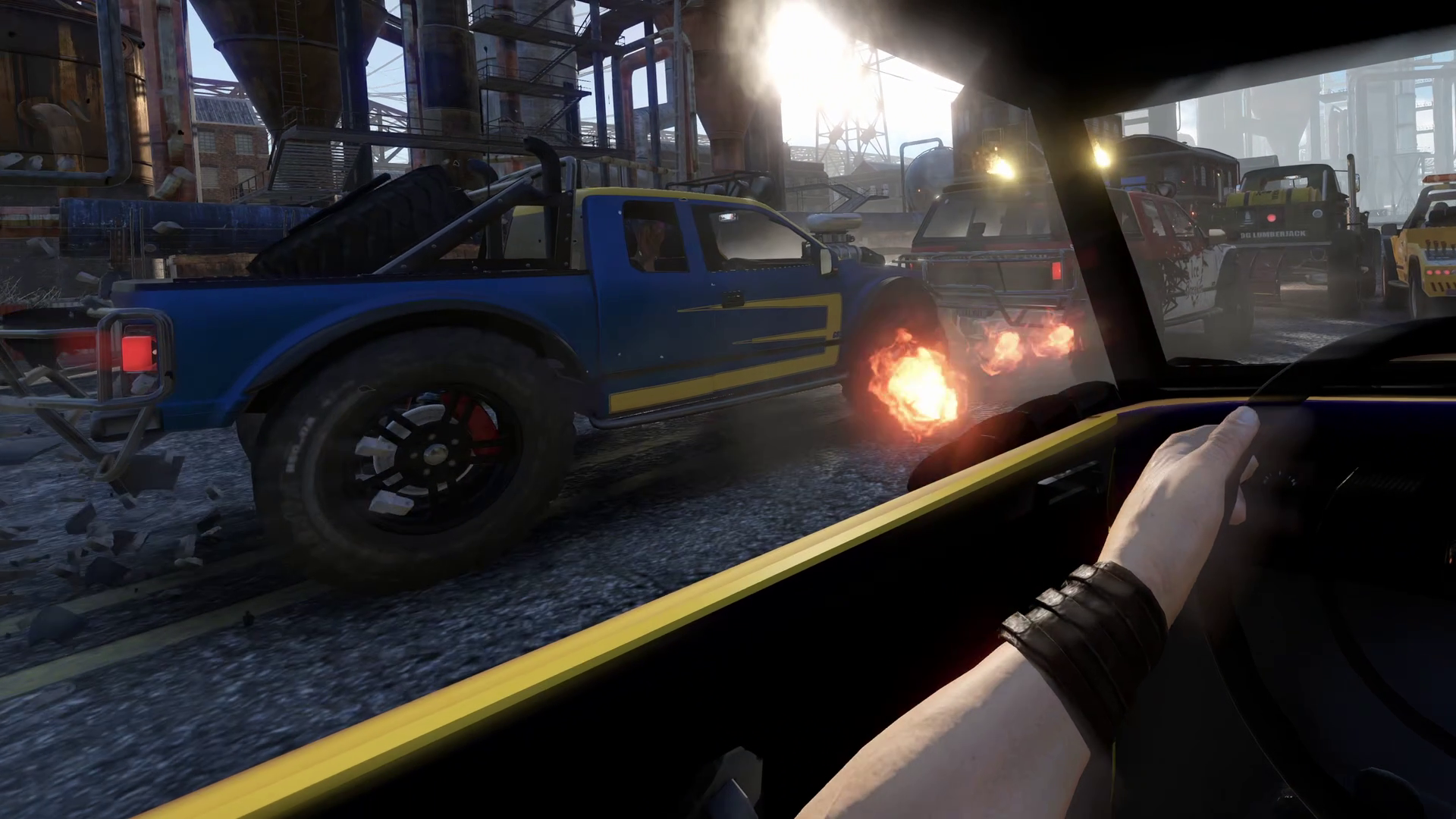
So you asked favorite mode. I just still love a classic race. I don't think anything beats the thrill of the FlatOut races with all of the debris and all the physics that the game has. I think that physics and VR go hand in hand so well together. In FlatOut, hitting something to try to get ahead and you try to take a shortcut, but now you have a big log in on your windshield, so it's like "oh, is that actually worth it?" Then you have to stick your head actually out the window to see a little bit until you steer and shake the log off.
UploadVR: What went into the decision making process of something like this and Out of Sight VR being an Early Access game versus full release like Wrath, Trombone Champ, and Roboquest?
Elliott Tate: When I was coming up with the idea of Spark, one of the rules was "no timelines" because that kills so many projects and kills creativity and also gets games to ship on time. I know you have to have it within budget and within time and you need it for a lot of things, but part of the magic of what we did with modding was just this looser timeline and so Early Access really plays well into that concept. If it's a smaller team working on it or just one person you might not have the community helping to give feedback at some point to build the game with them. We kind of do with all our games, but I think for FlatOut specifically, one nightmare that I've been talking about being in the trenches is just getting all the wheels supported and um turns out that's a nightmare like hell on earth don't wish it upon anyone.
UploadVR: Just thinking about all the different combinations for PC, there's so many different GPU/CPU/RAM combinations. Now you got VR headsets on top of that and now you're putting wheels on top of that, so there's an infinite number of different combinations you've got to account for.
Elliott Tate: The situations I've been working through it's like this wheel doesn't work, so look into the report and it's like Fanatec wheel mixed with Logitech pedals mixed with a Thrustmaster. The different parts of it are all different and then they all use the same axis and they're conflicting, so you have to basically make them all know how to talk to each other. We finally built a tool that really has kind of solved that, so we've gotten a little over like 200 unique combos working now for people, but that is the pain of PC.
Not just having one thing to build for, but you've got sometimes hundreds of different setups and you're like "why is this not working?" and it's of course some combo that you know you had never seen before, but worth it I think. I love to see that there's still a core PC VR community. It's kind of part of my heart. I love the graphics that PC VR can produce, so it's been really cool to see them show up for FlatOut and really support it. It's been pretty awesome.
UploadVR: Was there any feedback so far that has surprised you?
Elliott Tate: Some people were saying it was too easy some people were saying it was too hard so it's kind of weird when you get sentences away they're like this is too easy and then...
UploadVR: Two reviews back to back...
Elliott Tate: Or one person was like "I paid this money and now I have to grind for this stuff. I paid for it, so I should get it all unlocked" and I was like here, let me give you a special save that has it all unlocked, but it was almost like "how dare you make me work for it."
UploadVR: That's interesting, because a lot of games have that progression system and that grind in there.
Elliott Tate: We can fix that super easy. Here's a save that has it all unlocked. I think I'll probably add that as like a Konami code somewhere we hide in there that unlocks. One cool thing about a game like this and what we do is even stuff that seems kind of obscure, like a feature request that isn't real big, we're happy to add it. A lot of times, it doesn't take long just to add some option out there for something, so sometimes it surprised me how many people have enjoyed like whether it's a difficulty, some insane mode that I would never play myself.
UploadVR: I'm looking forward to getting chucked out of a car whenever you decide to put that in there. That's gonna be fun.
Elliott Tate: I'll let you be the first tester.
UploadVR: You've got my email. What were some of the unique challenges of FlatOut aside from the wheel configurations versus those other projects? And were there some things that you learned from those earlier projects that you were able to pull forward into this to make this a little bit smoother?
Elliott Tate: Yeah, that's a good question too. The custom engine has a learning curve. There's a lot of proven processes especially for VR if you're using Unreal Engine or Unity. There's um kind of methods to doing stuff and you're kind of inventing the wheel a little bit when you're doing a custom engine
UploadVR: Was this the first custom engine project you've taken on? Or the first one to release?
Elliott Tate: The first one to release, yeah. I did the motion control implementation and with VRIK, there's no package out there. You have to write it by yourself, so there's those extra um bits there, but I think learning, every time we release a game, that design language of how do you convert flat elements? What makes them feel even a little bit better if you don't have time to redesign something completely? One thing I did was in FlatOut adding feathering to the loading screens. In a flat game, you're drawing on the actual monitor size and you have a nice rectangle, but a floating rectangle doesn't feel exactly great in VR, especially one that's shaped to the size of a screen. Ideally you break that apart and redesign it completely, but it also can work pretty well if you just add some kind of feathering, how you handle the world around it blacking out and fading in at the right areas.
A racing game is quite different, so I wouldn't say there's a huge amount of design overlap, but we've built a lot of tools that help porting flat screen games to VR and that certainly gets used across projects. Adding DLSS was a big thing for this game. It's an older engine that looked quite blurry in VR and so one real big thing I wanted to do was make it look as sharp as we could. If you've played on default settings, it might still be a little blurry. You can turn up the super sampling, but if you have the computer to put DLAA on, that looks really nice. It's a modern Nvidia antialiasing technique and it looks super super sharp.
To me, those kind of details are important. Then optimization, things you don't even think about. The game has a physics tick that runs at 30 and 60 Hertz, so that's how it calculates physics, so if you're running a headset at 90Hz, you'll see objects move almost like they're stuttering across, so suddenly you're like oh I don't just need to work on the rendering now. I need to unlock the physics engine and make that talk to the rendering part and make those all match up, so that it looks smooth. Those are all examples of things that the more projects you do, the more you have pretty clear ideas of how to solve different tech challenges.
UploadVR: We talked about all the challenges that you've had through the development process. What's something in the game that you want to tell people to look out for that you're really proud of?
Elliott Tate: I think I'm pretty proud of the haptics. Do you have a wheel?
UploadVR: I do not, not yet. This game is going to make me buy one.
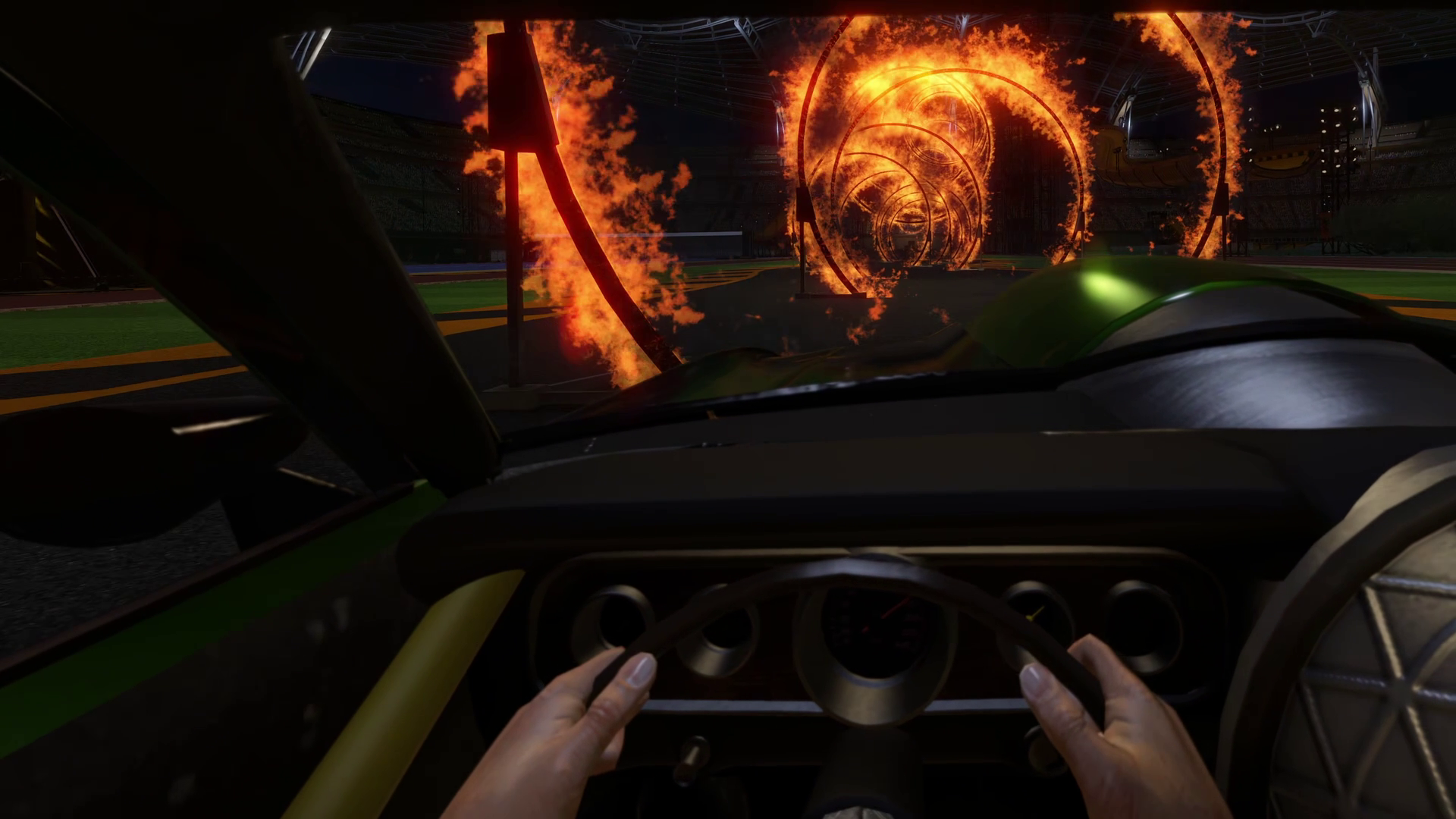
Elliott Tate: You need to. We really went all out with how the car handles when you're crashing, so it's the full force feedback that connects to the whole suspension system and everything, so you feel just every bump or if you're turning it, it really force feedback swerves around. We've added telemetry that will come soon in a release, so people that have full motion rigs will be able to experience that too.
I love being immersed in VR, so when I sit there with the wheel and feel all that, it almost doubles the experience for me. I can't wait for you to get a wheel because it really takes it to the next level where literally somebody smashes you and you feel it and getting knocked around. That really turned out well I think.
UploadVR: Alright, well congratulations again on the release. Elliott Tate, thank you so much for spending some time with us today. I appreciate it.
Elliott Tate: Yeah, thanks Mike.
FlatOut 4: Total Insanity VR is available now on Steam in Early Access.