

At GDC 2026, we had the chance to chat with Mighty Coconut CEO, Lucas Martell, about his past work in film and the application of those skills to VR.
Before founding Mighty Coconut, Lucas, along with other members of the Mighty Coconut team, spent ten years working in Hollywood. This interview is a fascinating insight into applying the skills learned in Tinseltown to his flagship virtual reality mini golf game.
In case you missed it, we also interviewed Mighty Coconut's Senior Art Designer, Don Carson about Walkabout's new Passport Hollywood course.
 Mike Johnson
UploadVR: So, Passport Hollywood, the thirty-ninth course for Walkabout Mini Golf. Number one, congratulations.
Lucas Martell: Thank you.
UploadVR: Did you ever think you were going to get this far when you first started?
Lucas Martell: Definitely not when we first started. I forget at what point we kind of realized that, wait a second we could basically keep doing this for an indeterminate amount of time. But no, that was never the thought when it started. I thought that maybe we'll get like "oh we'll get eight courses or something in at the very very beginning and here we are six years later."
UploadVR: When I spoke to Don Carson, he told me that you and several other people on the team have backgrounds in Hollywood animation and effects before you started in VR. So, with that said, what took so long to get Hollywood on the course list?
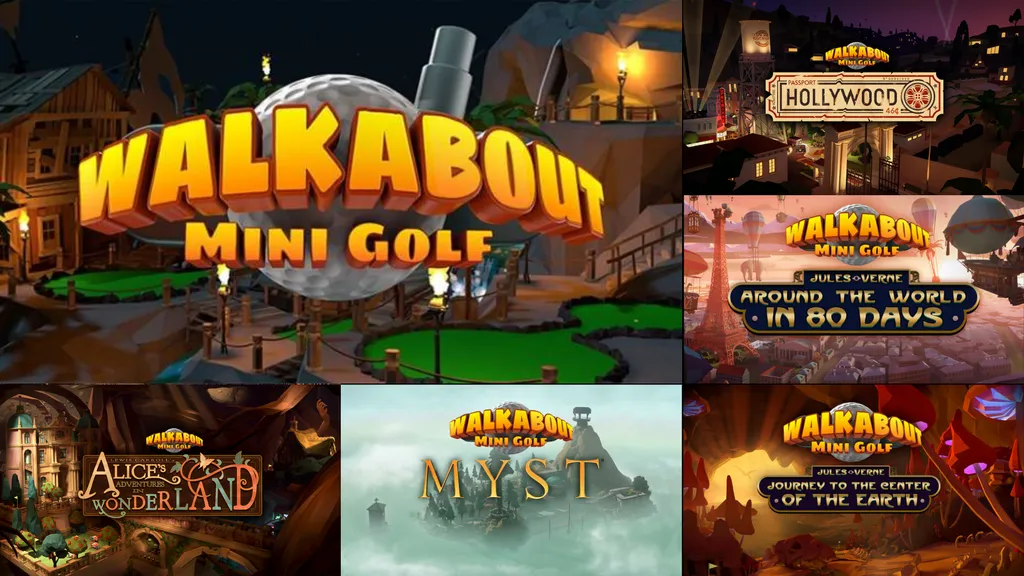
Lucas Martell: You know, I think the thing that I love about the Hollywood course is sort of like that it's really sort of a throwback. It's kind of the golden age Hollywood. It's an era that doesn't really exist. It's sort of this 50s, 60s where so much was happening with practical effects which are just so much more entertaining to see and golf around as opposed to now when so much of it is happening digitally. And I think that for us, we also just reached a point where we realized wait a second we've done so many different courses now and we have so much material to pull from. Why don't we imagine that a bunch of these courses are just actually like the film version of those courses. Farm some of those assets in a way that would have been one of the most expensive courses we've ever done if we had done it 20 courses ago. But now we've got all that base material that's like, "Oh no, now it's almost more like the greatest hits."
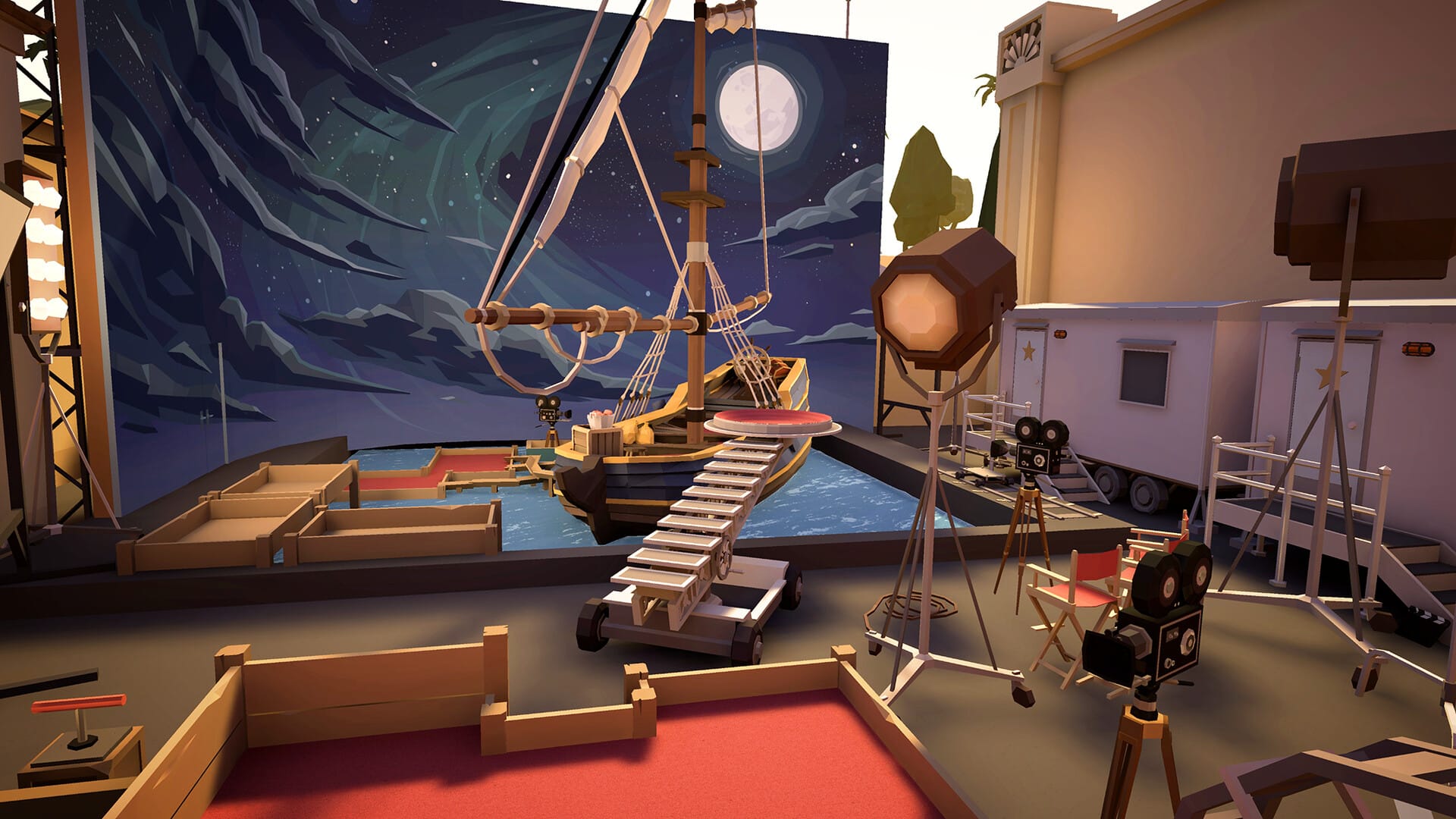
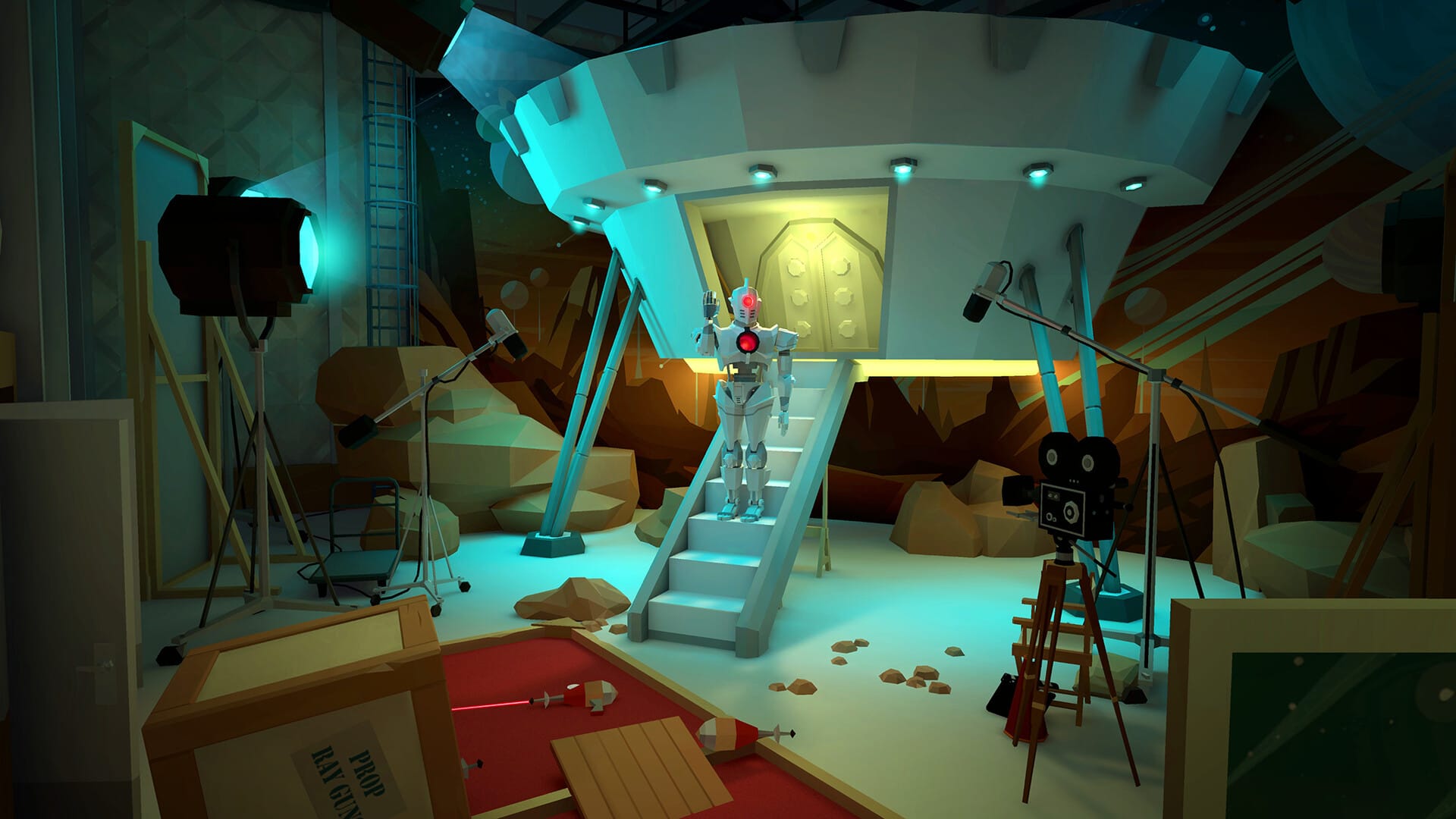
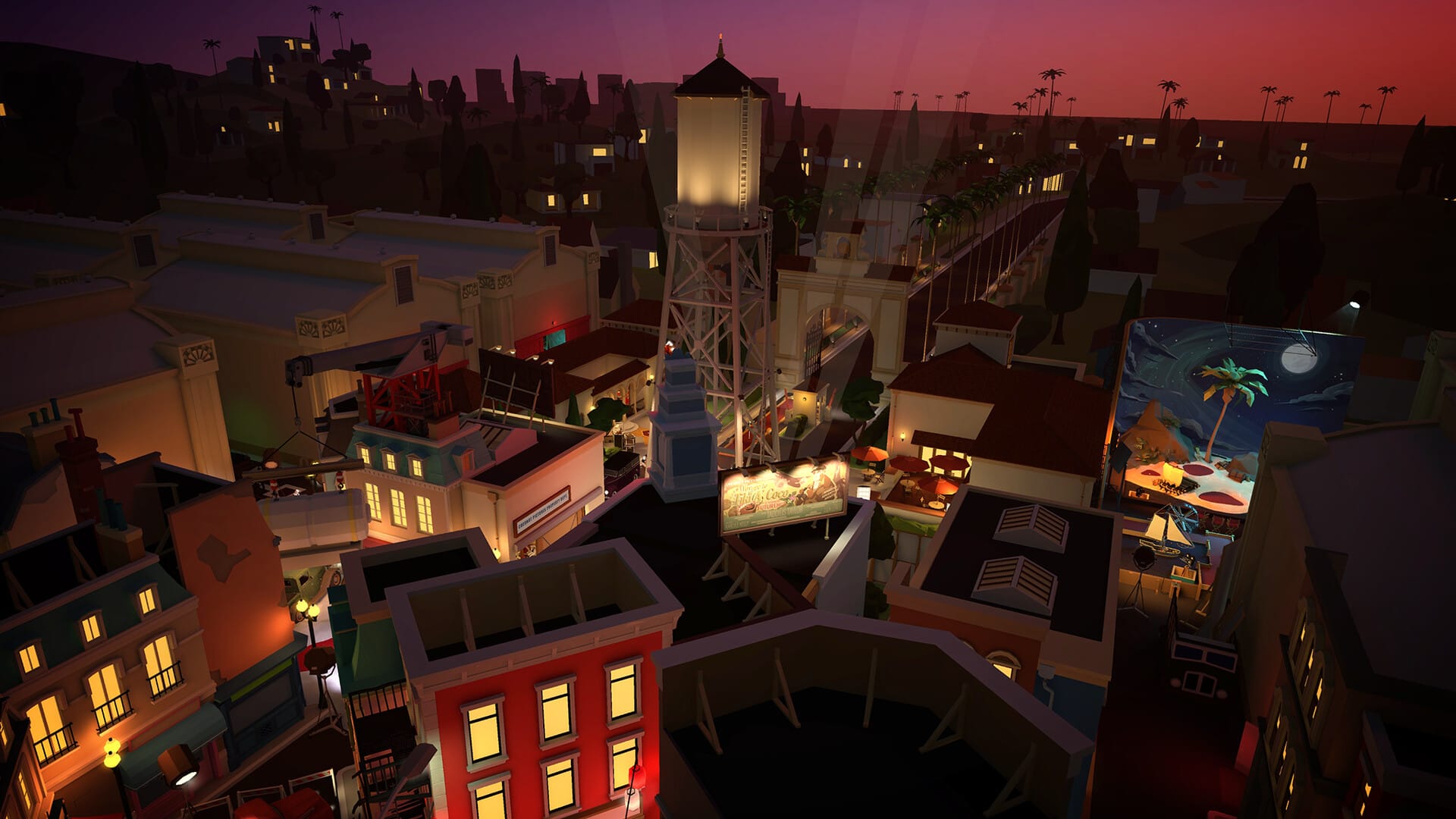
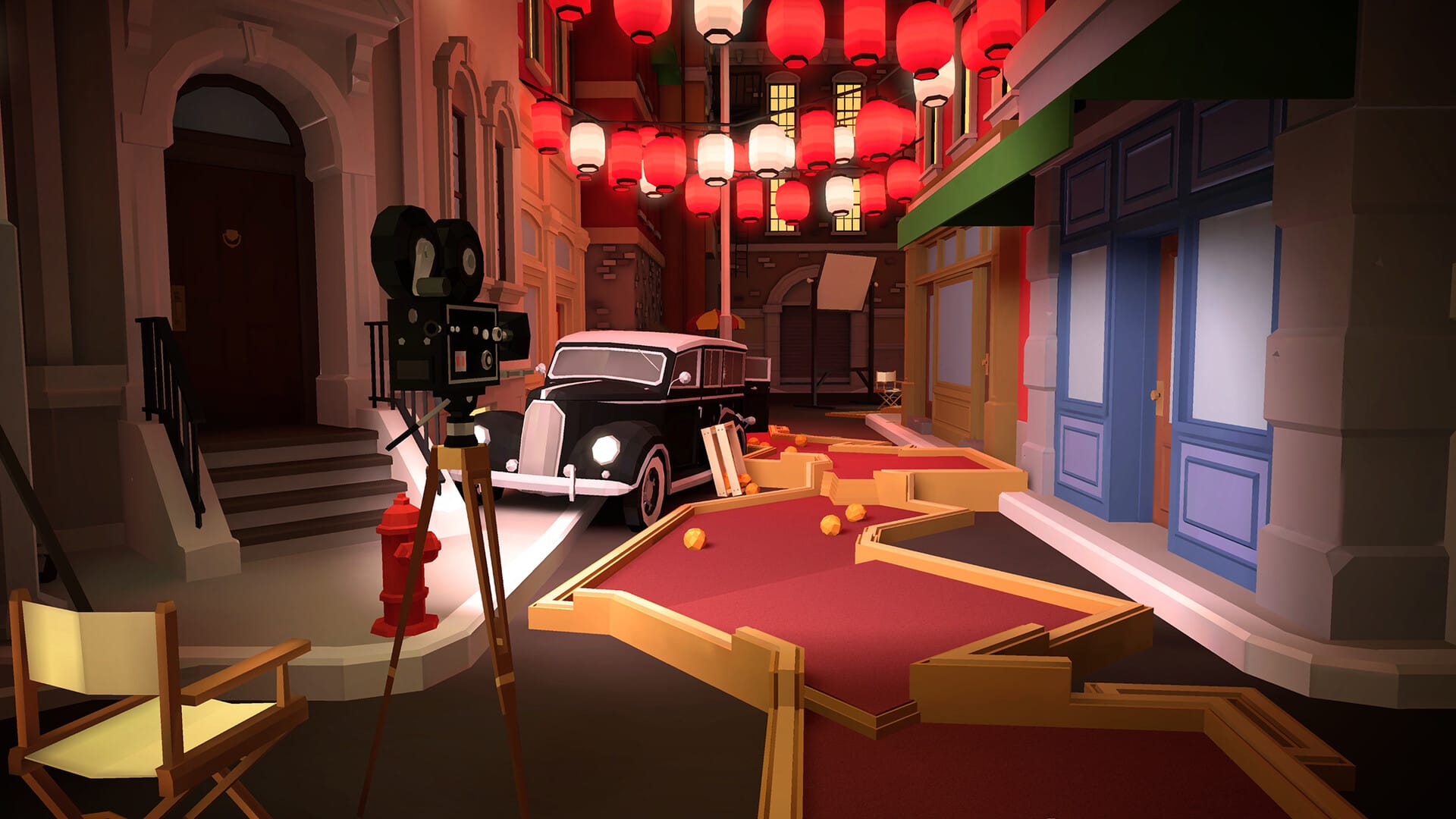
Walkabout Mini Golf Passport Hollywood
UploadVR: So you just pull it from what existed before.
Lucas Martell: Yeah. Exactly. And we still modify it, we still do a whole bunch to it and it's still done with a lot of care. But yeah, like I said, it's more of a greatest hits than anything else.
UploadVR: What was your background specifically at Hollywood before you came in?
Lucas Martell: I was a music major in school and then I started getting in the sound for film and then moved over into color and worked on Sin City and a couple of different things like that around Austin. Then during that, I made a short film called Pigeon Impossible and then sold that to Fox Animation, which became Spies In Disguise, which was the Will Smith and Tom Holland film where Will Smith turns into a pigeon. And so I wasn't super involved in the production of that, but while that 10-year production was going on, I was then sort of doing development.
So I was doing a lot more screen writing, shopping stuff around. I directed a lot more short form and commercial work. I was doing a little bit of everything, but I will say that the bulk of my time was actually spent, there's I think the third hole in Hollywood is the development room where you see all the scripts thrown out all over the floor. That was pretty much the world that I lived in for a very long time. Production tended to be a very short chunk of it and like 90% of Hollywood is trying to get your thing made. And it's sitting in rooms pitching and repitching and trying to just like sitting in story meetings and working all that stuff out. Sadly probably one of the least interesting rooms in Hollywood is where I spent probably most of my time sitting in those pitch meetings.
UploadVR: How much of that of your past skill set was almost like a one to one transfer to VR? How much did you actually have to learn when you got into this side of it?
Lucas Martell: I think that I have done so much animation and hands-on work that the coding was probably one area that I had to learn and I actually don't do coding anymore. I've been shut out. I'm no longer allowed in the kitchen. Anytime I submit a code change, there's always a couple of eyebrows raised of what fresh hell I've unleashed on the game.
I would say that probably the other biggest thing that's been sort of a learning issue for me [was] just the business of games and how I thought that it would function a lot like Hollywood and it is almost opposite in every single way. And this is more speaking on like the business side of things, but in Hollywood it's so much that it's you've kind of got the idea, you come in, you do a script and it's a very linear process, whereas in the games world, it is almost actually more like the old school Hollywood approach where everything is very insular to a studio and you don't have people coming into a game studio and pitching an idea.
You've got someone internally building a prototype, developing something, but it's all happening internally, which is that's kind of an old school way. There's still a couple of like animation studios like Pixar are still Pixar and Disney still kind of do things that way, but yeah, it's just a different beast than the film world where the script and the story is really the thing that you pass around and shop around and everything.
Walkabout Mini Golf Passport Hollywood Tour
UploadVR: So each course, and especially Hollywood when I did my tour of it, feels like you go on this journey. There's a story there.
Lucas Martell: You can think of it like three act structure. It's basically you got your story beats, but you just happen to have eighteen story beats. And sometimes we think more about an actual story if it's more of a gimmick hole where you're trying to do something thematic with a hole. Wallace and Gromit would probably be the one that had the most of that like, "Oh no, here is the very clear story beat that happens." Sometimes though that's a bit more gameplay. And I would say that there are certain things like Arizona Modern is one where I feel like that is pure gameplay from the design of that one, but even then you still see this bridge sort of like shooting out into the space out the side of the mountain. You see that the whole course and then leading up to that is all kind of building up and getting you excited to finally go back and be able to see this big vista from the other side of it.
So, there absolutely is some screenplay and a structure, especially structural stuff that kind of comes in from the filmmaking world. I also just have to say that Don Carson, who I know did that walk through with you, he is an absolute master of environmental storytelling and I think that he really taught me a lot about how much you can say with very little in terms of just placing assets in a very specific way. And like just you don't have quite the linear story that I'm used to in film where you've got characters and you got a really clear sequence of events. It's a little bit more general, but it gives you a sandbox to play in. Also Emma Mercado, one of our artists, is also just absolutely fantastic at sort of creating all these beautiful little vignettes with just the prop placement that's sort of like it seems like such a simple thing, but you can tell when someone who really knows what they're doing is placing those because it absolutely tells a story visiting a crime scene. You can tell what happened here and why and there's a whole backstory behind it that's just amazing if you take the time to really study it.
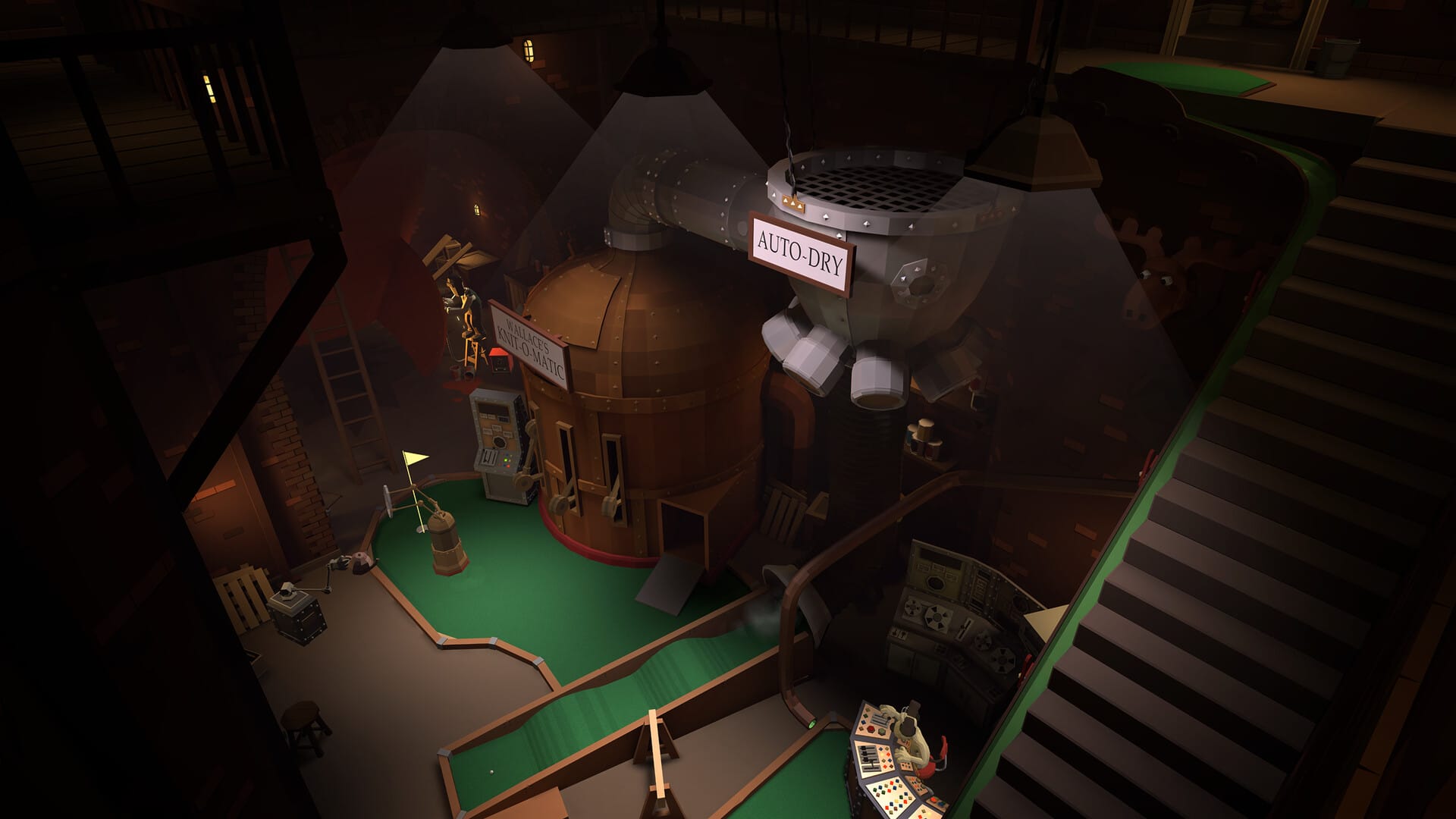
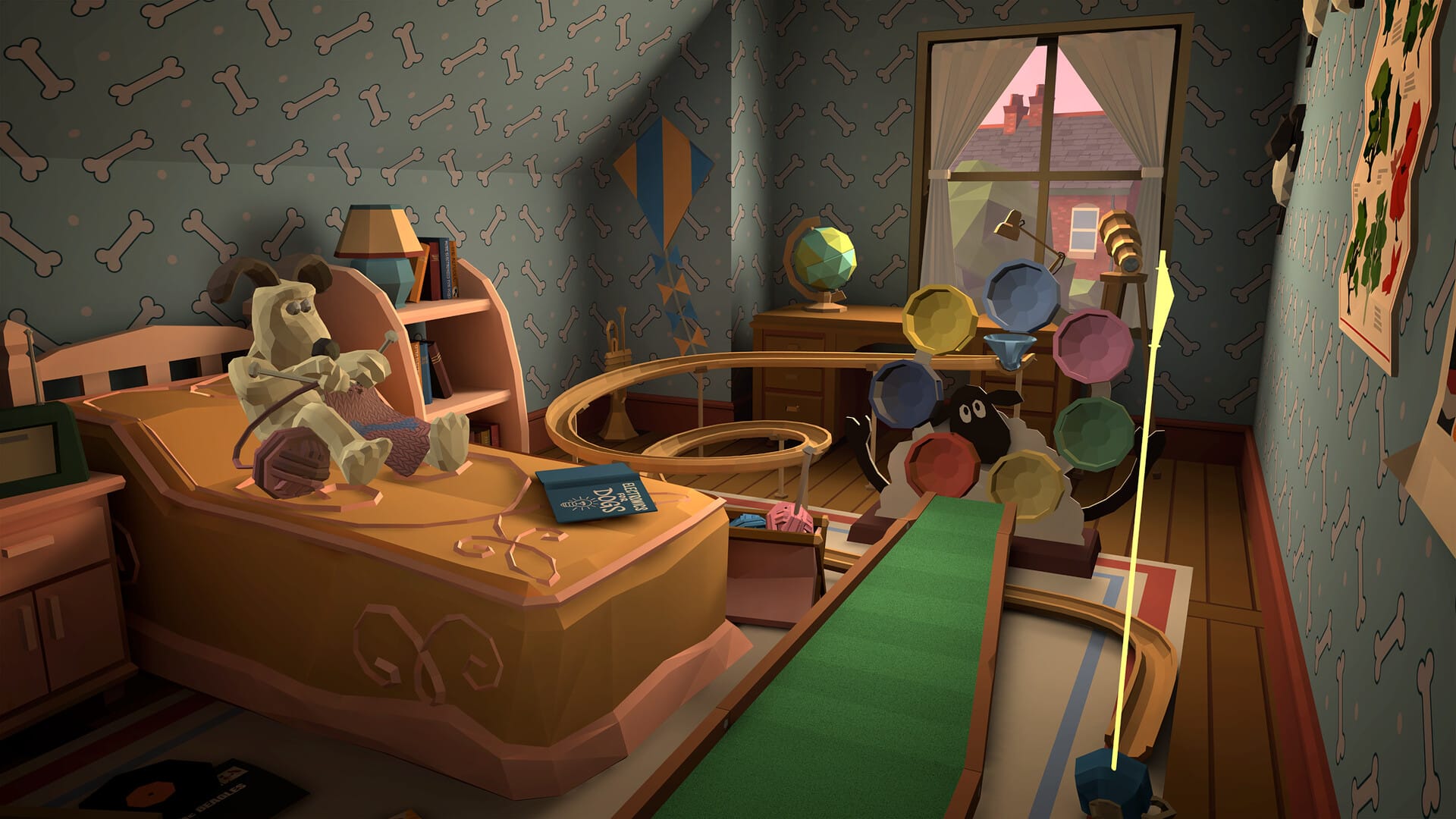
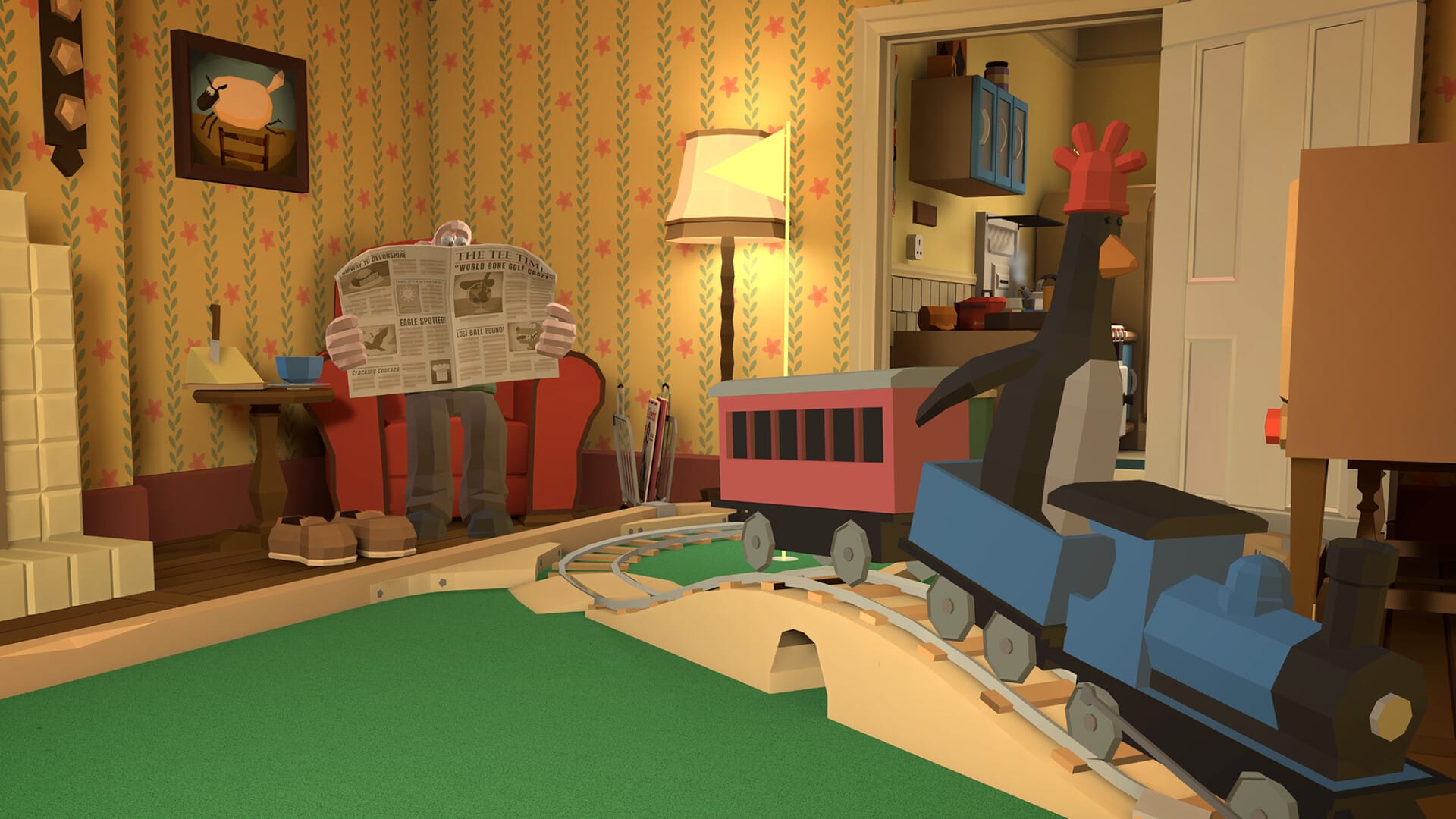
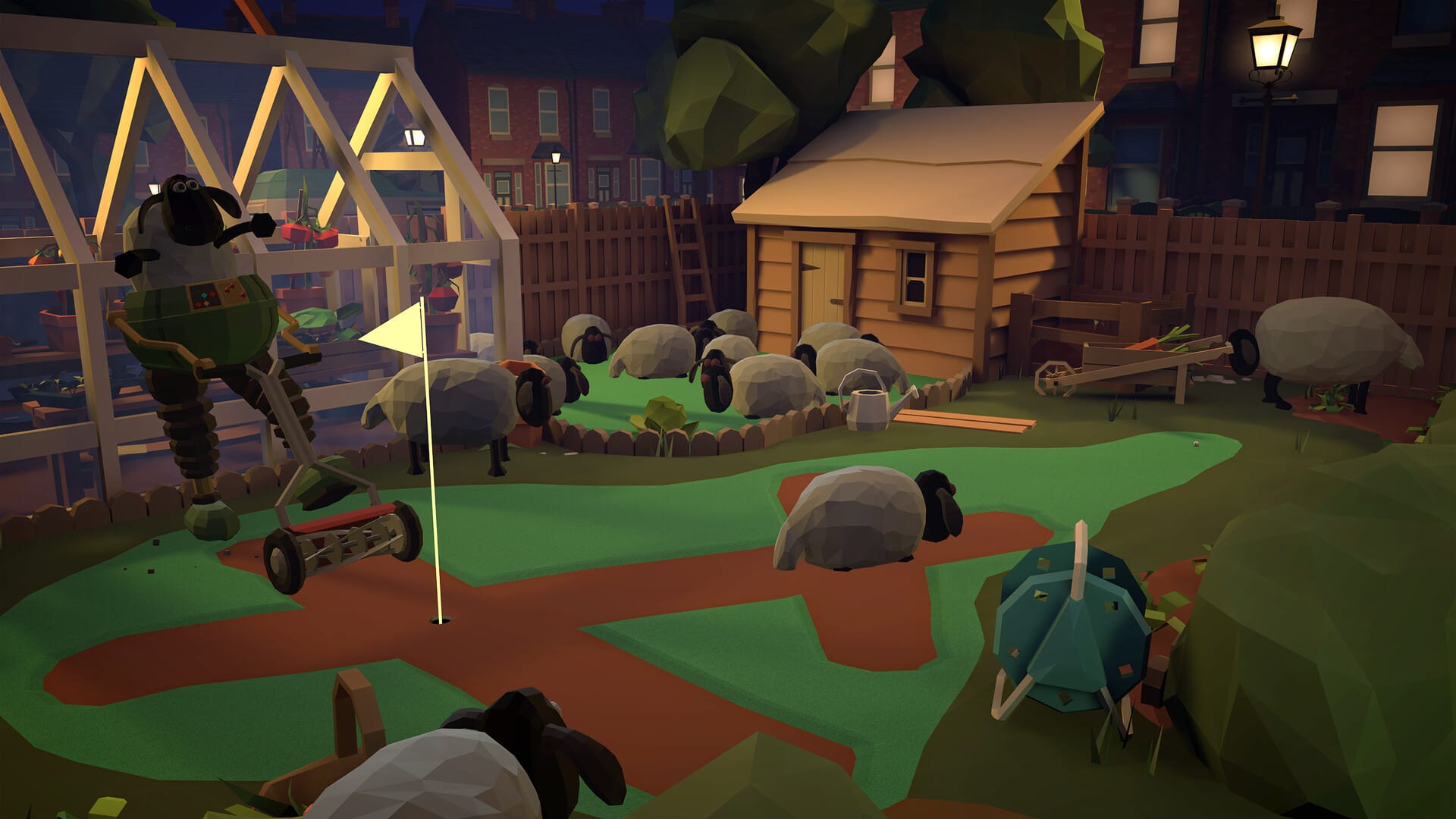
Walkabout Mini Golf's Wallace and Gromit course
UploadVR: So have there been moments where you'll design a hole and there's all these elaborate intricate setups and someone will say, no, just put this prop here and it just fills in that whole gap.
Lucas Martell: Oh yeah, absolutely. And we also do a balance where we always start with the environment in the world first. We do think about gameplay early on, but we usually don't really nail down the gameplay because for us, it's more about sort of the placement. Part of the reason that it's called Walkabout is that it is almost more about visiting this course as a world that you're supposed to explore or encouraged to explore. And mini golf just happens to be the thing that allows you to or gives you an excuse to sort of go on this particular path, this particular journey. So sometimes the holes do absolutely play into the story and sometimes it's almost more just like the hiking trail. Those are like the little markers along the way that guide you.
UploadVR: Back to Passport Hollywood for just a second. Obviously, that one holds a deep meaning to you because of your background. Was there another licensed course that really holds a personal touch to you? I asked that because Don said he personally fought for Alice in Wonderland.
Lucas Martell: I didn't even realize until more recently that I got to check off a couple of bucket list things because when I was a kid, I had wanted to make a journey to the center of the Earth adventure game that was very much inspired by Myst. And then the fact that we got to do an actual Journey to the Center of the Earth course and the actual Myst course checked that little childhood box because I grew up as a child of the 90s and the adventure game back then which that's where I spent so much of my time. So I'd say that those are probably the two that were maybe the most nostalgic for me.
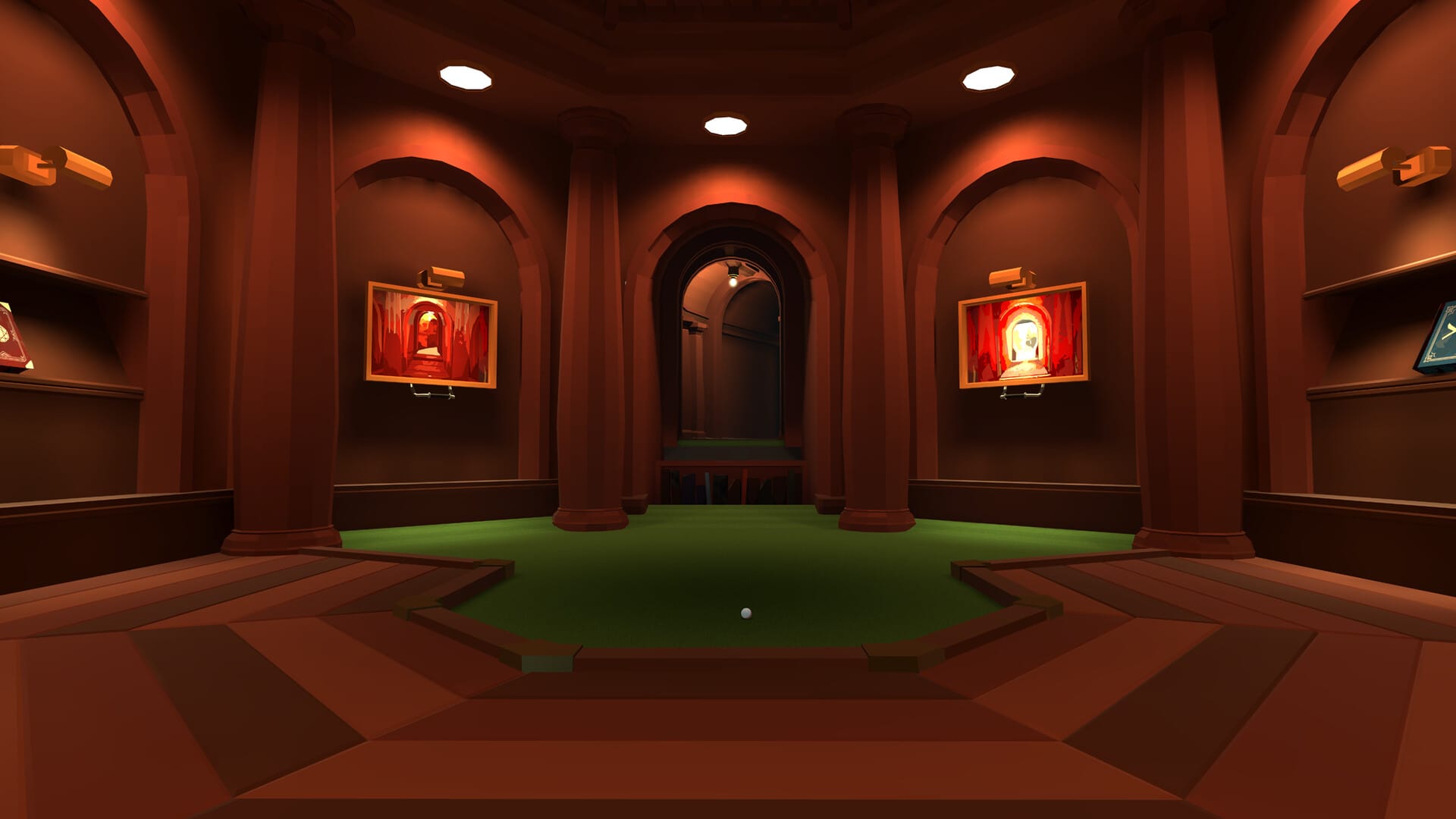
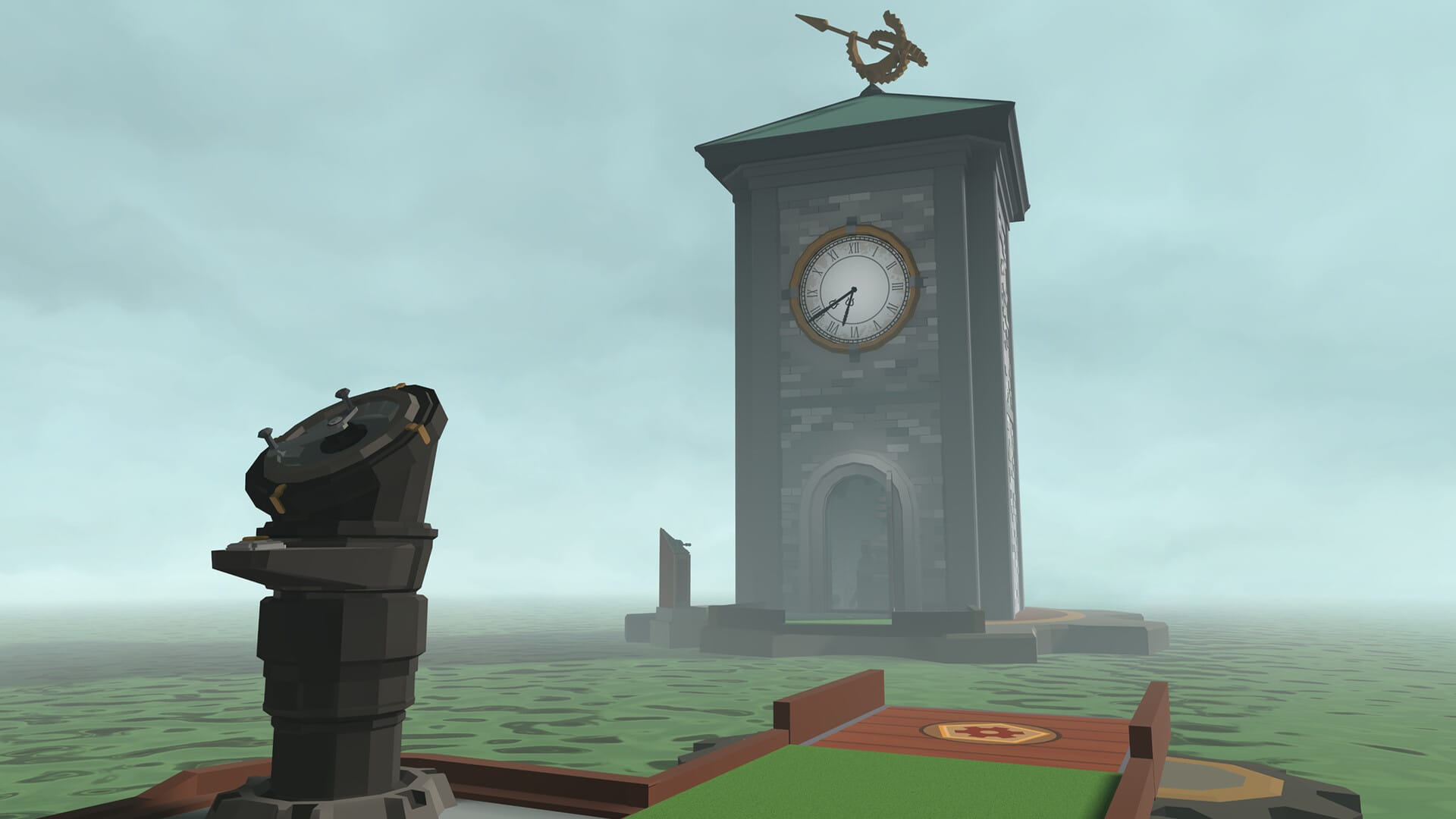
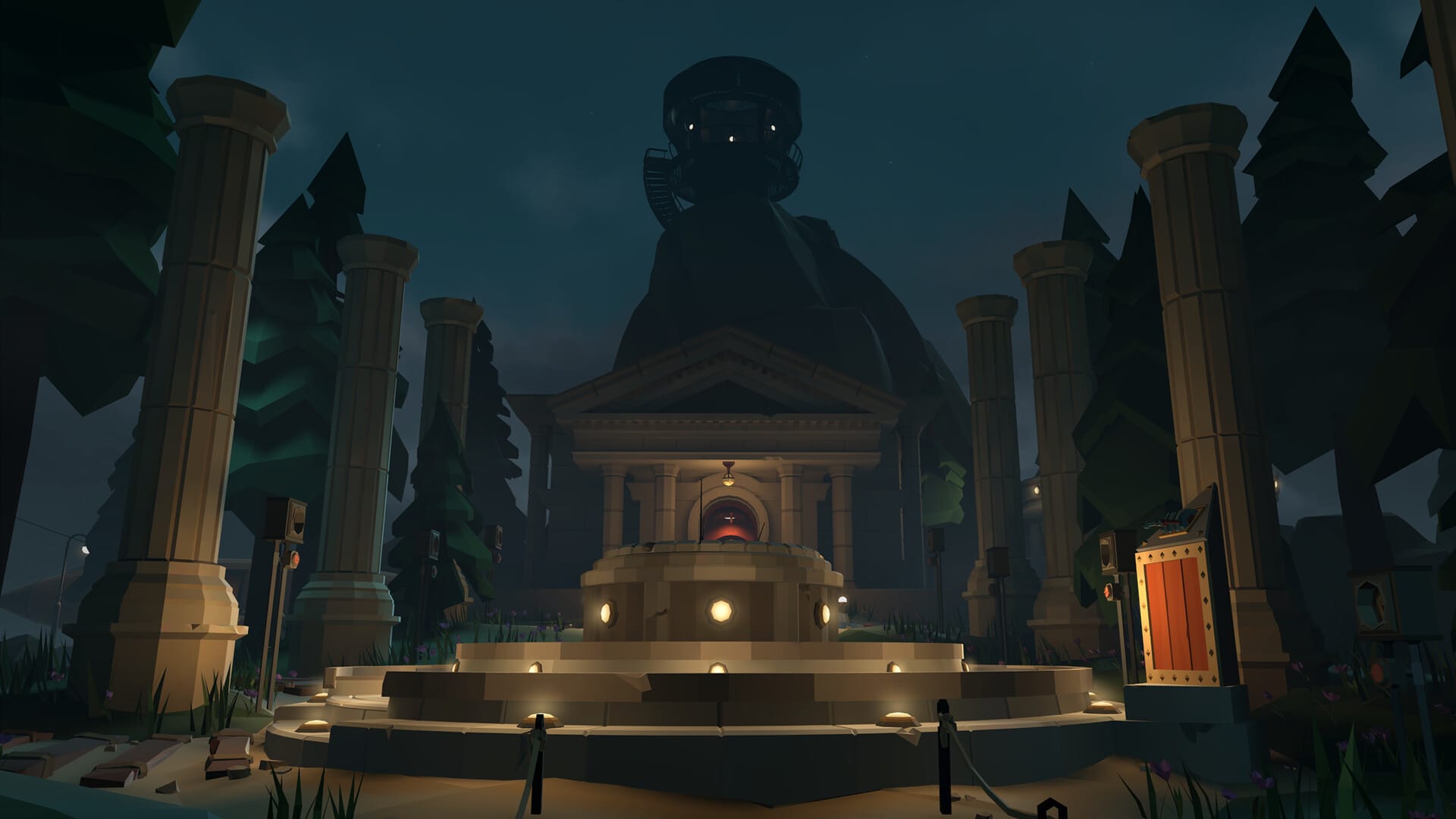
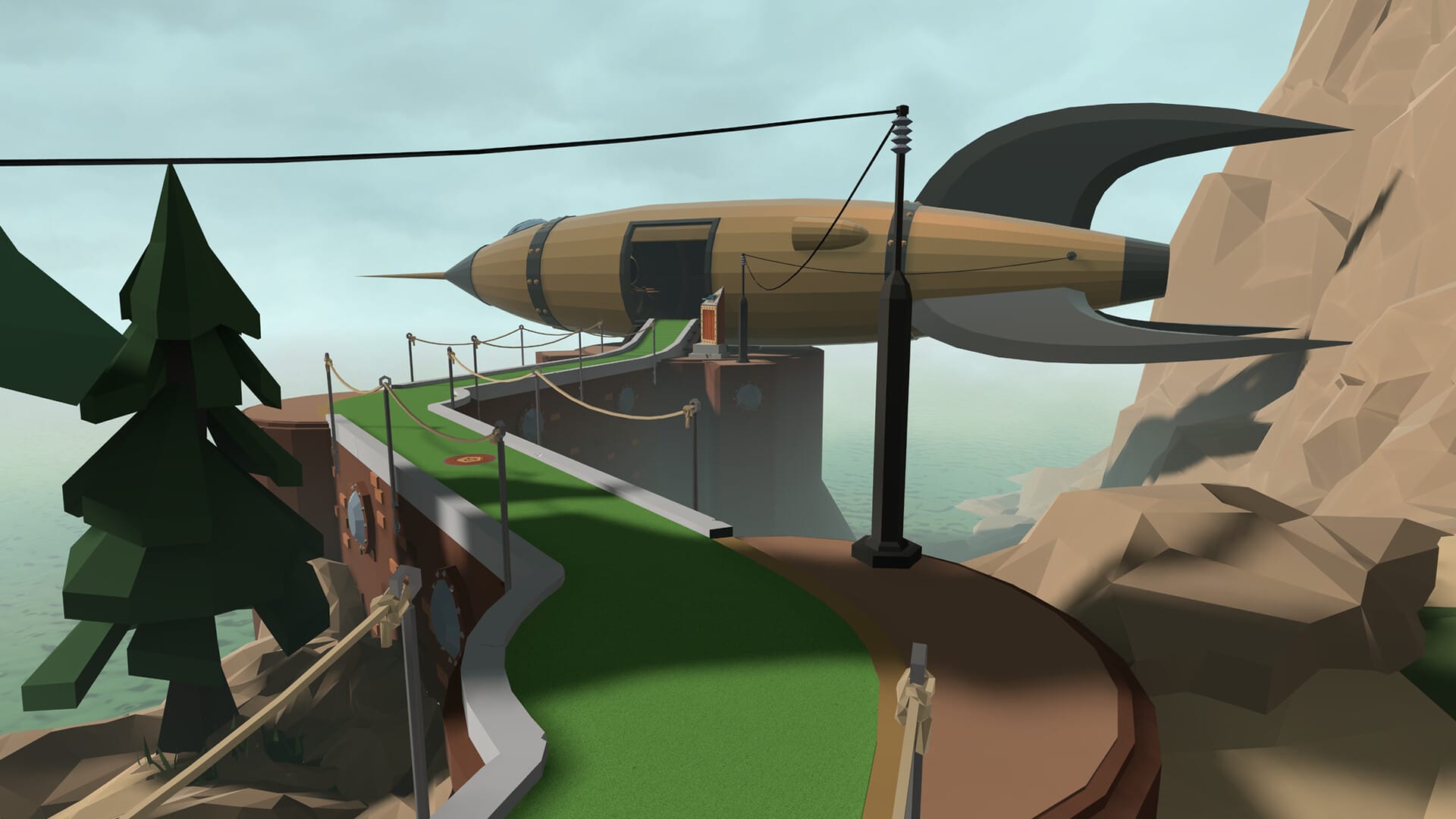
Walkabout Mini Golf's Myst course
UploadVR: So as you're conceptualizing these courses, does that happen a lot where a member of the team will say, "hey, I have a deep attachment to this," similar with Don with Alice In Wonderland?
Lucas Martell: Yeah. Absolutely. So, currently we've got four people on the design team. So, myself, Don Carson, Henning Koczy, and Laura Krause. One of the things that we realized probably about a year and a half ago was that every course certainly needs what we call a champion. And we will be at our design retreats that happened about once every 6 months or so and people were all talking about ideas and throwing out things that we want to see. And ultimately we sort of boil that down to a short list of like, okay, here's what we're really working on this week. But what we also realized is that if we don't have someone who raises a hand and says, "I want that to be mine. I want that to be I want to own that. I'm close to it. I know exactly what needs to happen with that," that if you don't have that champion, it kind of doesn't have someone fighting for it. It doesn't have someone with a really clear vision. So I would say that it mostly comes down to the design team in that sense that it's usually one of the four of us that has to sort of be the driving force behind it.
Now that's not to say that the rest of the team isn't very influential on that, but the core idea of what something is has to come from that design team because that's the thing that unifies everything and that's what gives it the skeleton for the rest of the team to hang on, so that when the artists are working on something, they still have a base to work from. They're not having to invent the story from scratch basically.
UploadVR: Okay, the design retreat you just talked about. I read your AMA on Reddit. There, you said that you already had your courses plotted out for all of 2026 and you're talking about 2027?
Lucas Martell: Actually, we have all of 2027 figured out. It's 2028 that we're starting to work on with the next one.
UploadVR: Wow. Are the design retreats where those decisions get made or you kind of like a specialized lay out the road map for that? Or is that in different places?
Lucas Martell: Yeah, that so the design retreat is usually about one week every six months and it is sort of the hatching grounds for a lot of those. So typically we'll come out of one of those with about three or four new courses and we'll usually touch on a couple of existing courses that just need a decision made or a little bit of just figuring out some element to them. And usually how that happens is that people come in with ideas of what they're wanting to do and we kind of pitch them and we talk back and forth. It's still a very collaborative thing because I can think of one of the courses that's coming up, I won't give away because we haven't announced it yet, but it was a cool idea, but it was missing a little something.
And what often happens in those design retreats is that someone will raise a hand and say, "I want to do GDC the game." Like, okay." Then someone else says like, "Oh, I I see how that could be cool." Sort of like, "Oh, maybe you could do like you do different types of video games. Like, it's like you're walking the show floor or something like that." This is a terrible idea. We're not doing this, but then a lot of times we have another element that we often call a twist and sometimes an idea by itself isn't quite enough to sort of hold a course. So, it'd be like, okay, well, what else could you do because if it's just in the conference center, that's not that interesting. Okay. So, place it in virtual reality, place it in the metaverse, do something to sort of make it a lot more cool.
I guess probably the best example is Around The World in 80 Days which there was the thought like "oh you just do holes that each one is sort of like a different country," which was interesting, but it just it felt a little bland and also a lot of those were like no, we actually want to do a course in Venice. We wanted to do a course in these places. It was right about the time that the passport series was being hatched and we kind of didn't want to waste all of that and burn through all of that really cool content where like I want to spend a full course in Tokyo. So, we came up with this idea, like let's imagine it more as the place where the travel is happening from.
So much of that book was about the mechanics of travel and just figuring out how to get from point A to point B and making that the thing and then putting it into the Eiffel Tower. None of that was actually in the book, but it was very apropos because it came directly from the time period that was occurring. Jules Verne was, I believe, involved somewhat in the creation of the Eiffel Tower in the World's Fair or maybe he just participated. I forget exactly what it was, but there were so many elements that sort of tied it together that none of that was exactly part of the book, but that twist made it such an interesting place to explore and something that was uniquely ours.
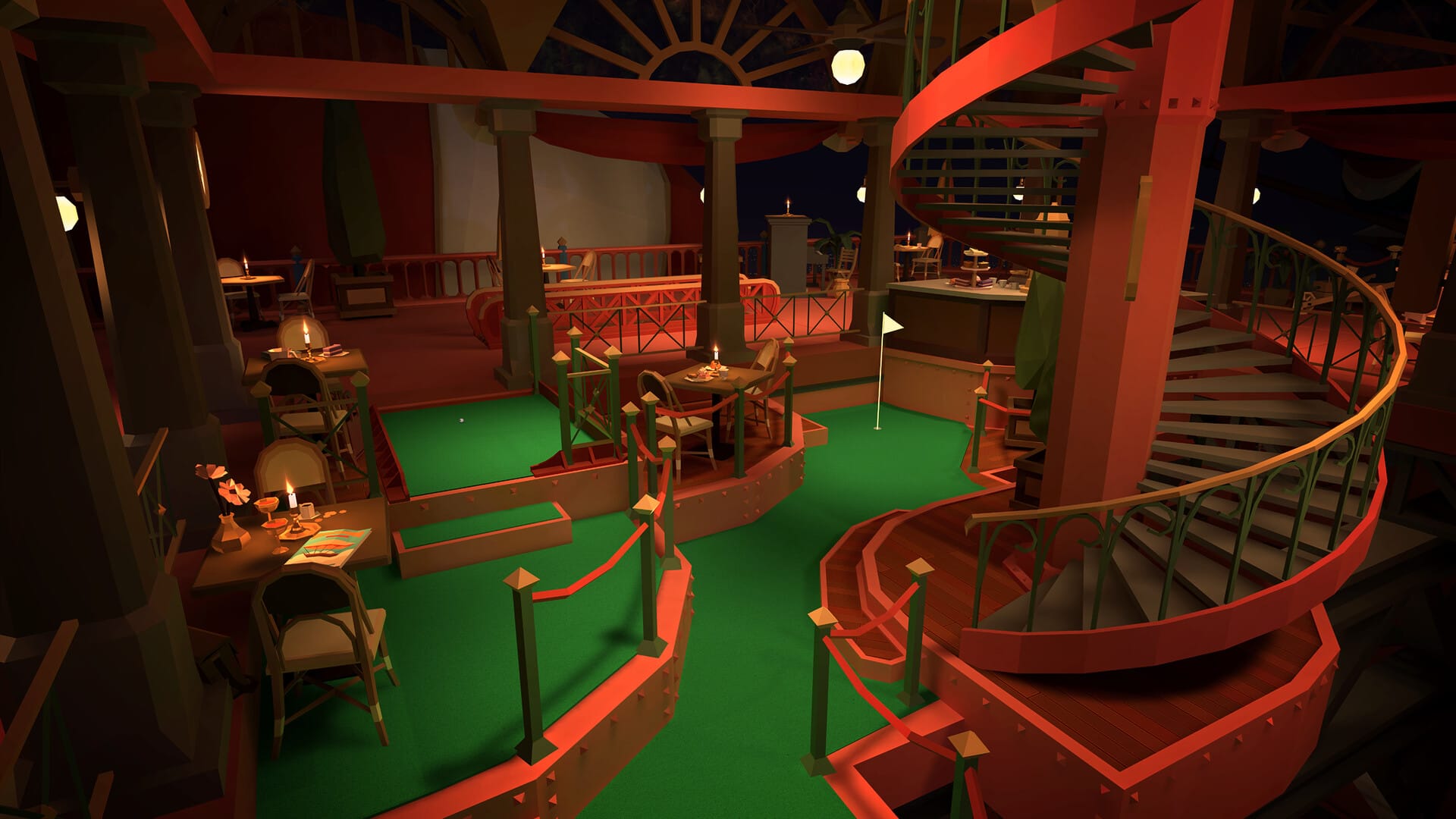
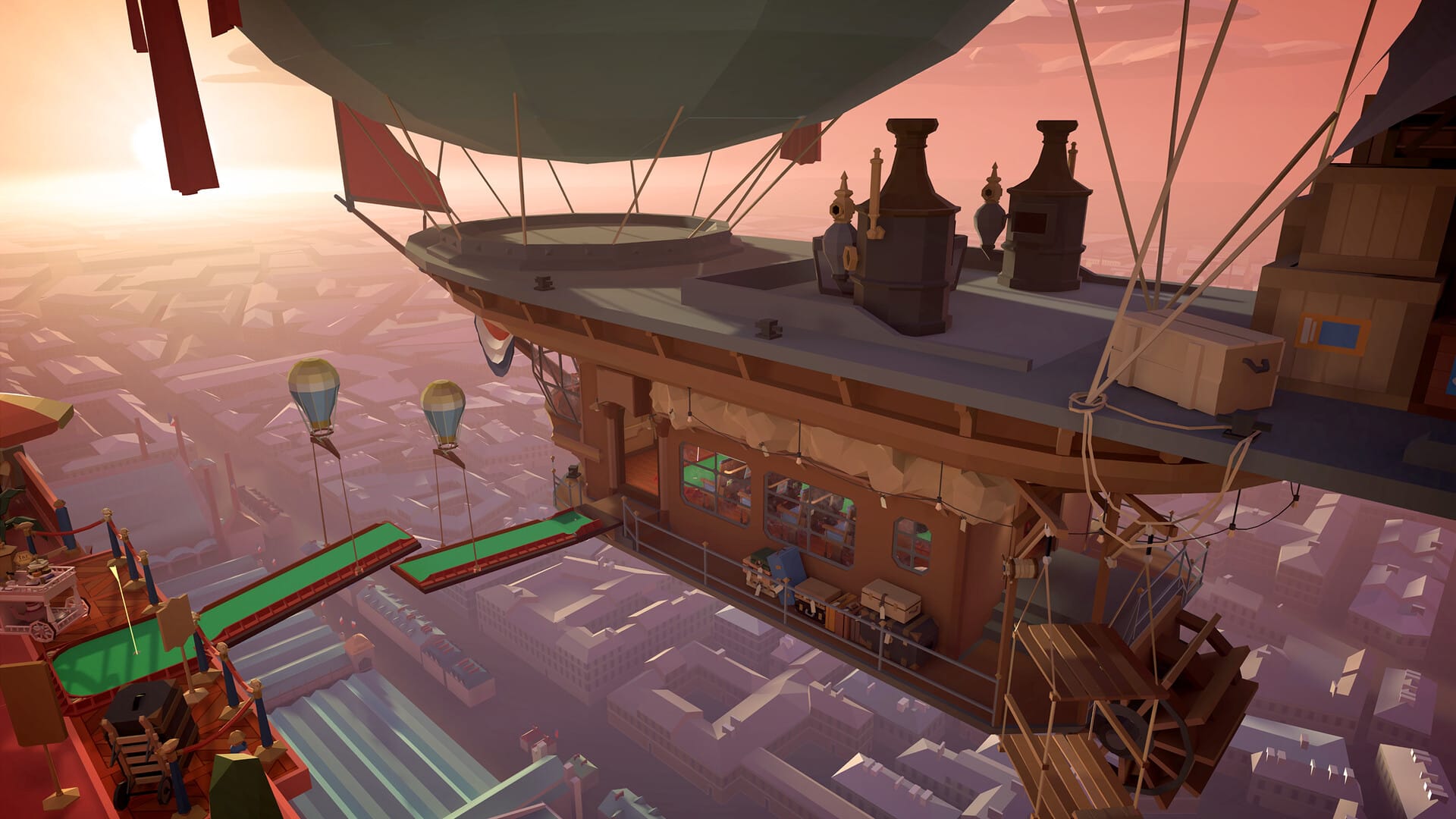
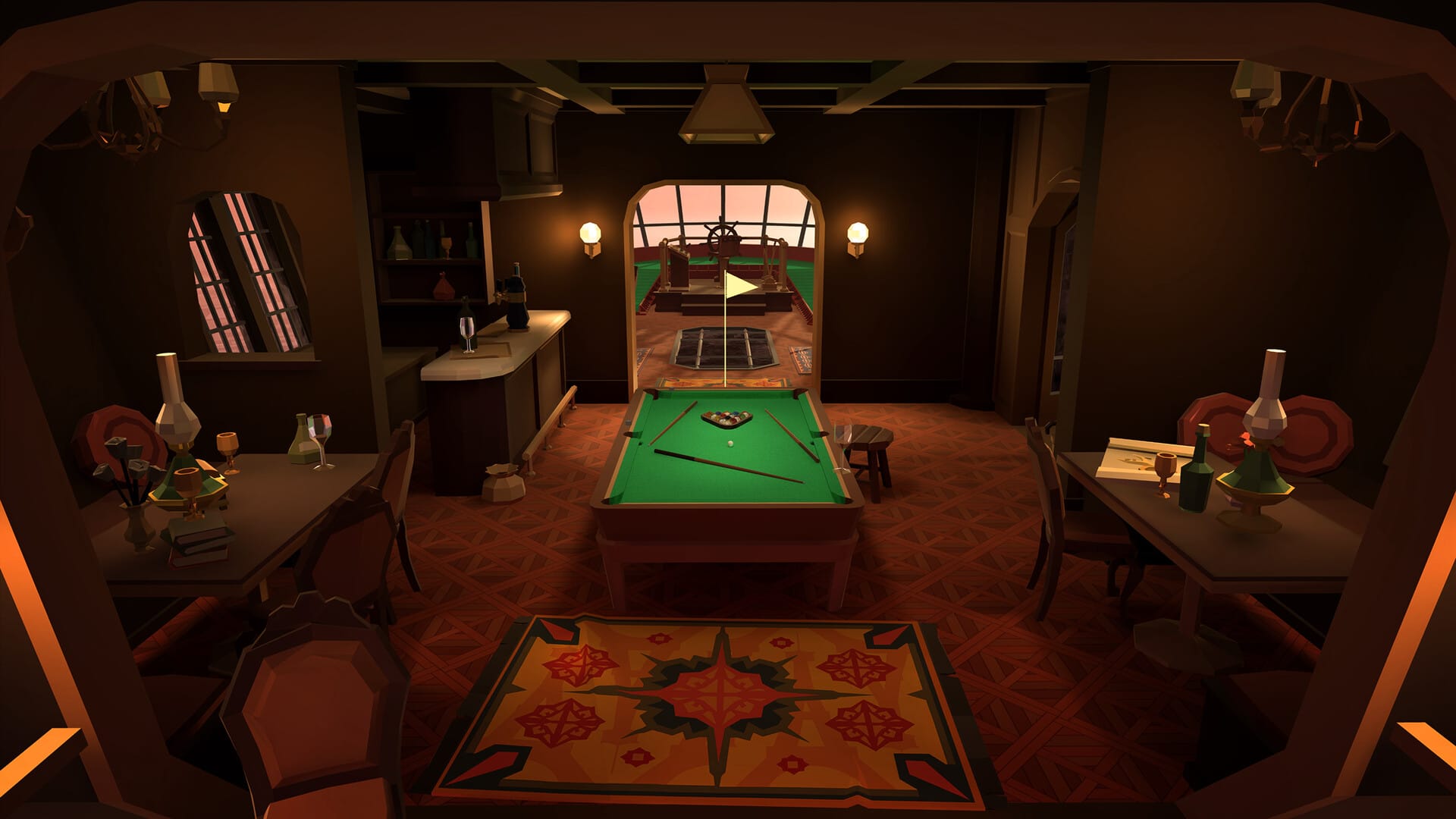
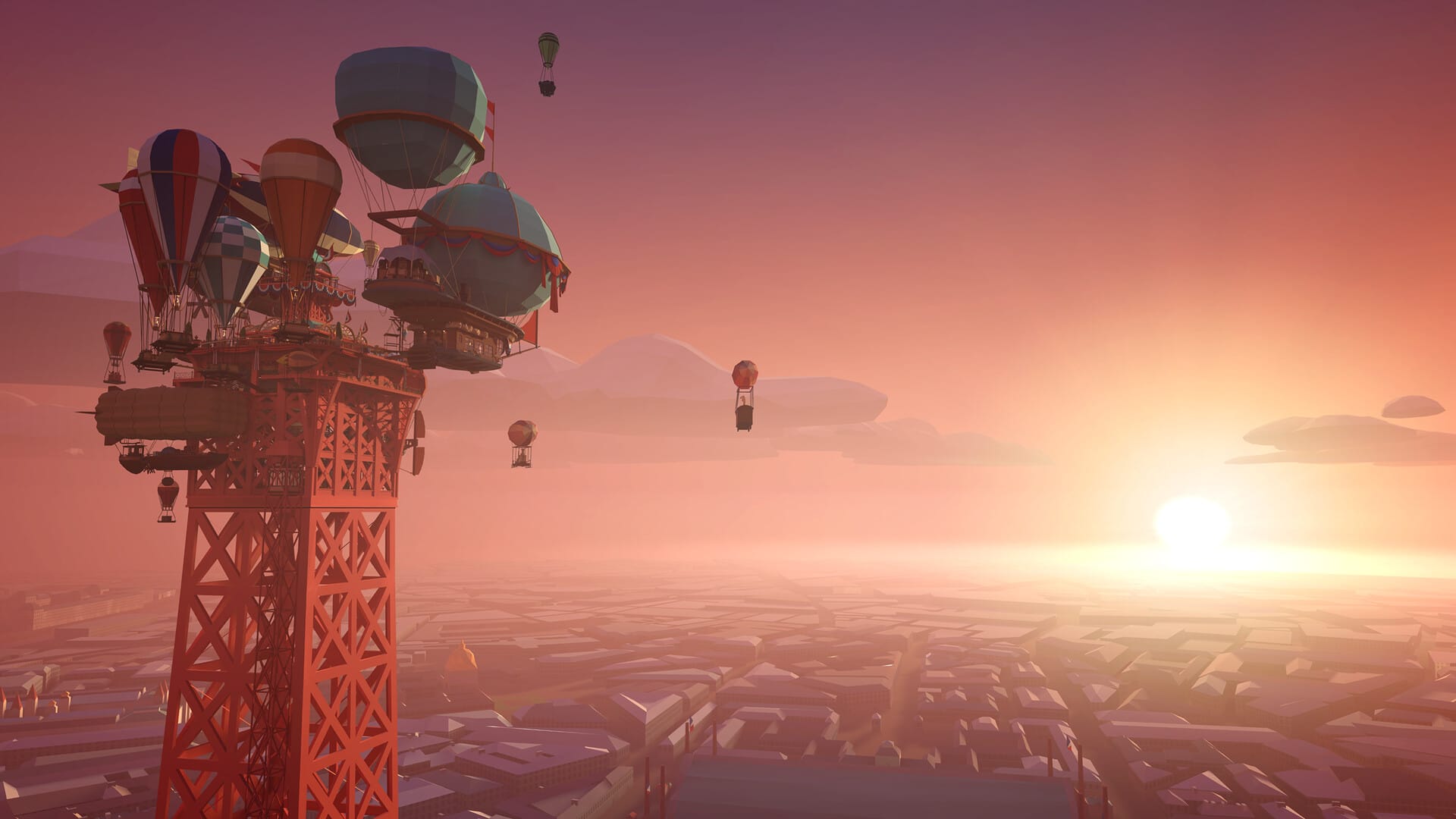
Walkabout Mini Golf's Around The World In 80 Days course
UploadVR: Have you ever been into a situation where you'll have the course idea, you said you got everything for 2026 and 2027 done. Have you ever like put something on the backburner saying, "Hey guys, this one isn't fully baked yet. Let's put this on the backburner and bring another one up."
Lucas Martell: I would say that we used to do that a lot more. I feel like now we've kind of figured that out. We all have sort of a sixth sense of this is ready versus maybe it still needs to cook just a little bit longer. So we don't do that much anymore. Although there were times in the past where we would shift the order around more or we would be getting somewhere on a course and be like, you know what? This is still missing something. Let's actually shove that down the line. Let's move these other couple up. That is sort of chaos for the production team.
So we've done a lot less of that lately and a big part of that has also just been we added Laura Krause to the team about a year and a half ago. She's really proven to be that fourth voice in the room and she also has a different aesthetic than all of us. We needed that balance and we needed that extra person to give us the time to create something. I almost think of our design team like the bullpen and like a baseball team. You know you got your starters and you've got some closing pitchers and everyone sort of has a different skill set. It's about putting the right person in at the right time.
UploadVR: You're the head of the company obviously, but you also talked about being a champion for certain courses. Sometimes that's you and sometimes it's other people. How do you balance being the champion of one course where pretty much the buck stops with you versus having to go be CEO guy and there's champions for other courses and having to step on their toes versus giving them the creative freedom to build what they want?
Lucas Martell: Yeah, well I would say that I'm the CEO of the company out of necessity because someone had to have the title? Someone had to do it. So I wouldn't necessarily put myself. That's not sort of like how my brain naturally works. I would say that the way that I personally balance that is not unlike um directing film or anything like that, which is you want to create an environment where people are able to do their best work, but to also ensure that it will fit together. So the way I always usually think about that is sort of like creating a sandbox. Like you if you just sort of set people loose on a beach and said, "Hey, you know, here's a bunch of stuff. Go build something." It's going to be chaos. Whereas if you as a director, if you just come in and say like, "Okay, we're going to do a course." I want to put up the walls of that sandbox and then people know they're like, "Okay, I can build anything that I want, but I've got these constraints within it."
It's really about defining those constraints, but then really giving people the freedom to kind of take it and own it. And I mean something that is so unique about our process is that unlike most traditional games where they would come up with a list of assets, you would do concept art for those assets, you would hand them off and each modeler would only work on like one asset at a time. We actually hand the entire course between different people.
So at any given time, so like one of the artists will just like own the course for four or five weeks. Maybe they're focusing on the architecture. Tad Catalano tends to do a lot of the architecture and he owns the entire course for that time. So if he decides that he needs to move something around, he wants to knock out a wall and open something up for visuals. Like he might raise his hand and say, "Hey, is this okay?" just to make sure he doesn't step on anybody's toes. But ultimately he's got it at the moment. So if he really wants to and believes that it'll make it that much better, he might just go in and do it and not tell anybody. But that's part of that trust factor that someone's not going to destroy something that doesn't fundamentally make it better. That freedom I think is a big part of what makes Walkabout's environments especially so cool and visually interesting is that the fact that it is getting lovingly handled in its entirety by so many different people.
UploadVR: I asked Don the same question I'll ask you now. Is there a specific part of Passport Hollywood that is a little Easter egg or thing that's especially meaningful to you?
Lucas Martell: I think that for me the one specific thing that I squeezed in there was I mentioned hole number three which is the development meeting room. That building was loosely based off of what had been the music building on the Fox lot. That actually became Fox animation basically. So we were working on Spies In Disguise, that was where all that was happening. It's not the exact thing, but it was definitely inspired by that. I was like "you know what I spent a whole lot of time going in and out of that building, so let's memorialize that and represent all of the uh all of the different drafts of that script that got tossed into the bin during the development process."
Yeah, I remember taking the tour and I thought to myself just from the people that Don was explaining who worked on the course. I know that okay this probably meant something to this person. That probably meant something to that person. Just as we're going through different rooms like the props room and the art room that's great because you can tell a lot of care went into that. That's awesome. You love to see that. Honestly I don't know half of the stuff is in there. That's one of the other big things, but also that there's so many in jokes and Easter eggs and those little details that people are putting in that because most of my focus ends up being on the very front and just a little bit towards the very end of it.
UploadVR: So, I'd be remiss if I didn't talk about the general state of the industry. Gaming's had a tough time in the last three years with layoffs and studio closures and Mighty Coconut has not been immune to that. So, in the course of your restructuring, you said that some things were going to be scaled back. So how do you prioritize [projects] while having to run a little bit leaner now due to where the state of the industry is?
Lucas Martell: Well, because Walkabout is a mini-golf game, we really decided to prioritize the mini-golf. Which makes a lot of sense. We had been doing a lot of other things that I still absolutely love and there's still a few things that we are going to be releasing because they had been in development or we're even getting basically close to done. So, there will be a little bit of a tail end of some of those extra non-mini-golf things that we're going to be announcing and launching here soon. But, a lot of that was frankly experiments. We were trying to see what we could do, what the audience responded to, and would people spend time doing some of these other things beyond just mini golf. Some of those were successful, some of them weren't as popular, but I think that we got a lot of what we needed out of them.
One of the other things we also realized is that the amount of time that we were spending was starting to it was taking a lot of time and effort to sort of like create those and add those and polish those. It was less about the actual effort that it took to make each of those in terms of like putting it into the game. It was more that just the tracking of all those things. And like suddenly you've got instead of just like a few big plates which of course are spinning, you've got like fifty or sixty little tiny plates. Like oh yeah, we've got to launch the slingshots on that course this week. Then next week, we've got to do this, which means you've got to do all the marketing art, all the social support. QA has to check it. We really didn't fully or at least I didn't fully wrap my head around how much of that ancillary stuff would go into actually launching all that stuff on an individual basis. So, that's really ultimately a lot of the stuff that we've pulled back from. So, I don't think that a lot of fans will necessarily notice a difference other than those who are really paying attention to all that extra stuff. That was unfortunately one of those areas that we just we absolutely had to pull back on because of the amount of resources that it was uh that it was taking out.
UploadVR: Walkabout started several years ago and this industry changes quite often. What do you think has kept Walkabout steady and relevant as you move through, probably two or three different generations of players by now?
Lucas Martell: I would say two things. I think the social side of it and the fact that so many people are able to meet up with either strangers or, for most people, it's people playing with others that they know and it may be physically distant. We've also had a lot of couples who played together and I saw the wedding. That was actually two strangers who met in Walkabout. Yeah, so they actually met as strangers and then they got married after that. The social side of it was something that I had not intended for the game to become when I first made it. In fact, it was kind of a fluke because Oculus at the time pushed to really add multiplayer. At the time, it was only a Quest 1 and I was like "there are hardly any headsets out there. Why do we need to add multiplayer to this one?" I didn't realize that the Quest 2 was literally going to launch like two weeks after Walkabout. So, thank you to them for calling that out.
The second thing that has really made Walkabout stay relevant is the world building and the care and the fact that you can go into one of these and even though it's still mini golf, it's still fundamentally the same mechanic, you're stepping into a totally different world every single time. And where a lot of games are maybe more constrained that like if it's set in a post apocalyptic world, you're very limited on the range of different types of worlds that you can convey that fit the story. But because with us, it's just a minigolf game. We can go drastic. You can have Sweetopia on one and then Journey To The Center Of The Earth. Each of them can have their own identity and I think that's kind of just been luck that worked out so well, but once we learned that, I think we've absolutely been pushing that and been pushing ourselves to do better, more interesting worlds because that's also the thing that I think keeps people coming back.
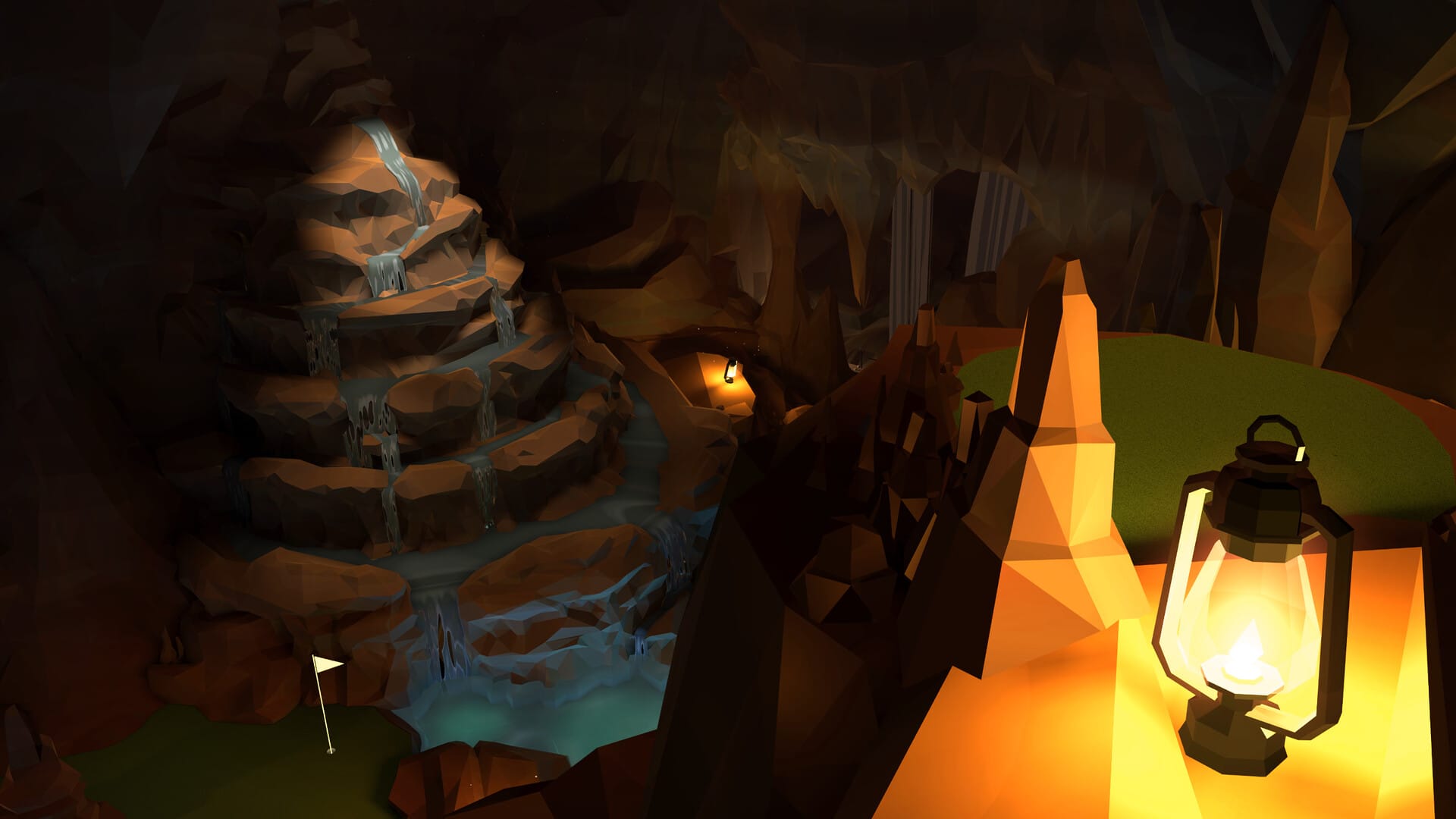
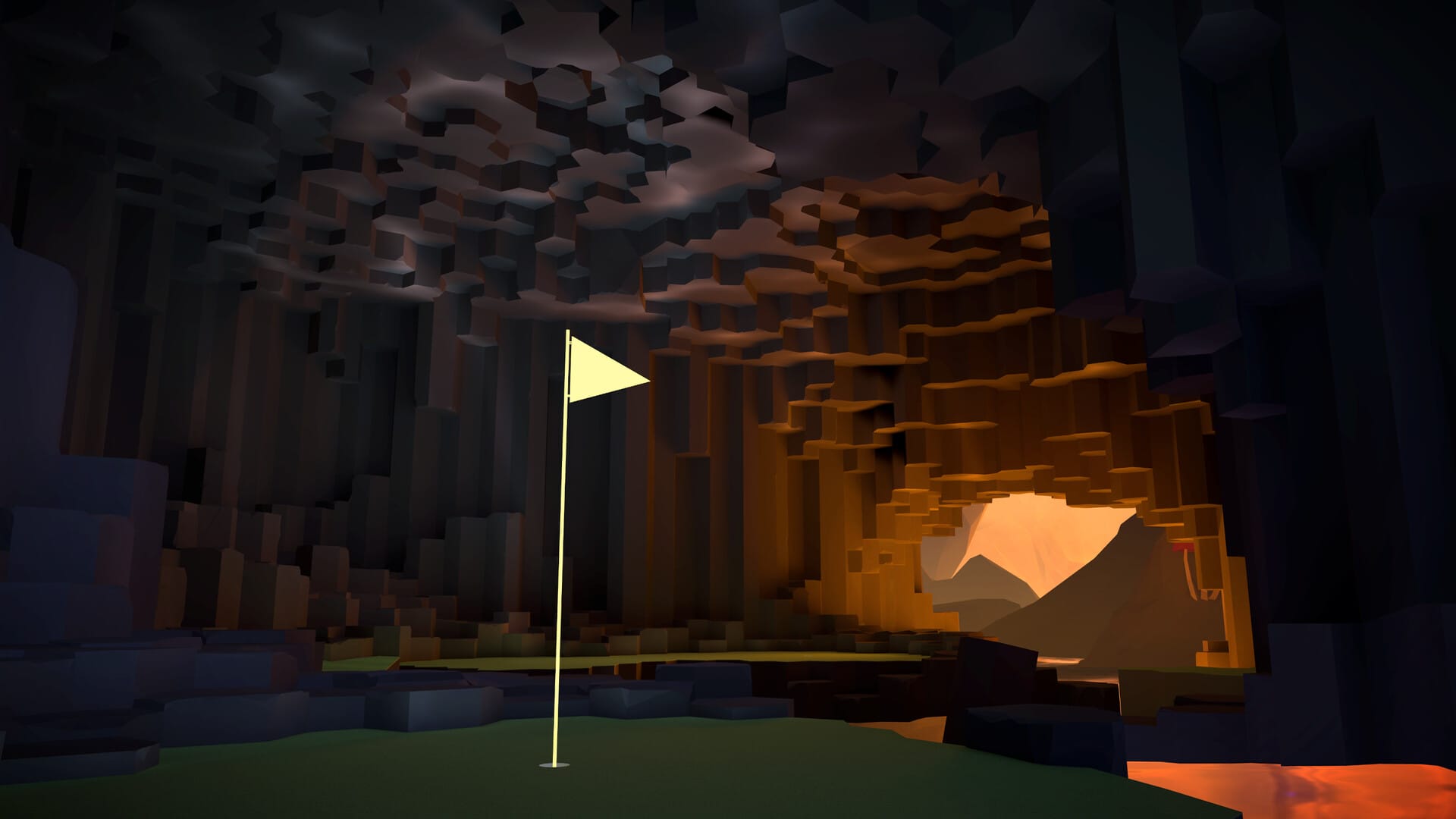
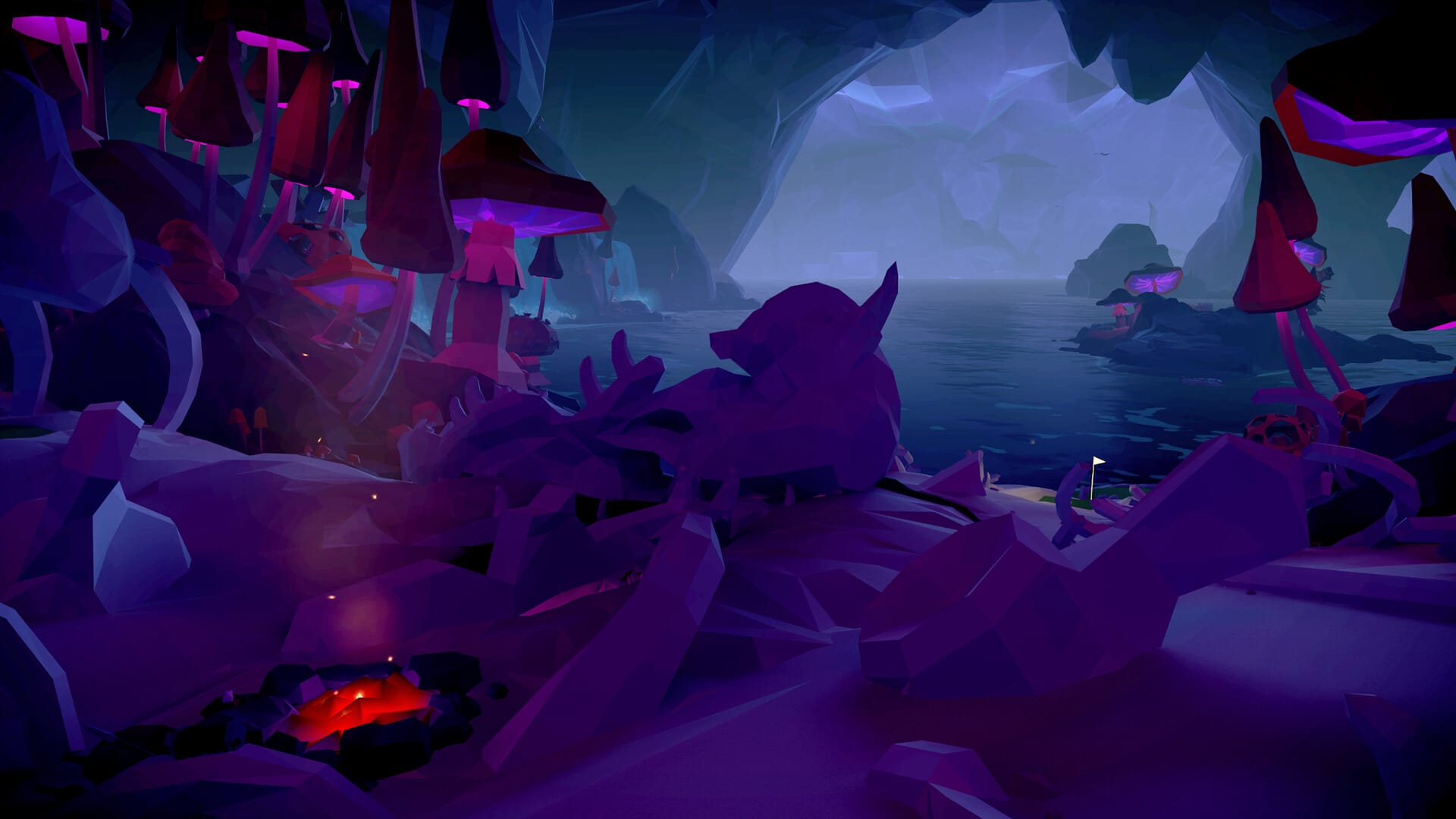
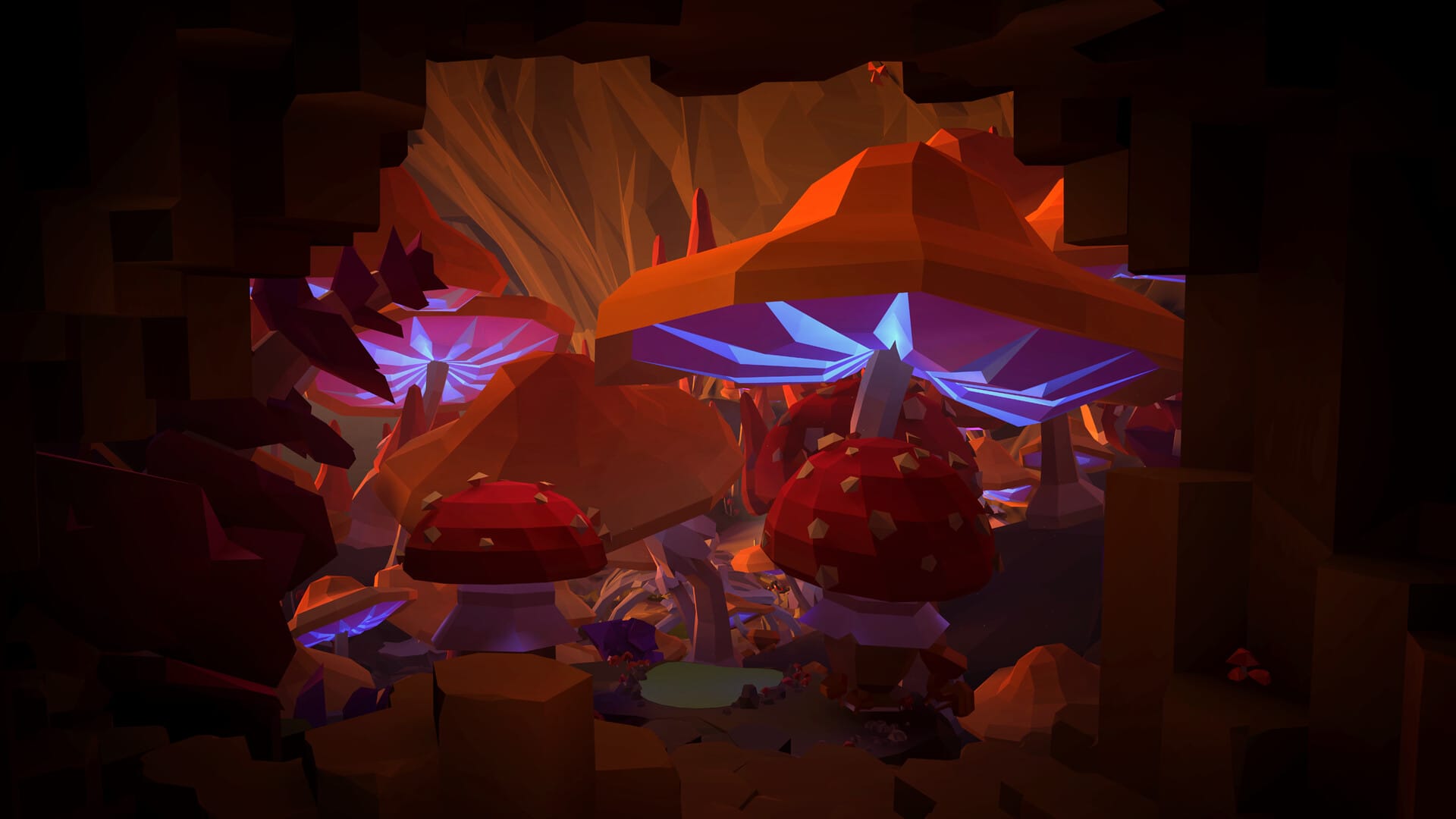
Walkabout Mini Golf's Journey to the Center of the Earth course
UploadVR: Moving forward, what are you excited about for Walkabout?
Lucas Martell: For the game personally, I am really excited because I actually haven't gotten a chance to be a course champion of course in quite a while. There is one coming up that I finally get to get my hands dirty and I get to do a lot of the hands-on stuff that I've been missing for a long time. So selfishly I am really, really excited to be able to get back in and do some of the hands-on stuff. I will let you know when that one comes out.
UploadVR: Lucas Martell, pleasure to meet you. Thank you so much for your time. I appreciate it.
Lucas Martell: Thank you.