

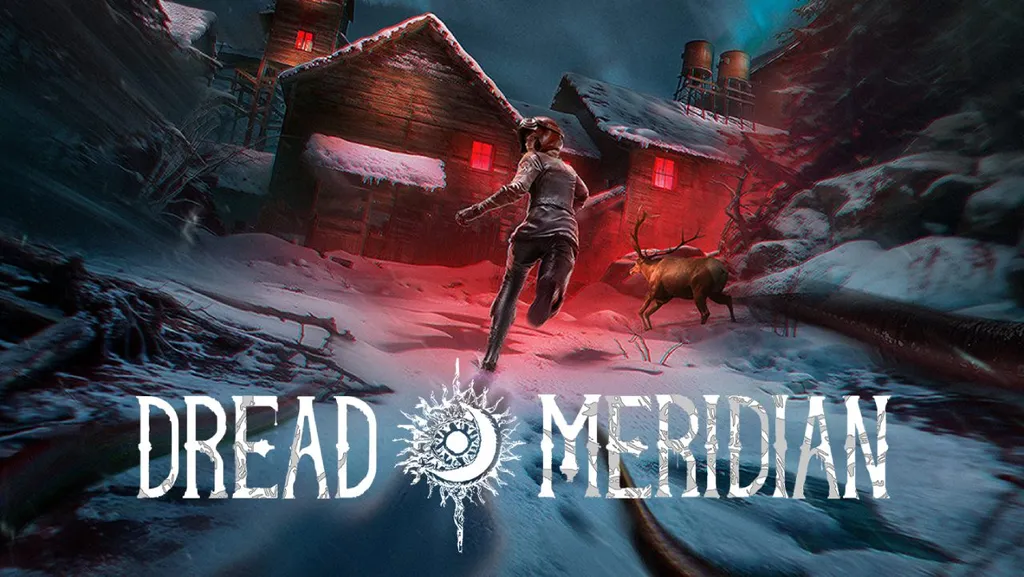
Dread Meridian is an H.P. Lovecraft-inspired survival horror with a moody atmosphere held back by janky combat at launch.
Scary scenes such as the ones vividly described in H.P. Lovecraft’s “At the Mountains of Madness” can leave readers in a disconcerting mood. Dread Meridian features all the elements of this winning formula, but technical drawbacks ultimately prove its undoing.
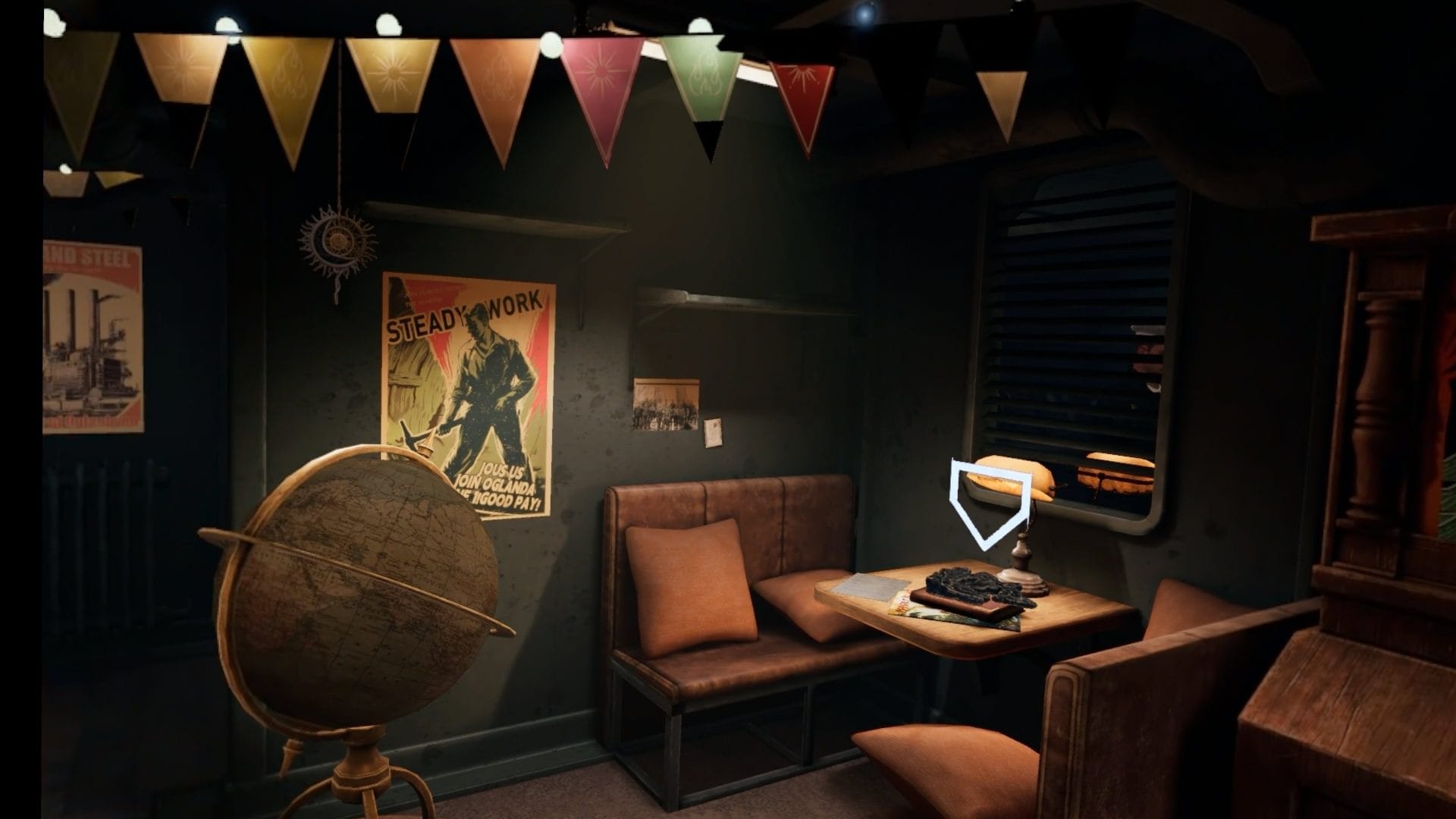
It all starts with the story as straightforward as can be. As Daniela, you begin your journey on a boat, narrating your missing sister’s letter indicating she went on a research expedition because of mysterious artifacts they found. A poster of a Dr. Jekyll & Mr. Hyde movie can be seen on the walls of Dani’s room, as well as several books to interact with.
Her one-track mind allows for the game to explore narrative set pieces without much explanation as to why you are there other than to search for your sister. Eventually crashing into a frozen wasteland, a gorgeous aurora borealis lights up the night sky over what is otherwise hell on Earth.
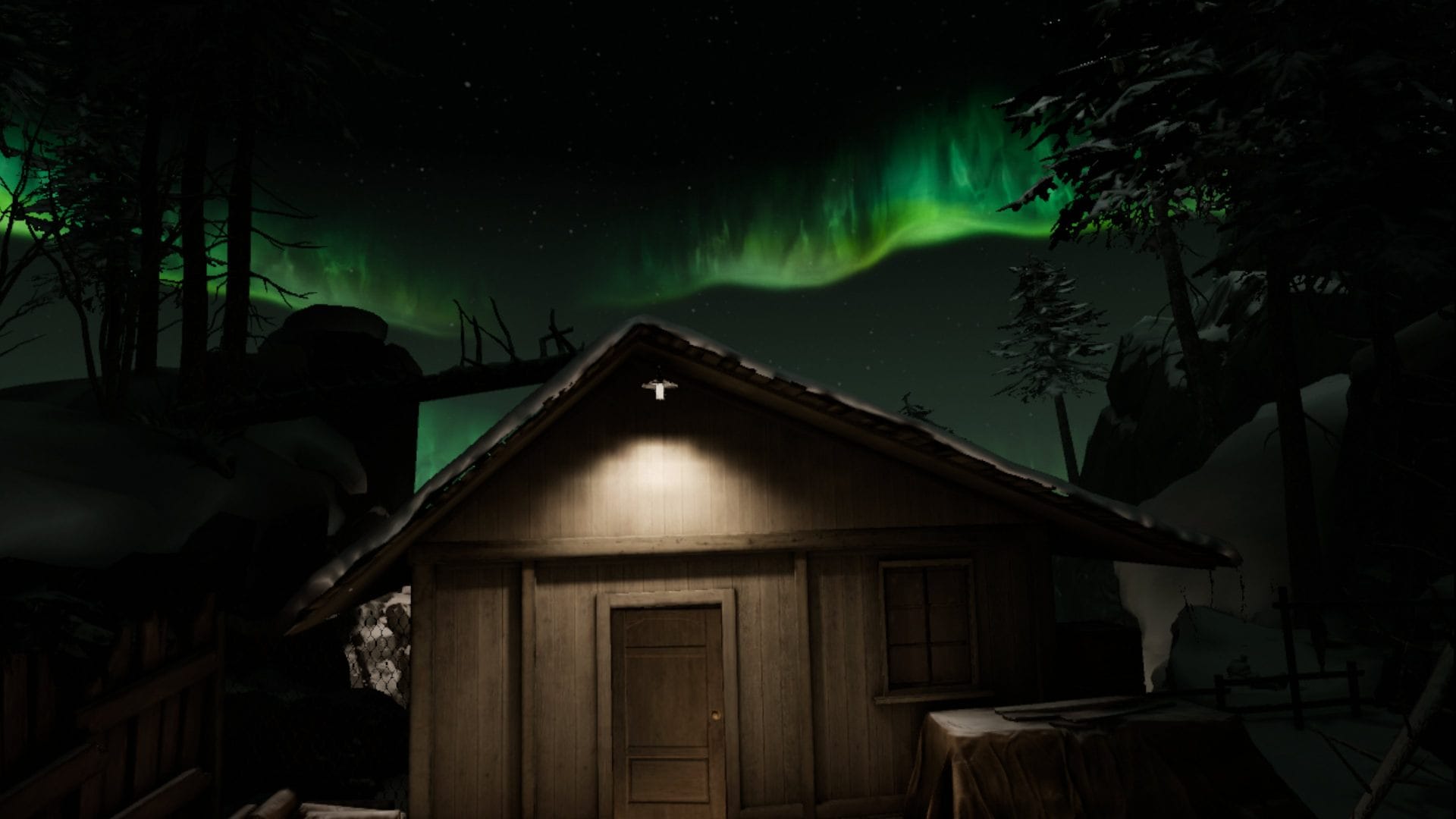
Each of the game’s five chapters is short enough to be finished in about an hour or less. Showing varied environments like a seemingly abandoned research base, a cabin in the woods with a horrifying secret, and the infested cave where mutated monsters abound, the frantic search stays unpredictable throughout. Turns out messing with eldritch horrors beyond human comprehension can mess with researchers’ minds.
The levels are easy to understand for survival horror enthusiasts, with simple puzzles where the solutions can be logically solved or found close by. In that regard, Dread Meridian seems to do everything well, but the crux of the matter is how it plays, and that is where it squanders any goodwill thus far.
Comfort
Dread Meridian has two main preset comfort settings: Immersive and Comfortable. Immersive has smooth turning, faster rotation speed, and movement direction set to the controller. Comfortable features are snap turning, slower movements in general, and movement direction set to Head.
The motion overlay, or tunnel vision, is also a part of the mode. Everything can be customized in the settings. That said, even if you turn off the overlay, when climbing, it always seems to briefly activate. No dedicated seated or standing options are available, though there is a way to readjust height.
Wiggle Fest
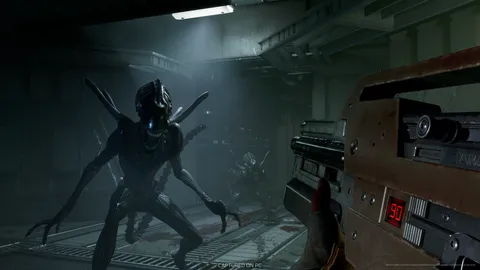
A well-known term within VR communities that comes to mind when describing this game’s combat is a “wiggle fest.” While it is possible to use a gun, an SMG, and more firearms, these weapons are flimsy, not to mention the lack of ammo. That leads to only being able to use a knife, which, although extremely effective, has you hacking away at the air with no thought, praying you will defeat every monster without being damaged.
To have the enemy freeze in place at times is more hilarious than alarming. There are no difficulty settings, and the checkpoints are few and far between; this can easily lead to frustration. Being killed by an enemy cheap shot that is unpredictable to register after spending 15 minutes running around a research base is a tough pill to swallow.
How Does It Compare On Steam?
Dread Meridian looks crisp from Steam. While the environments are small and claustrophobic, every puzzle, rock texture, and poster is clear, and the enemies are even freakier to look at. On Quest, the game settled on an expected cartoony look, with textures overall looking muddier in all respects. No performance issues were noticed on either version.
My gaming laptop uses an AMD Ryzen 7 250 w/ Radeon 780M Graphics Processor, 24 GB DDR5-5600MT/s SODIMM, and an Nvidia GeForce RTX 5060 8 GB GDDR7. The comparison was conducted using a Meta Quest 3 via the Steam Link app.
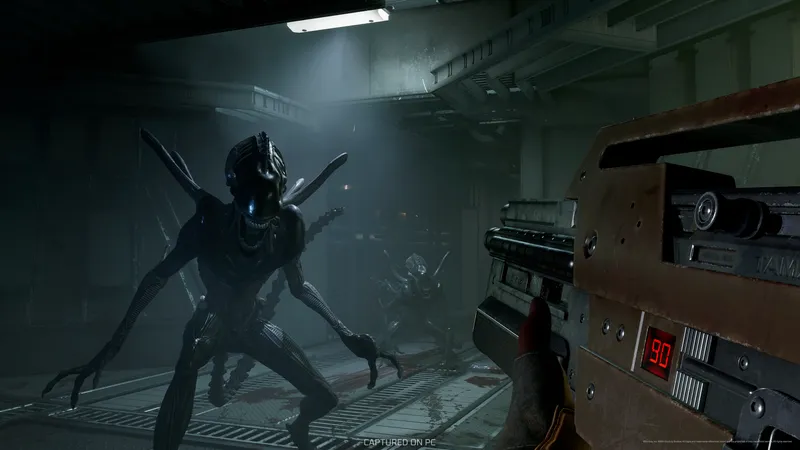
There are hints of brilliance in Dani’s journey. When not struggling with the unwieldy combat, exploring the infested areas is quite unsettling. If Dread Meridian excels in something, it is that it is dripping with Lovecraftian atmosphere. Whispers are heard in Dani’s head telling her to complete a forbidden ritual; hallucinations of otherworldly landscapes assault her, and fleshy, grotesquely mutated corpses adorn the halls of every place you visit.
The abundant documents and voice recordings of the researchers’ descent into madness are as intriguing as they are eerie. It is honestly difficult to dismiss what is witnessed on-screen because there was clearly effort put into it, but the issues that creep up in the moment-to-moment gameplay cannot be ignored.
An example of the flimsy combat when getting up close.
As a seasoned VR player, I seek lasting experiences that go beyond rolling credits. Great horror games have the potential to do that, especially late at night. Media based on H.P. Lovecraft’s work is among the most interesting due to its source material. Dread Meridian comes close to achieving this with its unnerving setting, but imprecise enemy hitboxes, punishing checkpoints, and buggy non-player character behavior ensure it becomes memorable, negatively. Down the line, with patches and the help of player feedback, perhaps it could arrive at the goal the developers had.
Editor's Note: UploadVR is publishing this hands-on writeup based on advance access to Dread Meridian. We are making no immediate plan for a formal review or update to this article, though we'll link to future coverage here if we are able.