
FitXR on Quest now has 'Journey', a personalized recommendation system designed to help you spend less time searching for workouts and more time exercising.
The app's July update also brings Profile Levels, revamped sound design, a new Oceana environment, and a daily streak system designed to encourage more consistent habits.
After spending several days with the update, I found Journey to be an interesting addition, though its recommendations didn't always line up with the way I already use FitXR.
Journey
FitXR offers more than 1,000 workouts across Boxing, Combat, HIIT, Dance, Sculpt, Flow, and other workout types. That breadth is one of the platform's biggest strengths, but it can also make deciding what to do next surprisingly difficult. Journey is designed to simplify that decision by recommending workouts based on a member's goals and activity.
When I spoke with FitXR CEO Sam Cole ahead of the update, he described Journey as part of a broader effort to remove friction from the fitness experience and help members build sustainable habits rather than treating each workout as an isolated session.

Journey begins by asking users about their fitness goals before recommending their first workouts. According to FitXR Vice President of Product Rob Mayes, recommendations for existing members also draw on workout history, preferred studios, coaches, music, and recent activity, while new members answer additional questions during onboarding.
Some recommendations matched the workouts I was looking for. Others consistently steered me toward higher-intensity HIIT sessions than I would normally choose. While Journey lets users adjust workout duration and overall intensity, I still found myself sometimes returning to the Explore menu to manually browse and select the classes I wanted.
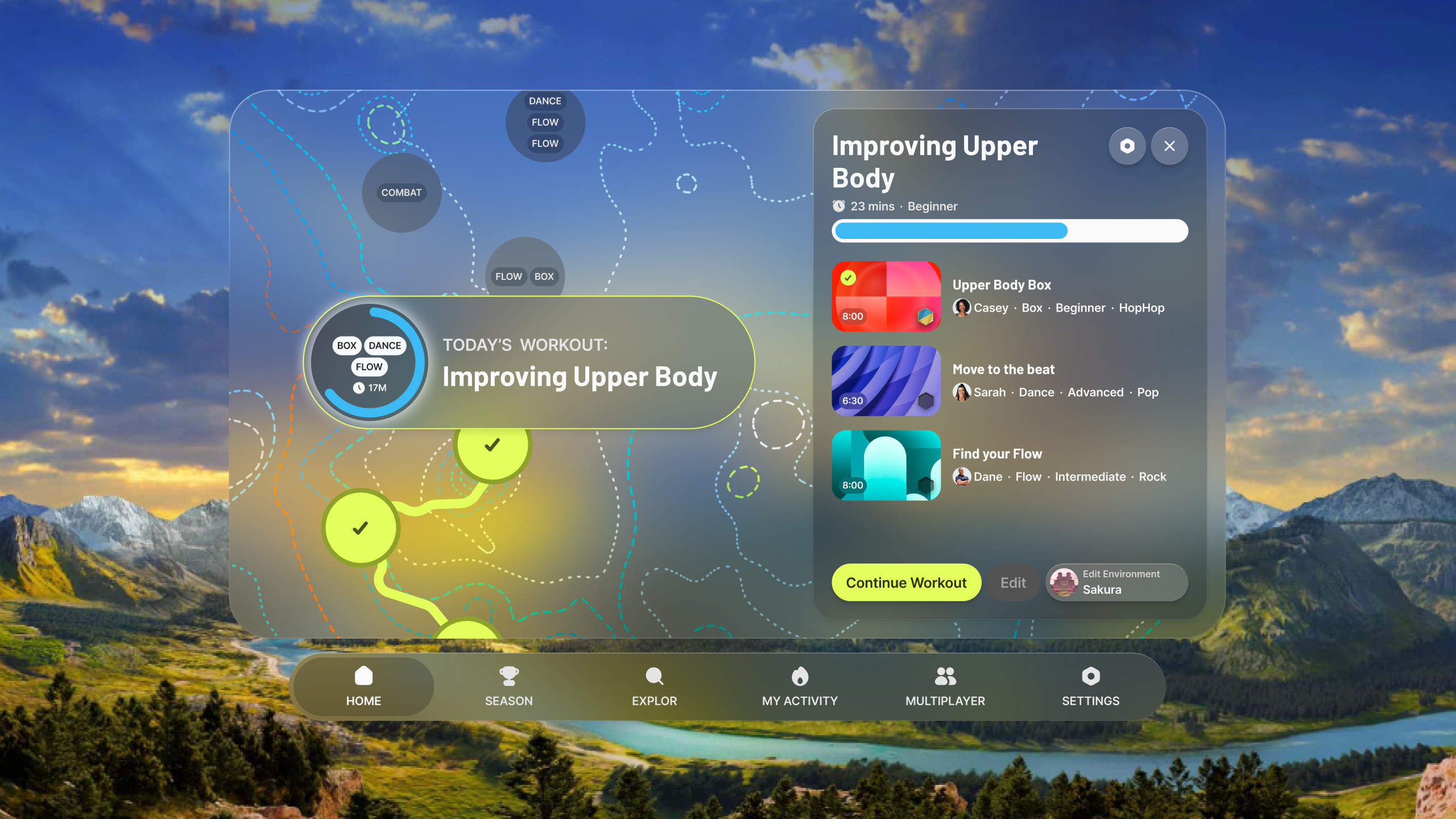
Although FitXR says Journey learns from a member's workout history and ongoing activity, I found it difficult to communicate workout-specific preferences. I generally enjoy intermediate or advanced Boxing, Combat, and Flow classes, while preferring lower-intensity HIIT workouts, yet Journey still treated those preferences as a single fitness profile.
Even when I chose a different workout, I appreciated what Journey is trying to solve. As FitXR's library continues to expand, reducing the time between putting on a headset and starting a workout becomes increasingly valuable.
"The main aim of Journey is to support and guide people toward the workouts we believe will help them reach their goals, but that guidance only works long-term if people don't feel they've lost their say in it," Mayes told UploadVR.
He said Journey continues learning from user behavior over time. If members consistently bypass its recommendations and instead choose different classes through Explore, those choices become one of the strongest signals shaping future recommendations. FitXR is also actively exploring giving members more control over the types of workouts Journey recommends.
Review and recalibrating after the first 7 days of my Journey
Based on FitXR's design and my experience as an existing member, Journey appears particularly well suited to newcomers still discovering the platform's library. Longtime members with established routines may find themselves wanting more flexibility before relying on it as their primary way of choosing workouts.
Profile Levels
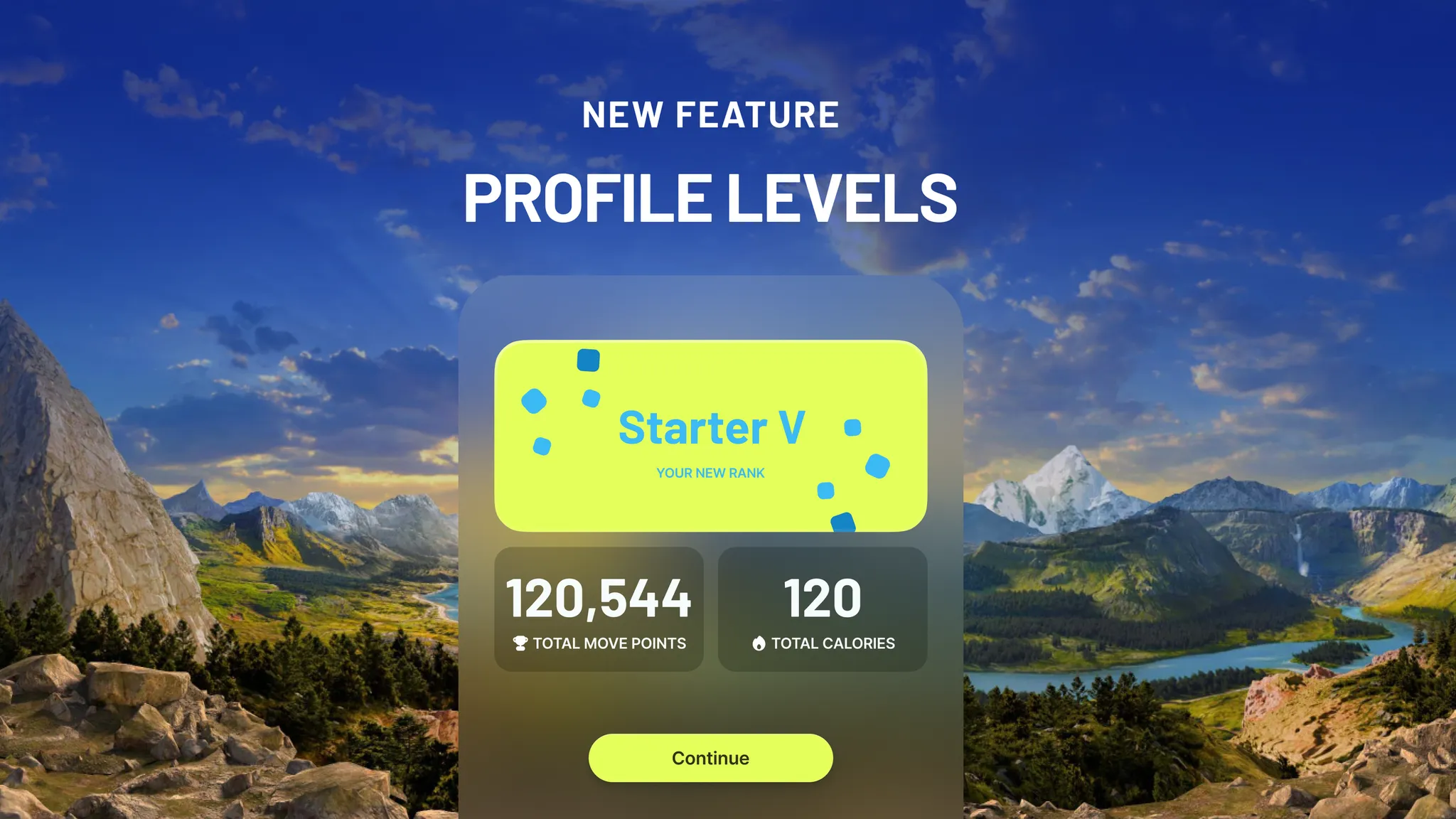
Profile Levels transform accumulated Move Points into a permanent progression system recognizing a member's complete FitXR history. Rather than existing as a number on its own, Move Points now unlock milestone titles ranging from Starter to Olympian.
Those levels reflect a member's entire workout history, giving longtime users recognition for years of consistency instead of rewarding only current streaks.
It finally gives Move Points a clearer sense of purpose.
Sound Design
The updated sound design was one of the first changes I noticed.
FitXR says it revisited audio throughout the app after receiving consistent community feedback, refreshing everything from interface interactions to workout sound effects.
During my testing, punches carried noticeably more impact, and power targets became easier to distinguish by sound. In Flow, rapid target sequences stayed in sync with the music more consistently, helping the workout feel smoother during faster combinations.
The updated sound design noticeably improves the feedback throughout each workout. Every strike feels more deliberate, making workouts more satisfying and responsive. For me, the sound overhaul ended up being one of the standout improvements in the entire update.
Oceana
The update also introduces Oceana, a new underwater environment available across multiple workout types.
Surrounded by coral reefs and marine life, Oceana expands FitXR's collection of workout environments with a vibrant underwater world. The colorful setting feels lively and immersive, giving returning members another fresh place to exercise.
The underwater theme extends beyond the environment itself. For the first time, Flow workouts include an alternate baton design, with coral-inspired controllers that match the Oceana environment. It's a small detail, but one that makes the experience feel more cohesive.

FitXR is also refreshing its existing workout environments, rebuilding five legacy spaces with updated lighting, textures, skies, and atmosphere. The company says additional environment updates are planned in the coming months.
Community Feedback
Early discussion in FitXR's official Facebook community has been generally positive, with many users welcoming the convenience of personalized workout recommendations. Others, however, said they still prefer choosing workouts manually, suggesting Journey may appeal most to those looking for a simpler starting point.
Daily streaks have also drawn mixed reactions. According to Mayes, FitXR spent roughly a year testing the feature with new members before rolling it out more broadly. The goal is to encourage consistent daily habits while allowing members to preserve progress through Freeze Days when life interrupts a routine.
Some community members, however, have asked for weekly streaks to return, particularly those who intentionally rotate between multiple VR fitness apps or expect to be away from home longer than their available Freeze Days.
Final Thoughts
After several days with Journey, I still found myself occasionally using the Explore menu to find the workout I wanted. At the same time, I could already see the recommendations beginning to reflect my preferences. Since Journey is designed to adapt over time, I'm interested to see how those suggestions evolve over the coming weeks.
If it continues to become more personalized, Journey has the potential to make finding the right workout faster and more intuitive, reducing the time spent searching and helping users get into their workouts sooner.