
Entry points hidden within recent updates to the YouTube app on Quest reveal that Google is working on a major overhaul of the app's immersive view, bringing it closer to the experience on the company's own Android XR platform.
YouTube has received modest updates on Meta's standalone VR devices over the years. However, the app's core design is still very similar to the Oculus Go version of the app that launched back in 2018.
Some of the most significant additions include support for higher video resolutions, Mixed Reality wall anchoring on Quest 3 and 3S, and a 'Panel Mode' that lets you open the app in a 2D window to use alongside other system-level apps. Google and Meta also experimented with co-watching at one point, but that was removed from Horizon OS as part of the move to the Loft VR Home Environment, which began with the rollout of Horizon OS v81 PTC.
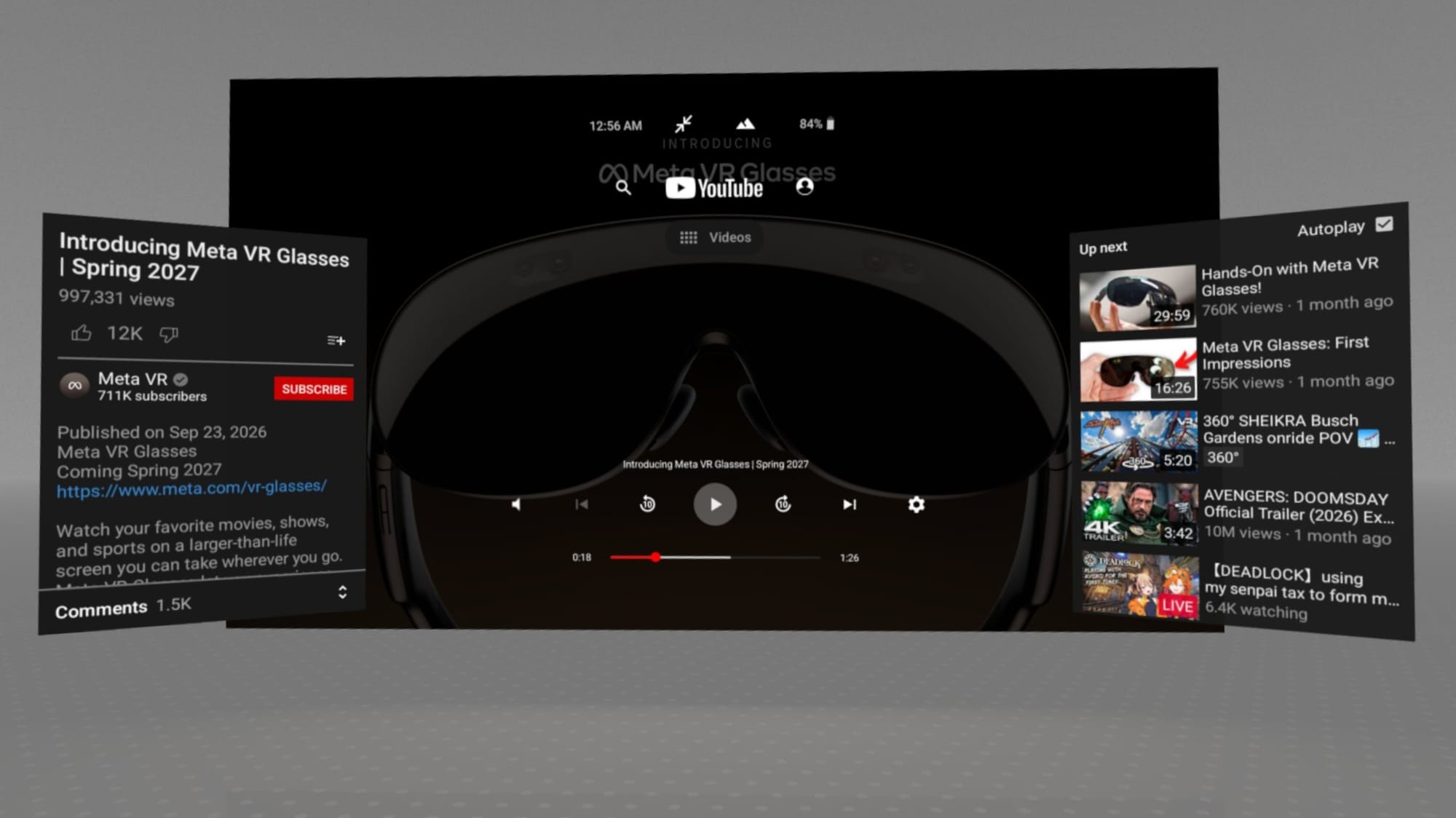
While the interface within Panel Mode was updated to offer an experience broadly similar to YouTube on various Smart TVs, the app's immersive view was left largely unchanged.
Now, Google appears to be working on a major overhaul of the app's full-space immersive view, bringing it more in line with other modern spatial experiences.
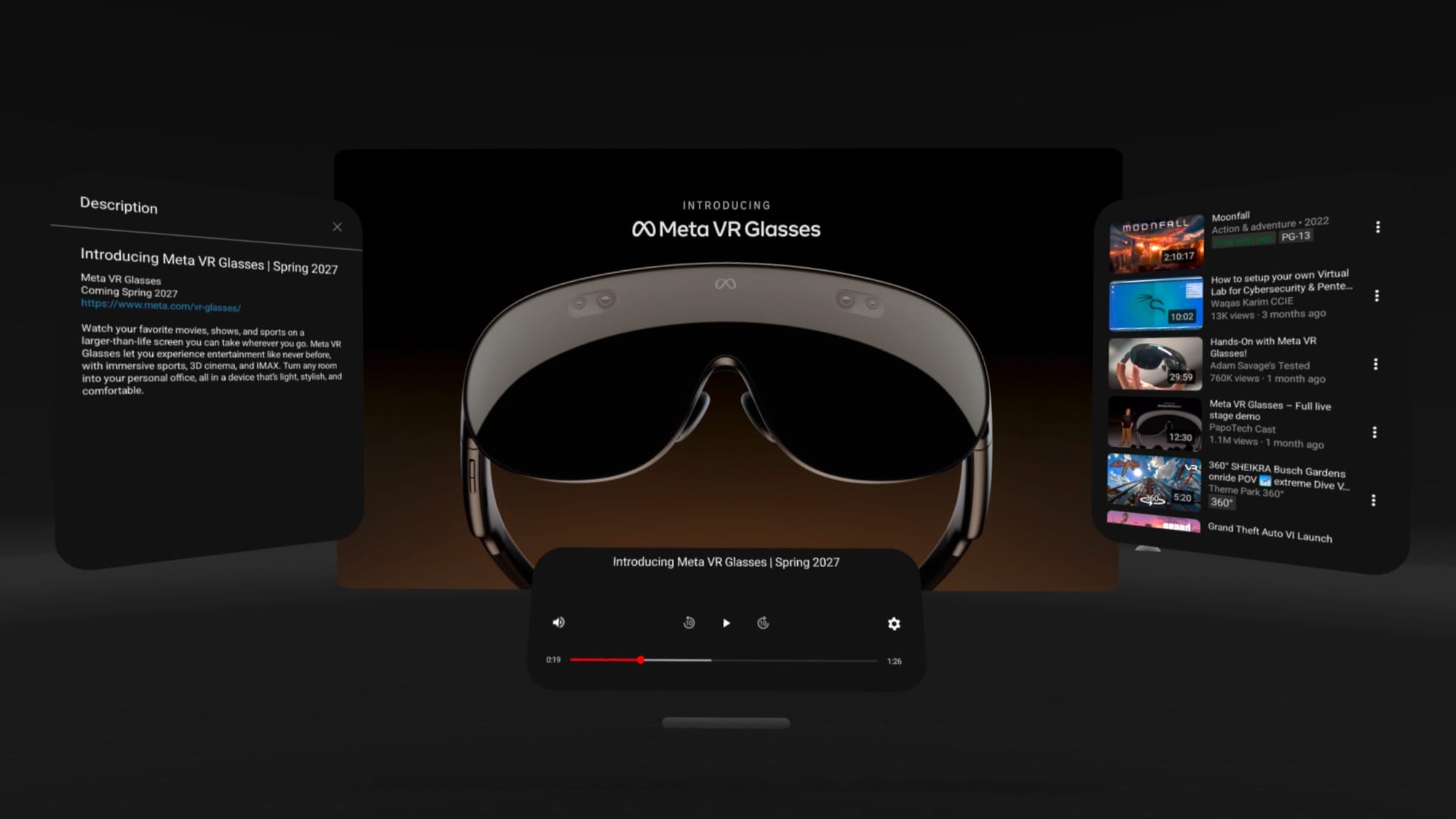
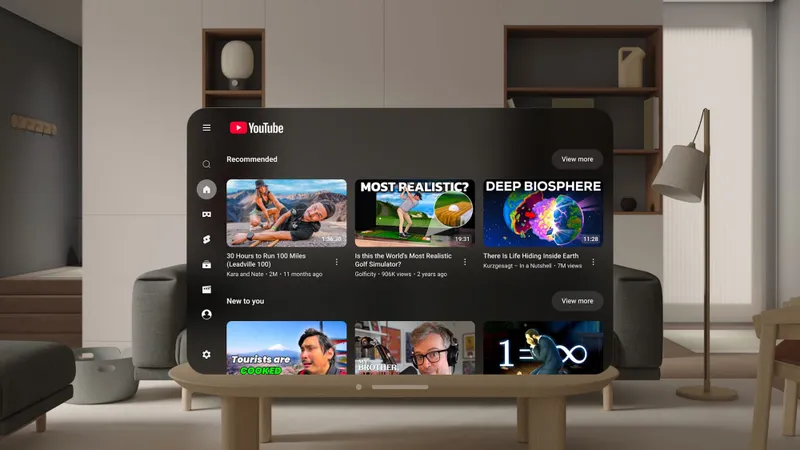
The new immersive view features a redesigned UI, with a main window that is consistent with the existing Panel Mode experience. It introduces a Horizon OS-style Control Bar, with options for changing the environment and switching to Panel Mode.
Notably, the new interface also allows users to open an additional window for browsing while a video is playing. Videos selected in this window will then play in the main window.
The app now uses additional Meta-specific integrations, including the OS-level Virtual Keyboard overlay. The main window has grab handles and dedicated corner handles for resizing, similar to other windows across Horizon OS, and also automatically adjusts its size to match the aspect ratio of the content being watched.
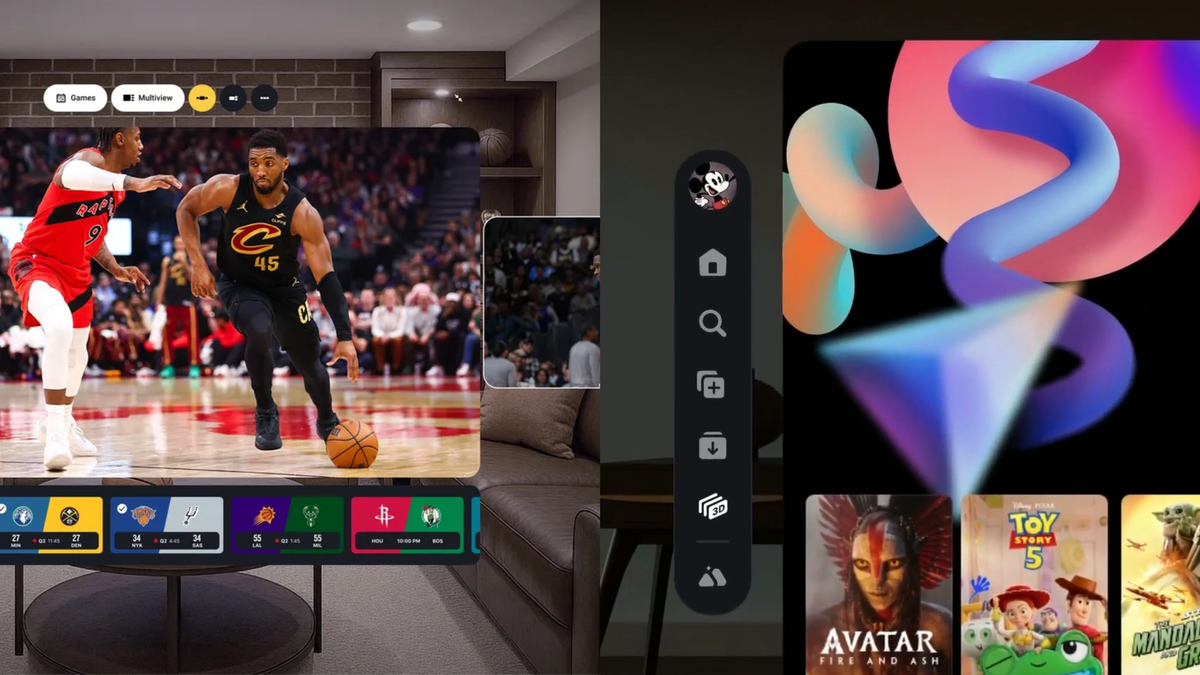
These changes closely resemble the Android XR version of YouTube, which is designed for Google's own XR operating system, as well as the visionOS version of the app that debuted earlier this year.
On those platforms, YouTube features a Smart TV-like interface for standard browsing, then switches to a spatialized UI during video playback. This playback UI includes additional controls for adjusting the viewing area when watching 360° and 180° 3D content. The in-development Quest version does not currently include those controls.
YouTube on Android XR.
References to this overhaul were first added to the YouTube app for Quest back in late August, and it surfaces as Meta has been working to improve its spatial app tooling and encouraging developers and partners to optimize their apps for spatial operating systems ahead of the launch of Meta VR Glasses.
 Luna