

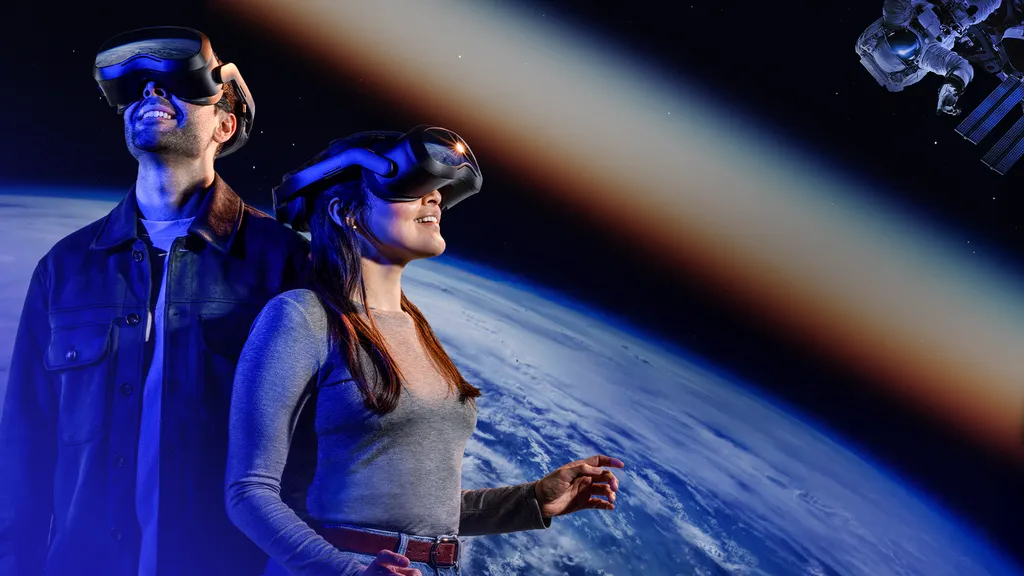
Space Explorers: The Infinite is the easiest way to access an experience of life in orbit - one that fewer than 300 people from around the world have lived in reality. It is an Infinity Experiences production, developed through a joint venture and creative collaboration between Felix & Paul Studios and PHI Studio.
This roughly one-hour location-based immersive experience combines memorable pre- and post-show elements with a free-roam VR journey through a stylized life-sized version of the International Space Station. There, visitors can explore inside and outside the ISS and step into real 360-degree moments with astronauts working and living in space. These real immersive moments captured aboard the ISS come from The Space Explorers series, created and produced by Felix & Paul Studios in collaboration with TIME Studios, and currently available for Meta Quest. The out-of-home experience of Space Explorers: The Infinite makes these real captures of astronauts' life in space accessible to a wider audience. Over half a million guests have visited so far as it pops up in different cities. I recently tried the experience in Mississauga, Ontario, and it is also currently running in Atlanta, Georgia.
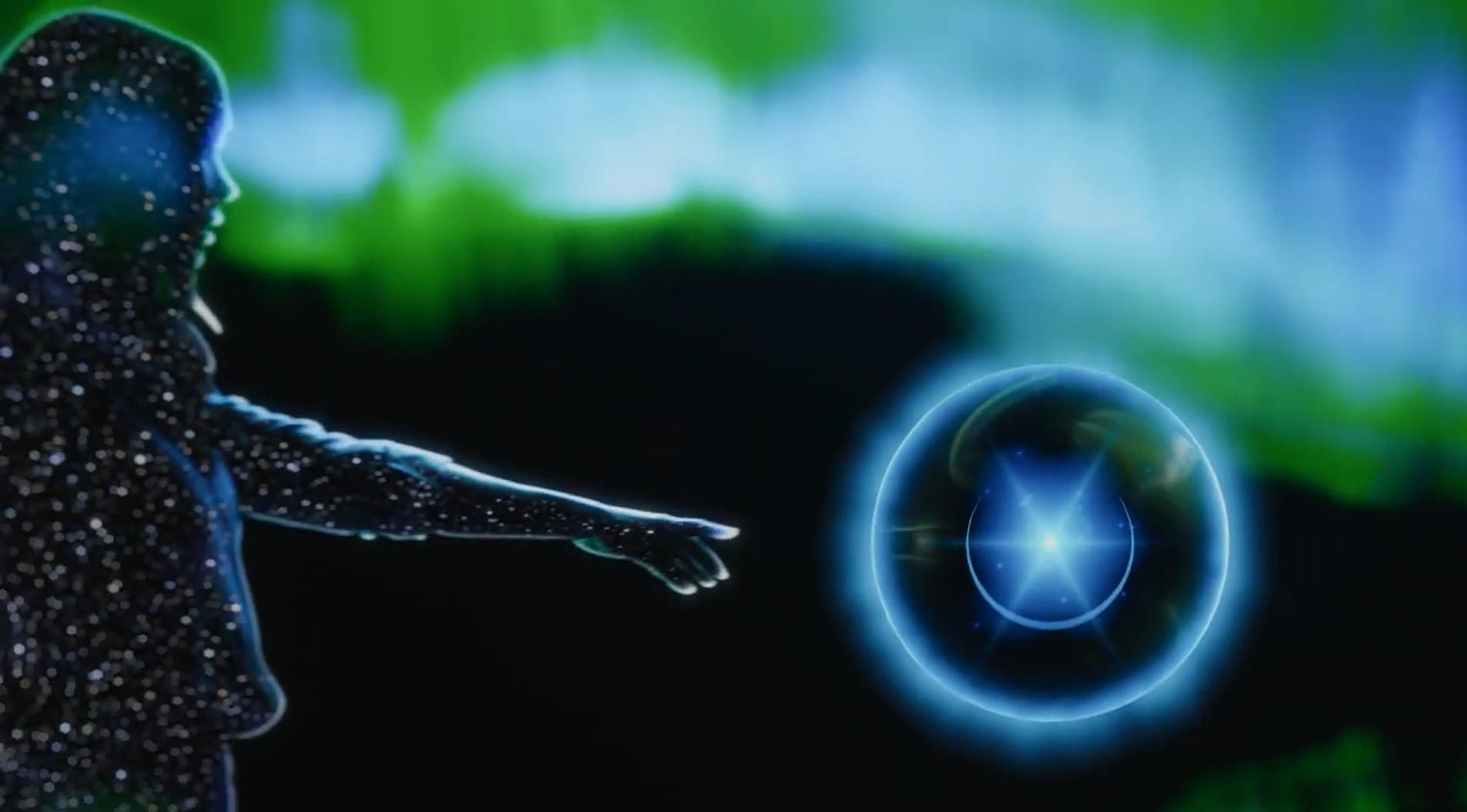
There was a moment I experienced while virtually exploring the ISS that stopped me in my tracks and became my favorite moment in Space Explorers: The Infinite. In a station module directly ahead of me, I noticed a family gathered around something. I could tell they were a family because their avatars appeared as life-sized human forms made of stars - two adults and a child. Together, they were visiting a live capture inside the ISS from the recent past where NASA astronauts were present with them, sharing what life is like roughly 250 miles from Earth.
Designed For Memorable Moments
What stood out most for me was how naturally the experience creates a connection with life on the ISS while also bringing people together. If you are visiting on your own, the experience does not feel overcrowded. Other guests appear as distant lights from afar, then as star-filled avatar outlines only when you get close in order to avoid walking into each other. If you are visiting as part of a group, your avatars appear in gold for each other while other guests appear in blue, making it easier to recognize one another in the station. That design choice matters because Space Explorers: The Infinite is not just an opportunity to view space. It creates opportunities for real memorable moments in a place most people will never experience firsthand.
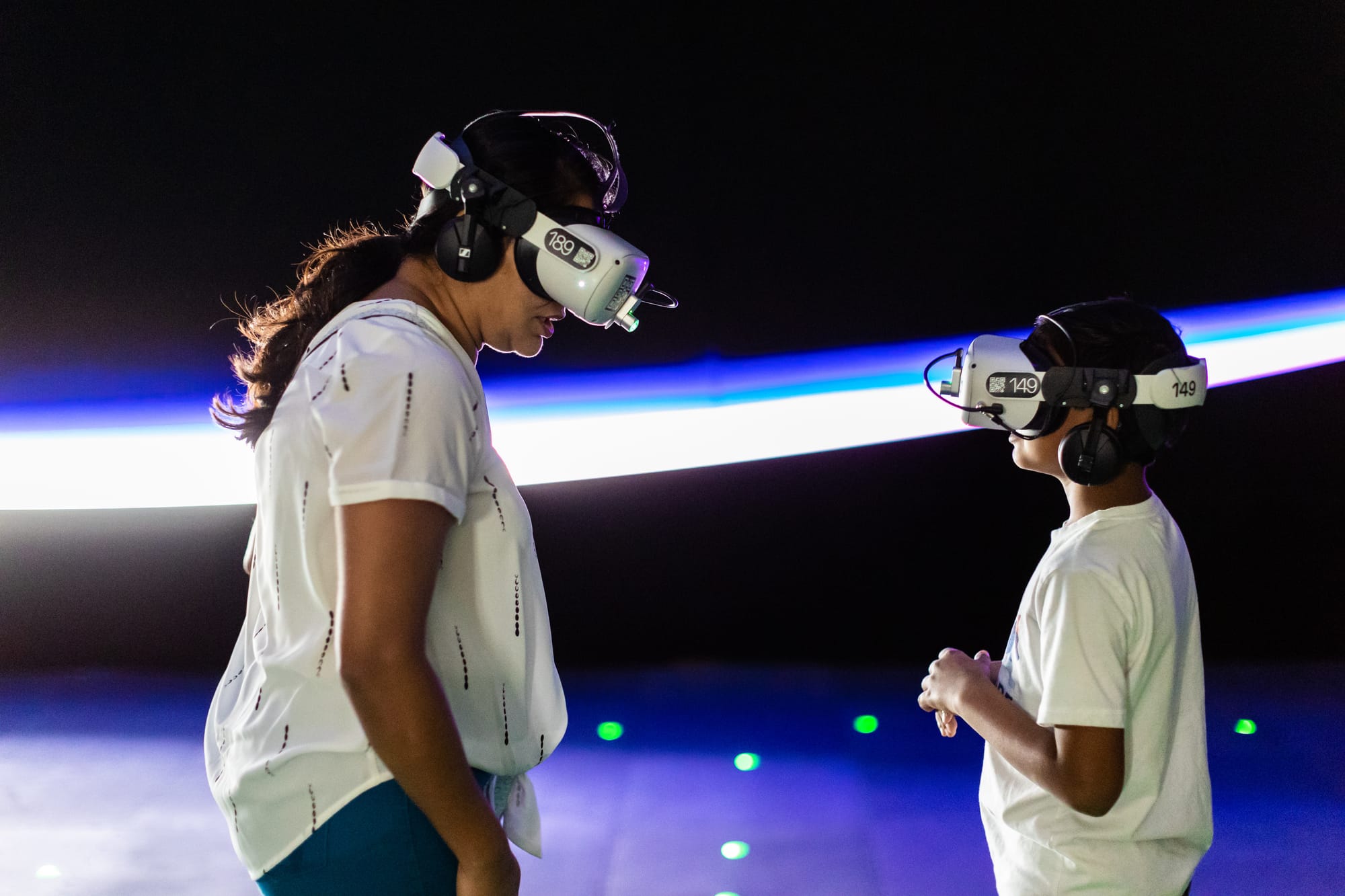
The full experience feels thoughtfully designed for all visitors, including those new to VR. Before entering full immersion, guests move through a short pre-show area with elements like astronaut bios and one of Felix & Paul Studios’ cameras used in space. This is followed by an audiovisual installation where the immersive audio introduces the experience as “a tribute to light and space and a thirst for knowledge that drives all of humanity.” After the main VR experience, it closes with looping video footage from Artemis I, the first mission in NASA’s Artemis program. This expands the story beyond life aboard the ISS and inspires guests to engage more with space exploration.
Transitions between the headset-free spaces and VR portion are smooth, without logistical interruptions distracting from the sense of being on a journey. Even getting tracked headsets onto guests was the fastest I have seen in any location-based VR experience to date. My one exception to that flow was the instructional onboarding video, which felt better suited before the short Lightroom narrative.
Once inside VR, the artistic rendition of the ISS is easy and natural to move through at your own pace, whether walking or in a wheelchair like one guest in my group. From selecting orbs that transport visitors into real 360-degree moments captured aboard the ISS to moving between modules or even outside the station, the interactions feel intuitive and the design empowers natural exploration.
Real Footage & Physical Exploration
Space Explorers: The Infinite integrates segments from the Adapt, Advance, Unite, and Expand episodes into its free-roam ISS layer, letting visitors explore the station and step into real 360-degree moments with astronauts. The VR component unfolds across these chapters covering life in orbit, deep space exploration, and shared human progress.
What makes it especially memorable is how the video captures feel more real because of their proximity to where you place yourself on the ISS, both inside and outside the station. You can learn about life on the ISS, float outside to find the Canadarm, or even encounter a real spacewalk unfolding in front of you. Because you choose where to go next, those moments can feel more like personal discoveries than something passively delivered to you. You can choose to pop into moments with astronauts and simply enjoy the virtual station. As I overheard one child passing me by say to someone during my visit, “Let’s keep exploring the ship”, referring to the ISS.
Interaction is mostly driven by physical movement and content selection. Outside of a few objects you can engage with, like buttons that trigger audio clips or some floating items to play with, I would have liked to see more hands-on moments aboard the ISS to deepen the sense of presence already created here. Still, there is already more to see than most visitors will have time for in one visit.
Lots To See With Limited Guidance
The real footage in the Space Explorers series adds up to roughly a couple hours, making it impossible to see every segment placed in and around the ISS during a timed visit. That also inspires rapid exploration and creates opportunities for groups to compare moments afterward, since friends or family may have seen and learned different things. But while interested guests can return for a new visit to try to see it all, there is no easy way to remember which orbs they previously selected as they all appear the same. They would need to remember which orb they chose, in which module, during which chapter.
I appreciate the ethereal look of the orbs, which fits the overall design of the ISS, but I would have liked visual cues such as icons or floating images pulled from the footage to hint at what was inside and help guide my next choice.
Once viewed, the orbs disappear, which helps avoid repeated selections during the same visit and usher along the learning. But it also means you cannot revisit a moment even if you want to.
With so much to discover, Space Explorers: The Infinite offers more than a visit to the ISS. It can leave visitors with a deeper appreciation for space exploration, our shared Earth, and what humanity can achieve together.