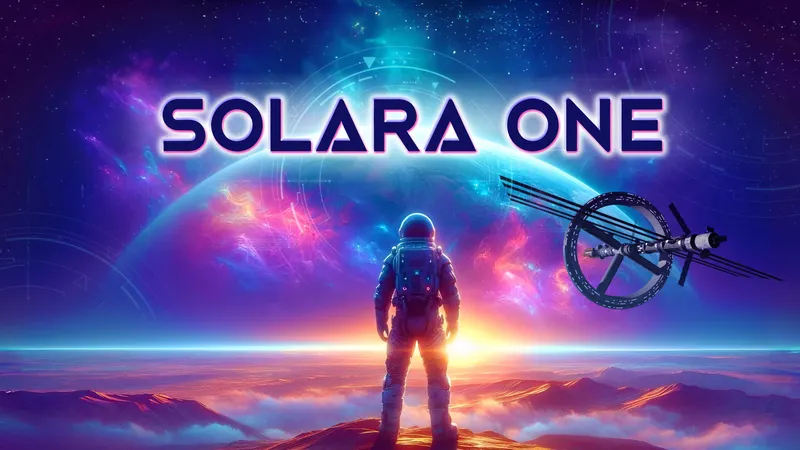

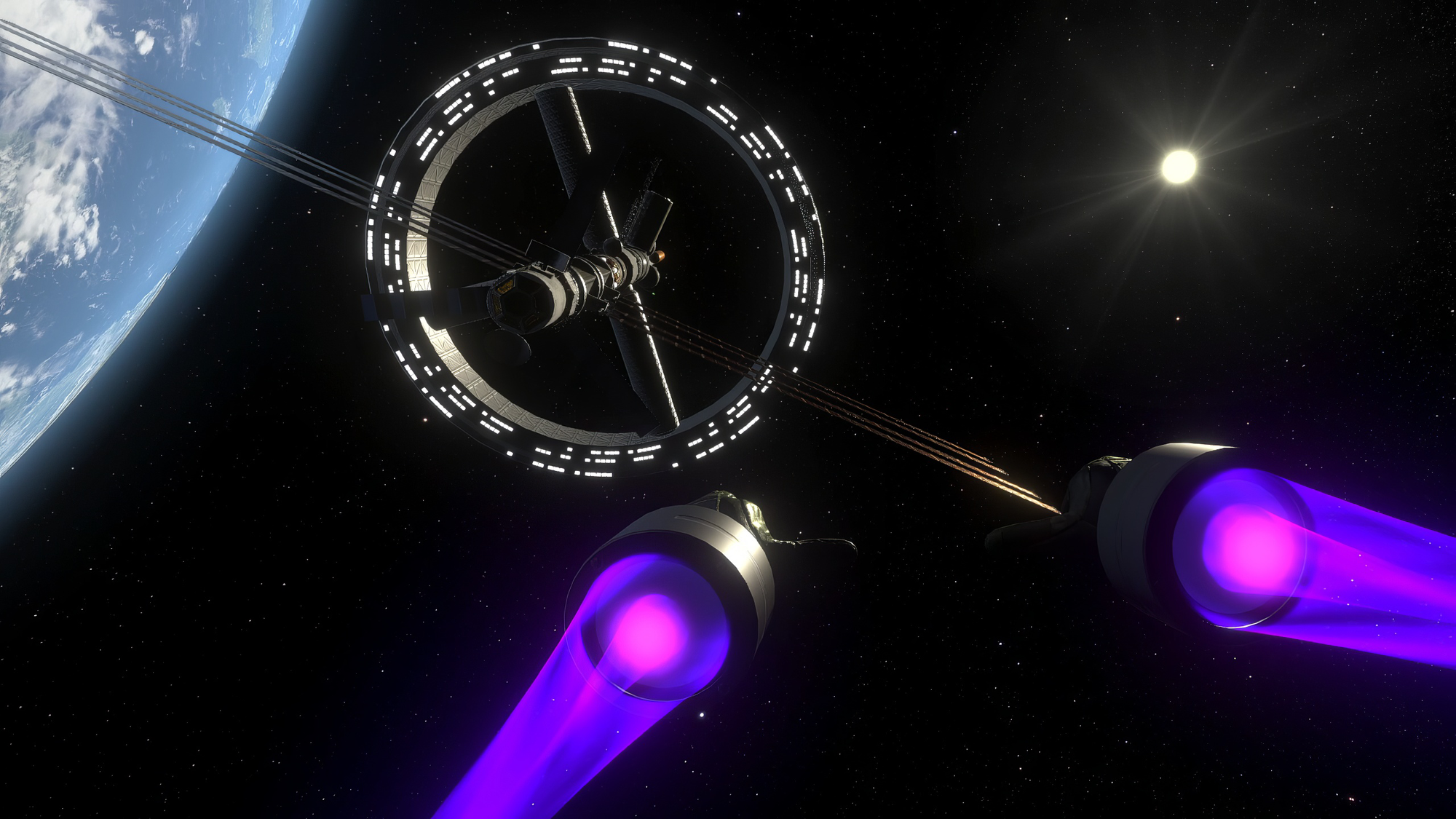
Solara One is an experience that sits in the center of a Venn diagram of VR genres: part game, part meditation, part sci-fi space exploration.
What's most impressive is that the entire experience was developed by a lone developer, Aaron Cryderman, who spent most of his career at BlackBerry working with data. After a career shift that left him with more free time, he decided to follow his interests in digital music creation, photography, meditation, and space art, and combine them into a singular project. Additionally, Cryderman wanted to satisfy his desire to experience space travel after realizing the possibility of experiencing it for real was unlikely.
He taught himself Unity over several months and started working on Solara One as a passion project, finally releasing the app on Meta Quest in May 2024.
Since launch, he's updated the experience several times, both with new content and with performance and visual enhancements.
Solara One combines relaxing meditation, awe-inspiring space views, and sci-fi environments, while employing clever physics and haptics to enhance immersion. The beautiful visuals are accompanied by music that heightens the sense of awe you feel in space, providing a deeper ambient undertone.
Cue The Holodeck
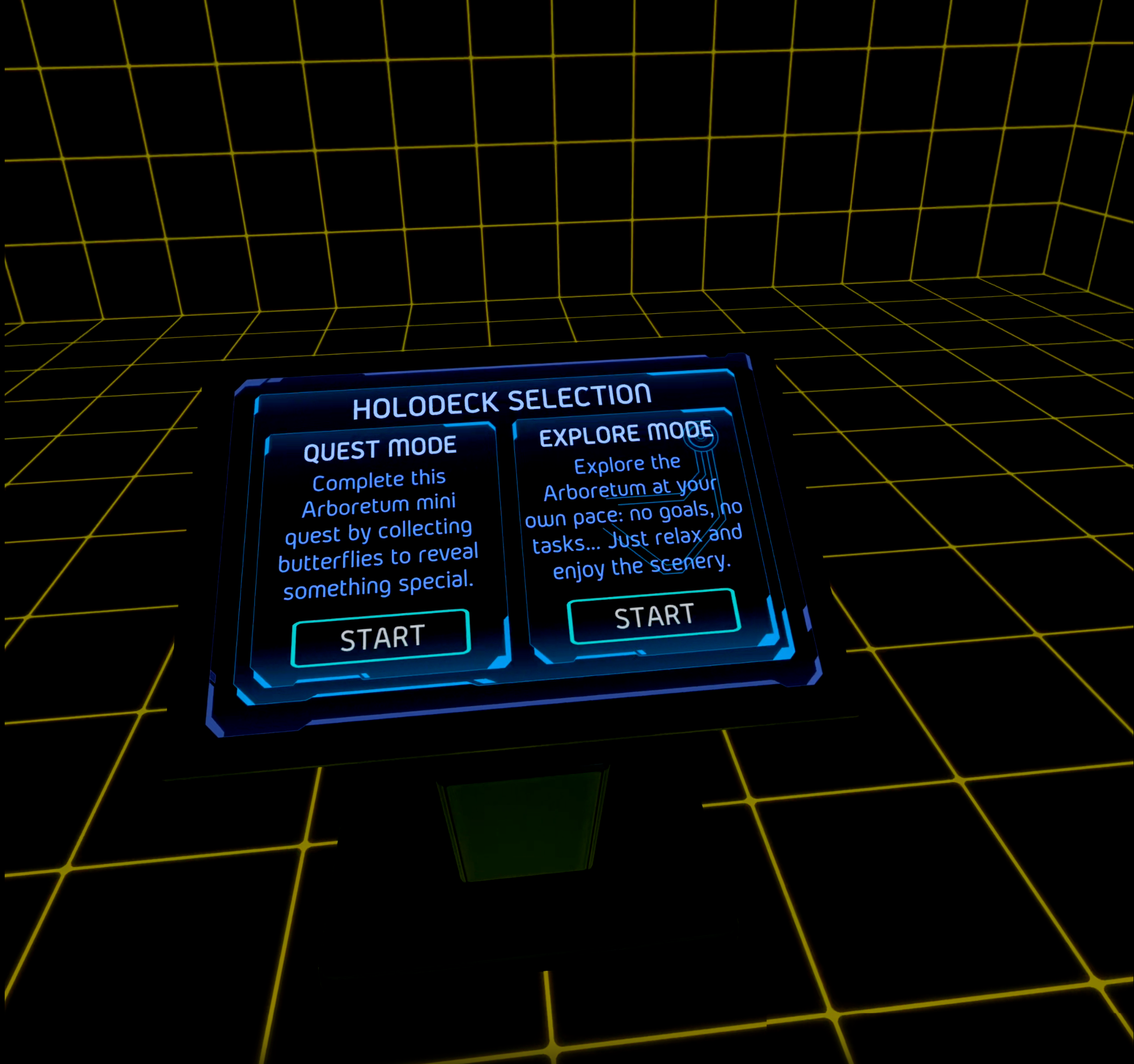
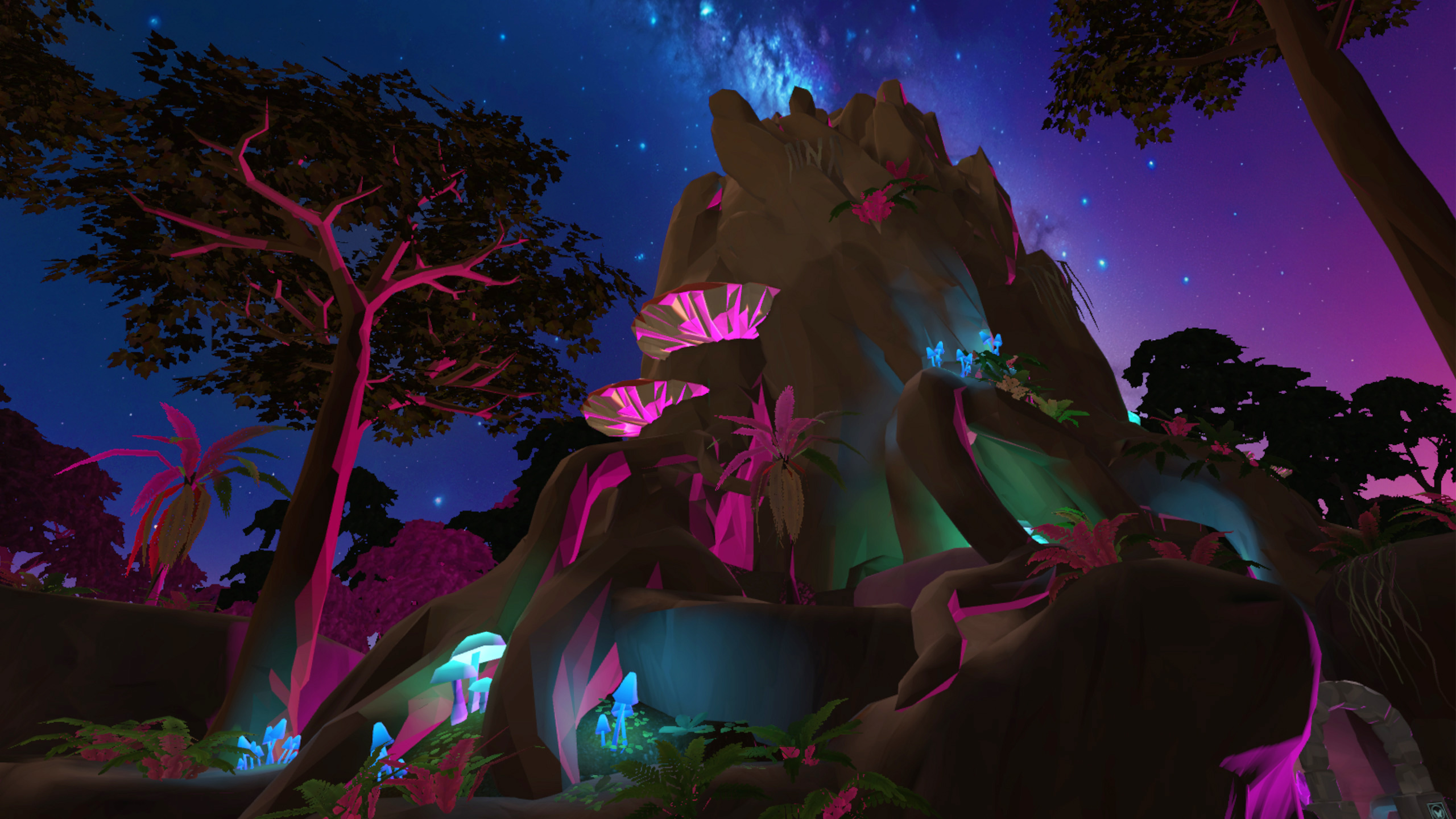
Cryderman released the Arboretum update to Solara One in early September, adding a Holodeck-like experience to the app. You enter an empty, grid-defined space at first, and are presented with two choices: a lightly gamified "Quest" mode and a free-play "Explore" mode. Make your selection, and the Arboretum loads in. You find yourself in a forest environment, with a large Buddha statue, glowing crystals, and the same mood-setting ambient music.
I won't give away too many details of the Quest mode, but there are orbs and butterflies. The experience pays off with a special celebration that is memorable and surprisingly emotional.
The Arboretum was not originally in Cryderman's road map for Solara One. However, he was thinking often about the day-to-day reality of living in outer space, and how humans would eventually yearn for a more earthly environment, if even for a little while. And of course, Star Trek's Holodeck provided inspiration to the idea.
Once Cryderman had his environmental assets optimized to run smoothly on Quest, he had another challenge to solve: what would a user actually do in a forest? How would users achieve an awe-filled meditative experience in a forest environment, as opposed to floating in outer space above a rotating planet?
Elevator to the Arboretum, taken from my Quest 3
A Butterfly Flaps Its Wings In Space
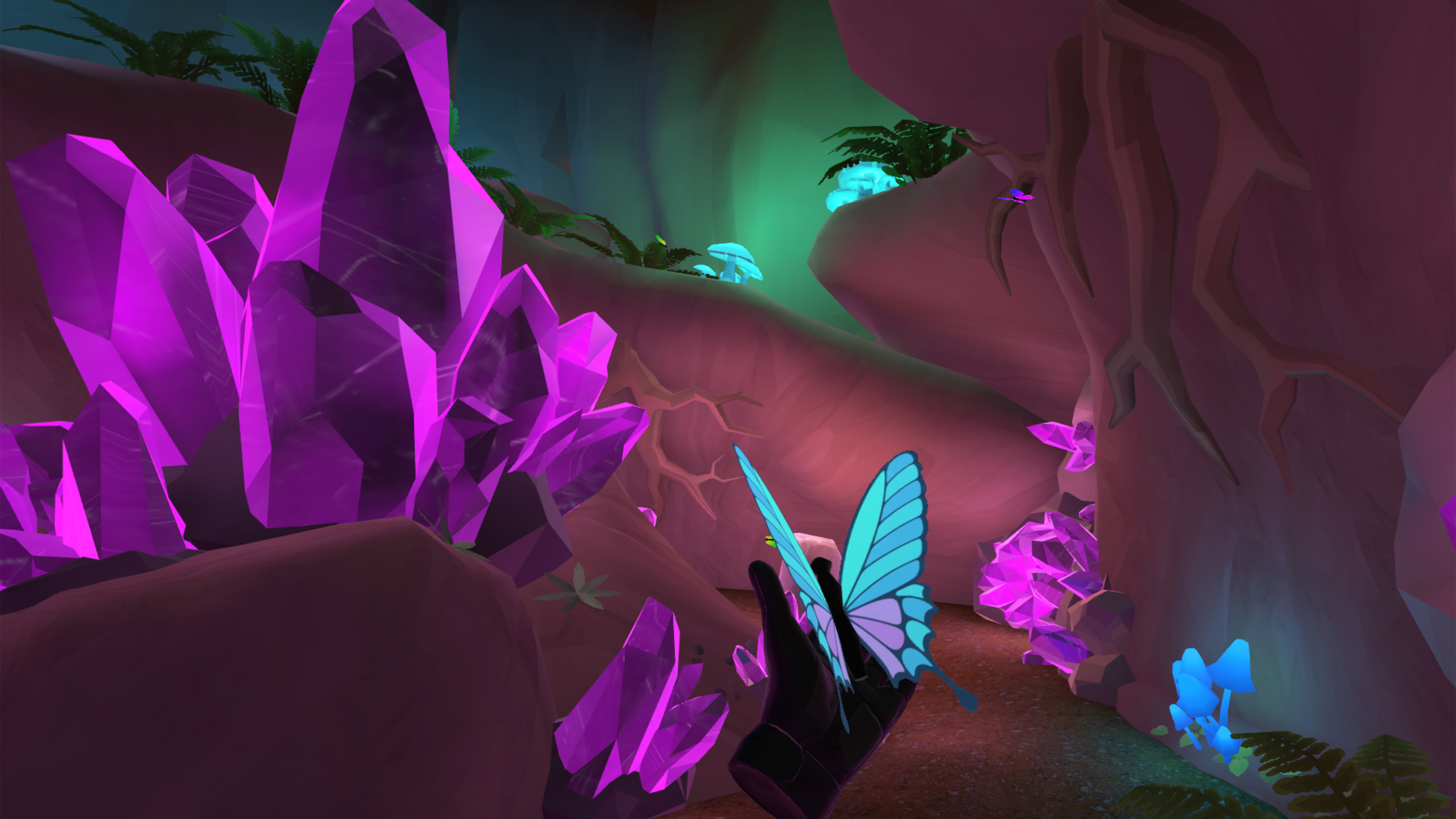
The butterflies that inhabit the forest environment serve more than just a visual purpose.
Cryderman explained to me that he wanted the butterflies to help induce a meditative state similar to sitting around a campfire, staring at the flames.
He explains, “If you're sitting around a campfire, you're just sitting there and you're mesmerized by the fire movement...you go into a naturally meditative state, but it's effortless.”
He continued, “The butterflies were kind of like...the campfire part where that's the thing that moves and kind of draws you in and focuses your attention a bit."
In the forest the butterflies provide flashes of color against the dark night and become almost hypnotic as you follow them with your eyes.
Adding A Game To Solara One
"My target for my game, my experience, is gamers who are looking to kind of relax and chill out in outer space.", Cryderman told me. Adding a gamified mode was something he realized would be popular with his core audience and would add something new to the Solara One experience. He also chose to leave a clear way for a user to simply relax in the Arboretum if that's their preference.
In my time playing both the Quest and Explore modes, I found the overall experience to be tranquil and a welcome respite from the dark beyond of outer space that surrounds you in the other areas of the app. Quest mode keeps you busy, and the pay-off at the end is worth the effort. The forest has enough nooks and hidden areas to keep it interesting as a chill-out experience. I would love the ability to explore the upper levels and go farther afield.
The Arboretum update provides another compelling reason for users to return to Solara One frequently. Few VR experiences deliver across so many fronts: crisp visuals, sound design, haptics and mechanics, UI design, and more. In my opinion, Solara One delivers across them all, and remains one of my most-recommended VR apps.
Solara One is available on Meta Quest.