
Entering the iconic Pyramids of Giza and uncovering new truths about how they were built is an experience most simply can’t try for themselves. They’re not Egyptologists for one, but it’s also unlikely they can easily take a trip to Egypt to even see it for themselves, never mind journey and discover new facts about these towering mysteries of historical engineering. At least now, VR can share everything we know so far about the truth of their creation, for those unable to make the trip, thanks to Excurio.
The Secret of the Pyramid Builders is self-explanatory, using the medium of free-roaming immersive VR to take people on a journey through history to learn more about the construction process of the Great Pyramids of Egypt. This is the latest project to debut at Japan’s Immersive Journey, a VR experience location dedicated to allowing visitors to try out a range of experiences that seek to shine a light on history using VR. We actually reviewed two of these experiences a few months ago, with this latest project having launched at the location earlier this summer (it’s also accessible in other locations around the world as stated here).
One of those experiences was one called Horizon of Khufu, which sought to teach about the purpose of the pyramids by taking us inside, exploring areas closed to the public while going back in time to learn the journey taken by the pharaoh to his final resting place. It was all wrapped in a rather endearing narrative where you and your guide, a young Egyptologist named Mona, are led by a talking cat who may or may not be the god Bastet through time and space to Ancient Egypt and back to witness it first hand.
This time, The Secret of the Pyramid Builders goes further into their construction using the latest scientific discoveries. For many thousands of years, people have speculated how these pyramids were built, such as through the use of external ramps that would allow the heavy stones to be lifted, but few have proven concrete and supported by fact as the record has been lost. This particular method, however, appeared unlikely due to the scale of these pyramids requiring a ramp larger and more ambitious than the constructions themselves to work.
More recently, modern technology has allowed scientists to scan the inside of the pyramids and learn even more about how they were made, discovering massive unexplained open spaces known as ‘voids’ by ScanPyramids, the group who led this technological breakthrough. Considering their shape, many have begun to speculate new methods such as an internal ramp to explain them, nonetheless opening new scientific breakthroughs thanks to the science.
This scientific push for technological understanding of the pyramids is worth knowing not just because it’s interesting - going beyond the scope of this experience, the ScanPyramids project seeks to create 3D understandings of the pyramids beyond any understood since the time of their construction, but has faced government and local roadblocks in their mission that have led to a drawn-out process in new discoveries - but because it also underpins this experience.
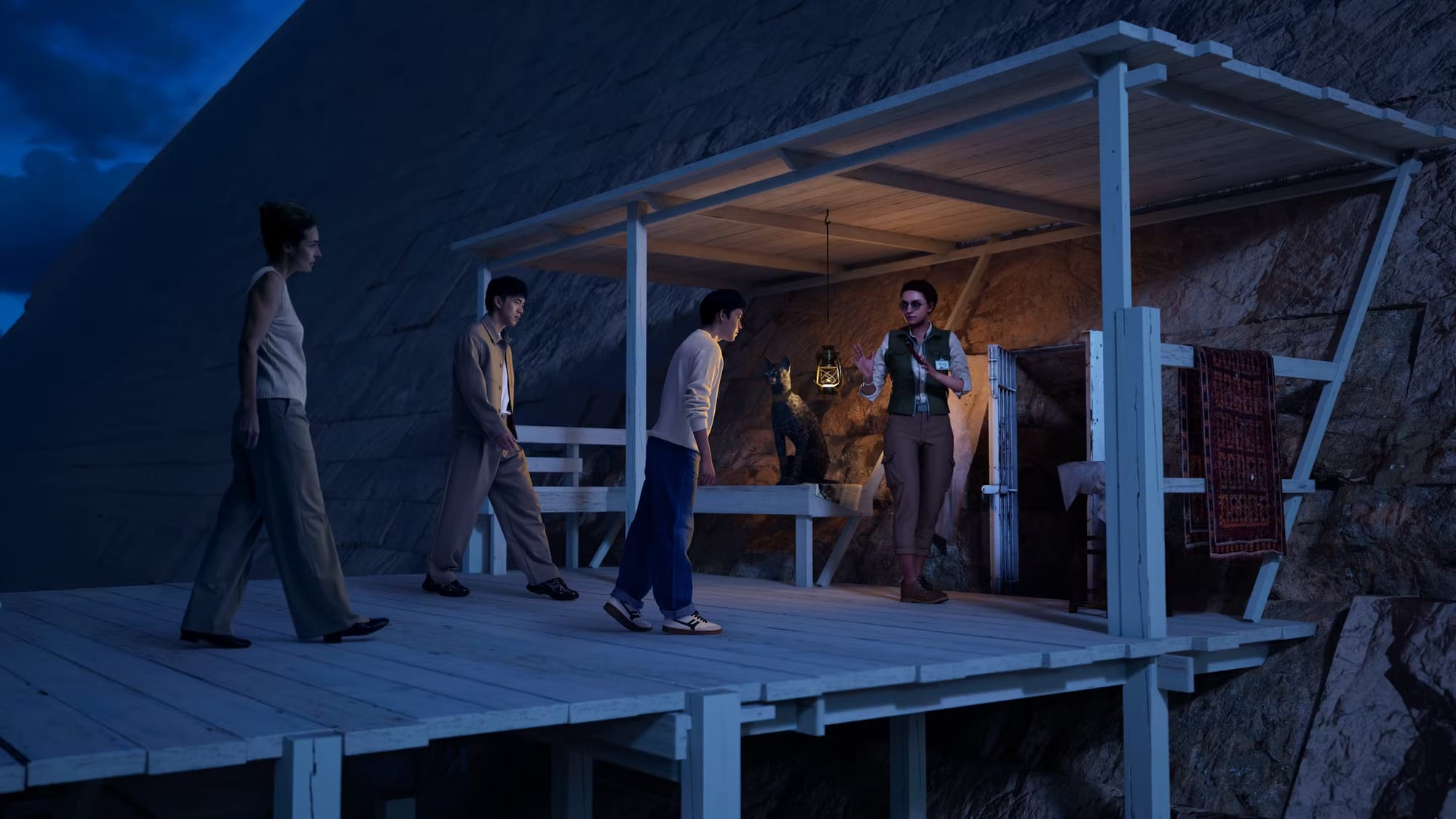
Using the ScanPyramids discoveries as a basis, this experience seeks to use the same characters as Horizon of Khufu to try and teach people about the science, debates and underpinnings of our modern understandings of the pyramids in the most engaging way.
Actually beginning the experience is a relatively identical experience to that of prior Excurio experiences: after signing in for your slot, you will receive an HTC Vive headset with which to enter the virtual world, hand tracking being used not to necessarily interact with the world but provide bearings for your sense of self in the space you will inhabit. A basic tutorial explains how to move around the space - the location uses a large open room with tracking markers to help the headset understand its location in 3D space, and you follow the direction of the story by physically walking from place to place to progress the narrative. If you step outside of the bounds you will be directed back, with other players in other memories appearing as particles to prevent bumping into others also inhabiting the space.
Secret of the Pyramid Builders treats you, the tour guest, as simply a new visitor, but the experience makes a surprisingly large number of references to Horizon of Khufu. Mona will reminisce of her past group, lament that the supernatural journey is happening ‘again’ before getting excited to go back in time and experience her research first hand. Of course, some locations are familiar. It’s notable enough to be something you pick up on and even feel a narrative connection in how Mona has grown between the experiences, but it won’t be lost if you don’t experience one before the other.
If anything, it’s easier to recommend this over Horizon of Khufu as, though the topics are different, enough of the knowledge is repeated while teaching a wealth of new information in a more engaging manner that it makes this the superior Ancient Egyptian journey. Not only are certain facts updated thanks to the ScanPyramids initiative, teaching updated information about the role of the Queen’s Chamber and burial tombs inside these pyramids, but the knowledge the development team has accumulated from years of creating these experiences makes actually traversing through Secret of the Pyramid Builders far smoother. Fewer cramped corridors and more open spaces with NPCs and plenty to see in all directions.
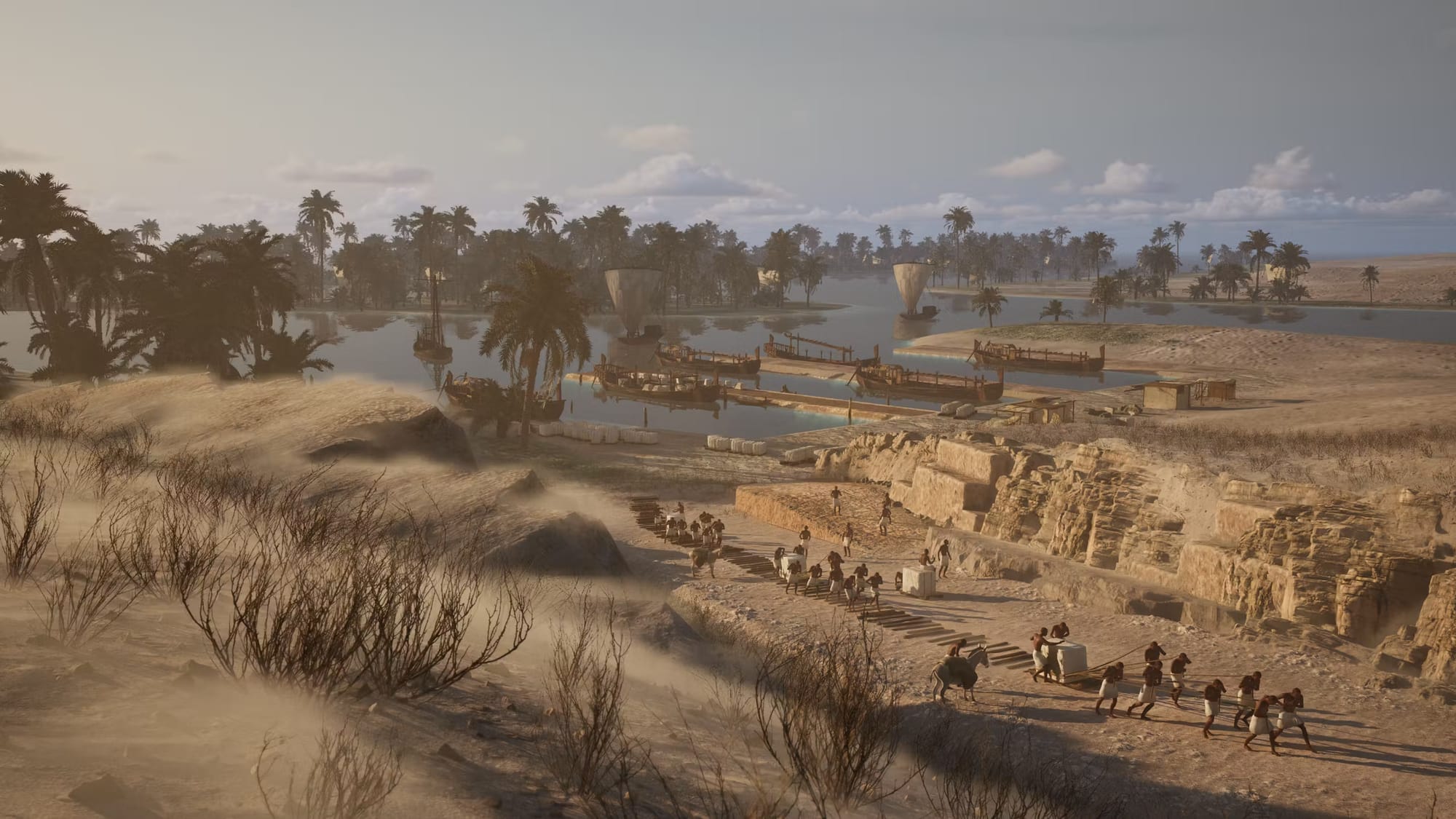
I found myself immediately engrossed by how, as opposed to a virtual lecture on Egyptian history, I felt a part of discovering the creation of the pyramids. As we journeyed back in time to Ancient Egypt, we got to see large piers where Egyptian ships would return with limestone for the outer casing of the pyramids, and even read real hieroglyphs that later research proved to be actual discovered remnants from those involved in their creation that scientists have discovered. Rather than being told how the pyramids were built, we experienced it, reading these texts and mixing these discoveries between conversations and first-hand witnessing the events for ourselves in the context of the experience.
I also found myself genuinely learning something new with this experience. Objective facts like the casing stones of limestone are shown through historical grounding we can be a part of, while the topic of scientific debate is seamlessly woven in by Mona talking us through each side’s debate with visual reference in 3D space enhanced by VR. As we debate internal versus external ramp theory, these are visualized and imposed onto the pyramids. Similar visualizations of what is inside the voids are conducted similarly, ensuring we don’t mix fact with theory in learning about this history.
Indeed, my only complaint comes in pronunciation, not the experience itself - the pronunciation used for Giza was at times distracting in its consistent departure from established pronunciations for the city in English and even Arabic. While you can’t interact physically with this world, by walking through it and engaging, you learn in a way only immersive VR in such a large, open space with this much ambition can provide. Secret of the Pyramid Builders is, like the pyramids themselves, a wonder to behold, and worth seeking out if you visit Tokyo.